
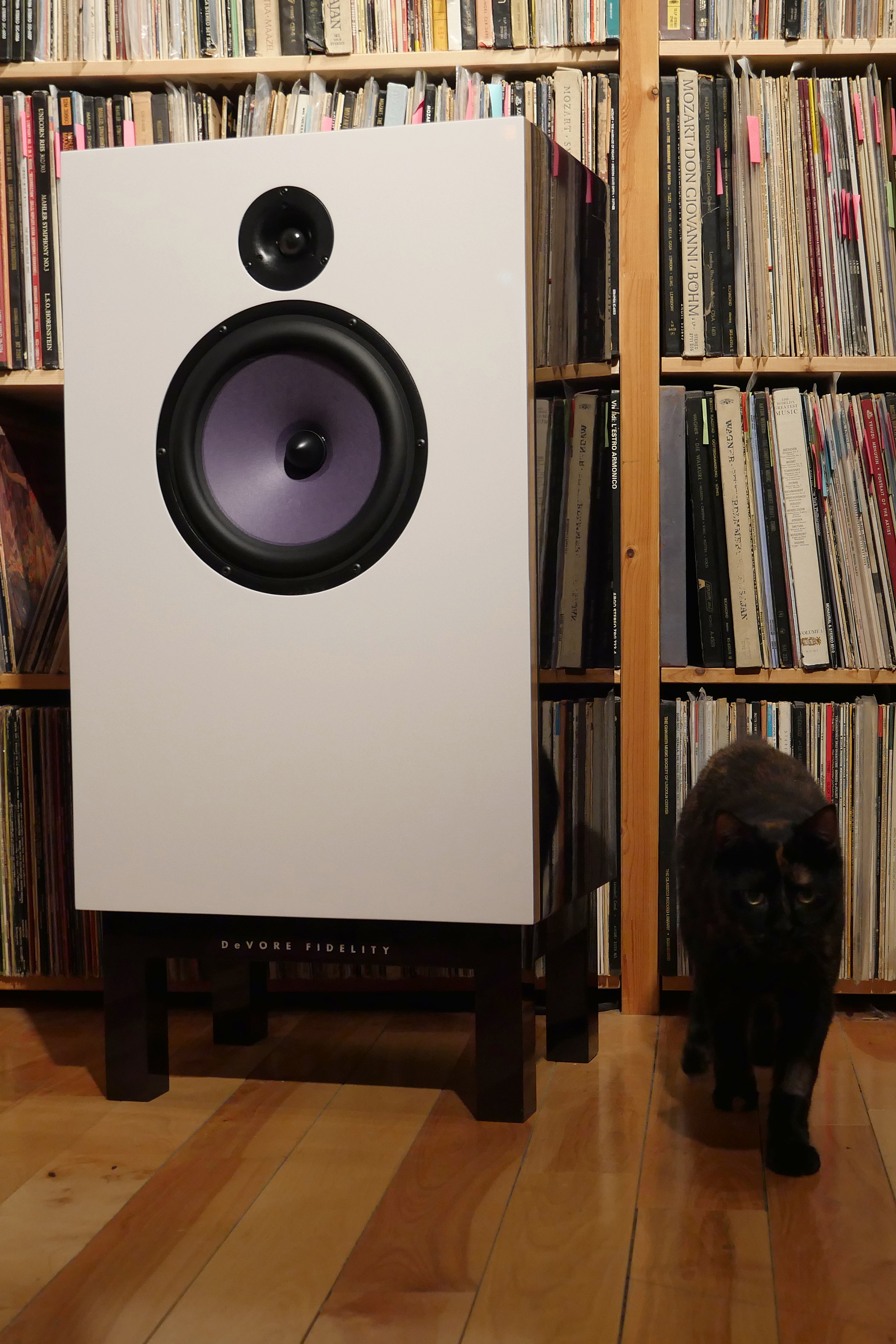
DeVore Orangutan O/96
Recenzje
Recenzja DeVore Orangutan O/96 w Hi-Fi Choice
Choć patrząc na te (relatywnie) szerokie fronty, trudno w to uwierzyć, to dobrze ustawione DeVore po prostu znikają z pokoju, pozostawiając słuchacza sam na sam z muzyką. Jedną z pierwszych płyt, których słuchałem, była przygotowana m.in. przez pana Kiuchi w ramach serii Hi-Q (XRCD24) 1 Symfonia Mahlera pod Giulinim. Orangutany zbudowały dużą, w każdym z trzech wymiarów, stabilną scenę, układając wielką orkiestrę symfoniczną w półokręgu za linią kolumn. Świetnie poradziły sobie z budowaniem kolejnych planów, a i dynamika, nawet jeśli nie jest to akurat jedno z najbardziej monumentalnych dzieł tego kompozytora, robiła duże wrażenie.
Na koniec kilka słów jeszcze o prezentacji wokali i (raz jeszcze) muzyki akustycznej. Przy całej tej energetyczności grania, świetnym prowadzeniu tempa i rytmu Orangutany 96 zachwycały wyrafinowaniem, umiejętnością oddania barwy i faktury głosów oraz instrumentów godnych tego, co bardzo dobry SET na triodach 300B ma do zaoferowanie w tym zakresie. Pięknie renderowały trójwymiarowe postaci, na pierwszym planie tak namacalne, tak obecne, że wystarczyło wyciągnąć rękę, by dotknąć Elli Fitzgerald, Etty James, Evy Cassidy itd. Kapitalnie zabrzmiał z winyla "Koncert z Kolonii" Jarreta. Jego fortepian był wielki, ciężki, acz maestro grał na nim z polotem, fantazją, wydobywając z niego ogromną paletę dźwięków. Kontrabas Raya Browna na "Soular Energy" powalał potęgą i szybkością, zachwycał długimi wybrzmieniami. Cudownie naturalnie, chwilami gładko, a potem ostro brzmiały skrzypce Carmignioli na krążku z muzyką Vivaldiego. Również moje ulubione dęciaki – trąbki, saksofony czy puzony na dobrych nagraniach nie dość, że kipiały wprost energią, to jeszcze materializowały się kilka metrów przede mną i wystarczyło zamknąć oczy, by magia tej prezentacji działała w 100%, zabierając mnie na kolejne koncerty. Piękne, ale i klasowe granie!
Dźwięk, zwłaszcza z SET-em na 300B, był niezwykle naturalny, wręcz organiczny i przekonujący. Testowany model jest chyba jeszcze nieco bardziej wyrafinowany, przemyca jeszcze więcej informacji w tej nadzwyczajnie spójnej, zwykle gładkiej, ale też czystej i transparentnej prezentacji. Przy dobrych nagraniach koncertowych trafiałem dzięki tym kolumnom wprost na sale koncertowe, przeżywając podobne emocje do tych, których faktycznie doświadczam, będąc uczestnikiem takich wydarzeń. Rodzaj muzyki nie ma właściwie znaczenia. Oczywiście kolumny mają pewne ograniczenia dotyczące przede wszystkim skali prezentacji, bo to w sumie nie tak duże podłogówki, ale i tak radzą sobie świetnie z rockiem czy symfoniką. Instrumenty akustyczne i wokale zachwycają naturalnością i namacalnością, elektryczne natomiast ogromnymi pokładami energii i dynamiki. Słuchanie muzyki z Orangutanów O/96 nigdy nie jest nudne, nawet gdy daną płytę zna się już na pamięć. Można z nimi spędzać wiele godzin i zamiast zmęczenia po każdym krążku natychmiast szuka się kolejnego. Dodam jeszcze, że Orangutany zagrają bardzo dobrze z każdym wzmacniaczem, acz moim zdaniem najwięcej magii będzie pewnie zawsze ze wzmacniaczem lampowym, najlepiej SET-em i to niskiej mocy. Jeśli szukacie głośników do tego typu wzmacniacza, koniecznie posłuchajcie propozycji Johna DeVore. Jeśli macie mocny piec, ale cenicie sobie szybkość, przestrzenność, namacalność i naturalność dźwięku, to też powinniście te kolumny odsłuchać. Są po prostu znakomite i sprawdzą się w każdym wysokiej klasy systemie.
Na pozór proste i nieco vintage'owe, pokazują, na czym polega dźwięk z wysokiej półki i to już z kilkuwatowymi wzmacniaczami
Link do recenzji: DeVore Orangutan O/96 – Hifichoice.pl
Recenzja DeVore Orangutan O/96 w Stereophile
Colorful yet uncolored, the DeVore Orangutan O/96 is the loudspeaker many of us have been waiting for. Yes, an old Western Electric horn or even an Altec Valencia has more punch and drama, and a Quad ESL has even more clarity and nuance of texture and timbre. But the O/96 gives a lot of everything and sacrifices little of anything. I'm thoroughly, giddily impressed.
Looking through my listening notes, I can't find word of a single record that wasn't extremely engaging through these speakers. From Mott the Hoople's Mad Shadows (LP, Atlantic SD 8272) to the great John Eliot Gardiner recording (with the Monteverdi Orchestra and Choir) of Purcell's Music for the Funeral of Queen Mary (LP, Erato STU 70911) to The David Grisman Rounder Album (LP, Rounder 0069), the Orangutan O/96s served them all with clarity, color, impact, drama, and scale. That last recording, which sounds realistically direct through most good systems, provided a perfect example: The DeVores allowed the fiddle, acoustic guitar, mandolin, Dobro, and upright bass to sound tactile and well textured. And the speakers' overall tonal balance was superb: The bass had just the right amount of weight and timbral richness, while Grisman's mandolin—especially in the instrumental "Waiting on Vassar"—had a fine, woody timbre and percussive attack. I've heard all of the musicians on this record in live settings on countless occasions, and the DeVores honored their sounds and their styles.
Among the amplifiers I own, the 20Wpc Shindo Haut-Brion served the O/96 better than Shindo's 25Wpc Corton Charlemagne, pushing from it a tighter, more rhythmically engaging sound. But the 4Wpc Fi 421A also loved the DeVores, in a similarly distinctive way. The Fi-DeVore combination wasn't the last word in center-fill detail, but it produced the best and biggest sense of scale I heard from the O/96s. While Jascha Heifetz's violin, in his rightly famous recording of Bruch's Scottish Fantasy with the New Symphony Orchestra of London conducted by Sir Malcolm Sargent (LP, RCA Living Stereo LSC 2603), sounded a bit more recessed than usual, the Fi and DeVores gave an engagingly good sense of the orchestra's size in every dimension. (By contrast, the Quad ESLs do a somewhat better job of allowing solo instruments—and voices, too, as in the above-mentioned Sea Pictures—to stand proud of the rest of the mix.) Subtle details, from the "sound" of the room to the occasional foot-tap by, I assume, Heifetz or Sargent, were clear. Musical sounds through this combination were also wonderfully physical, as with the many pizzicato notes carried by the cellos about a third of the way through the Bruch. Harp arpeggios blossomed richly, and overall tonal balance was spot-on perfect. And, surprisingly, the modestly powered Fi never seemed to run out of steam in a harsh way; it just ceased to get louder at certain points.
Among the performance characteristics that are as difficult to describe as to quantify—and that, coincidentally, rise above others in distinguishing vintage from contemporary products—is a loudspeaker's ability to convey the substance of musical sound, rather than suggesting a pale if attractively pellucid sonic outline. The DeVore O/96 hit the latter goal more handily than most modern loudspeakers I've heard, and if it didn't go as far down that road as, say, a Western Electric 755A, the DeVore was nonetheless very satisfying. There's a great new reissue of Glenn Gould's recording, with Leonard Bernstein and the New York Philharmonic, of Beethoven's Piano Concerto 4 (LP, Columbia/Impex MS 6262); the O/96s played it with an exceptional sense of sonic flesh and blood. Just as remarkably, the Orangutans did that while conveying far more of the recording space around and behind the instruments than other speakers no less substantial. That, I think, will be heard by some as the O/96's unique strength.
Link do recenzji: DeVore Orangutan O/96 – Stereophile
Recenzja DeVore Orangutan O/96 w Twittering Machines
More than most speakers I’ve had the pleasure to spend time with, the O/96 offer a direct connection to the humanness of the music being made, those aspects of music’s communicative powers that exist beyond an accumulation of sounds, every single time I sit in front of them. For years on end, without fail.
I’ve certainly heard speakers that can move more air, that offer even greater physicality, but this additional whomp has always come at the expense of the O/96’s grace and seamlessness, their ability to convincingly create low end electronic growl, richly hued timbre, lighter than air movement, and startling presence. By comparison, some larger multi-driver speakers have sounded boisterous at the expense of balance and nuance, two more of the O/96’s standout strengths. In my experience, speakers that initially impress but lack grace and ultimate balance fail to hold my attention over time and in the worst cases limit the kinds of music I want to hear. The DeVore’s work in the opposite fashion, even after two years of constant use, inviting the limitless exploration of what ever music I care to hear.
I’ve also heard speakers that can go convincingly lower, some sporting powered subwoofers, and for people who crave rave bass, the DeVore’s sub-30Hz in room response may not suffice. I’m more of a quality over subsonic rumble kinda listener so the O/96’s bass response fulfills my needs. That said, I had the opportunity to hear a pair of prototype DeVore O/Reference speakers here in the Barn, that come with a pair of stand alone powered bass units, and that was among the most physically and emotionally moving listening experiences I’ve had. Beauty and the beast.
Of course I have other favorite speakers and even more that are not on that list. But when it comes time to just listen, when my complete and total attention is focused on the music at hand, the DeVore O/96 meet my wants and needs as well as any speaker I’ve heard. The fact that I’ve only grown to enjoy them more two years on after countless hours of listening is a testament to the only kind of performance metric that really matters when it comes to hifi.
Link do recenzji: DeVore Orangutan O/96 – Twittering Machines
Recenzja DeVore Orangutan O/96 w Audiokey
The Orangutan O/96s as part of the reference system quartet made every album, every track, every selection feel far too short. The music resonated with such sublime beauty, transparency, overall technical acumen, that it kept me glued to my seat for hours. Seldom have I been in such anticipation of the next song, the next track, and actually dreading the end of an album. After a long-known album had ended, it was not uncommon for me to comment, “That was insanely short.” The end would always come much too soon, and this would be the rule, not the exception, with the Orangutan O/96s in the system.
The Orangutan O/96s pulled one of the most deft disappearing acts I can remember—unequaled by any other speaker I’ve ever had the pleasure of reviewing or owning. And as Orangutan O/96s are no small speakers, though certainly not a behemoth, this was fascinating. To my reference music collection, noted for spatial/dimensional recordings, I went.
I have owned and reviewed a good number of speakers, many a good deal more expensive than the O/96s and certainly more highly praised, but none possessed the whole-cloth musical acumen, the soup-to-nuts technical abilities of the 0/96 or its sublime musicality. Yes, there have been other quite exceptional and more expensive speakers, but they pale in comparison to this sub-$20k speaker.
The O/96s reached into the sub-bass and grabbed up the Holy-Bass-Head-Grail as if they were simultaneously eating bonbons, jumping about on a pogo stick, and playing paddle ball (a little red ball attached to a “wooden” paddle), just that easily. It was as if my various bass-afflicted review tracks had finally come to life with the Orangutan O/96s in the mix. Eiji Oue’s Stravinsky and Rachmaninoff (Reference Recordings) albums, as a result, were torments for any neighbors who also worked from home, though my apartment is to a large degree isolated in the complex.
There is no other speaker that I have, to date, reviewed that can match the sub-bass reach of the Orangutan O/96s, and certainly not with a minimum of 20 watts, mind you!
Mesmerizing. The Orangutan O/96s’ rendering of the midrange was natural, textured, three-dimensional, and taken as a whole, incredibly beguiling. The Vivid Audio Kaya 45 certainly had its way with vocals and is perhaps a hair’s breadth away from the O/96. However, there is more of a feel of the voice via the texture of the O/96s, which flesh out three-dimensionality, and the in-room palpability of voices even more so. No other speaker has come close.
It’s no wonder that so many reviewers, as I have come to discover, have opted for a pair of the Orangutan O/96s. Not only are they extraordinarily musical and technically superb from stem to stern, they pair easily with literally hundreds of amplifiers, from five watts to 400 watts. This is of course a reviewer’s dream speaker, given its tremendous versatility. “Youse guys aren’t getting out alive. See…”
Yeah. What can work with amplification from five measly watts to 400 watts, provide tonal/timbral renderings that harken back to the original venue, and even take you there, grab your heart like it’s sitting on your chest, and leap over tall buildings with a single bound? Okay, skip the building thing. But the rest is spot-on and of course you know the answer: the Orangutan O/96s.
Impeccable transparency, resolution detail? Check. Wide top-to-bottom frequency extension? Check. Beguiling tonal/timbral accuracy? Check. A staging envelope—front to back, right to left, deep, high—to die for? Check.
Link do recenzji: DeVore Orangutan O/96 – Audiokey
Recenzja DeVore Orangutan O/96 w Part-Time Audiophile
I’d been playing Massive Attack’s Mezzanine (2×33 rpm LP, 2013 limited-edition re-issue), and the O/96s were laying out a huge deep-V sound stage that was pushing well-past room boundaries. The Koetsu and Transrotor combo I was using were cutting through the congestion of analog, and digital instruments, effects, and textures, and the DeVores were giving each note space, separation, and clarity without a hint of smearing, blending or hash on any of the electronically-produced Pro Tools wizardry attendant on vocals, guitar, keyboard, and bass: No small feat on a song like Angel, which is layered with complex rhythmic, and tonal harmonics that I’ve heard other speakers in the O/96’s price range (or significantly more) unable to articulate, and give up on, instead pumping out a slurry of synth-tinged vocal inflection that lacked the clearly delineated, guttural punch the O/96s were effortlessly pouring into my listening room. Deep, authentic, pluck inflection was present on every bass note, and the bassline reproduction itself never let other instrument’s detailed playback get overwhelmed or embedded in it. The song sounded ascendant, and I was grinning.
Organic and earthy … these speakers are not afraid to get dirty. And I say that with the utmost respect, I’ve heard very few loudspeakers be able to really handle beautiful, clean, remastered LPs like the Analogue Productions 45rpm Prestige series, or Mobile Fidelity’s Original Master Recordings as well as a lot of the original ’70s and ’80s punk, prog-rock, post-punk, and ’60s rock, jazz and classical LPs I’ve managed to unearth over years of crate digging. It didn’t matter what I threw at them, they just always sounded right. No two LPs ever sounded the same, the DeVores let each album’s unique sonic signature pour forth effortlessly.
Have you ever pushed your way to the front of the stage for a live show? Felt the visceral impact of a floor tom, and bass drum in your chest, or the way the snare or the ride/crash cymbal, and high hat shimmers in time, and space? The compression in your eardrum as the cymbal’s alloy crushes under a drum stick’s strike? If you have then you’ll be right at home with what the O/96s are capable of reproducing. For me it’s all about the recorded performance: the emotional reaction the music creates within me. The temporal bridge between 1956, and my living room simply vanished. Separation of Rollins’ saxophone, and Flanagan’s piano playing coming through Watkin’s bass in the mix regardless of complexity in the song was of particular note on this cut.
Listening to these speakers I found my attention was always on the musicians’ performance. The emphasis was on the whole, rather than the parts. The minutiae of detail of every individual instrument or voice was there if I chose to focus in on it – and I could follow each instrument’s notes threaded through a song with ease – but it was always the feeling the song in question was eliciting within me that stood out. Listening through the O/96s was a constant emotional experience, that for me, spanned decades of hi-fi speaker design, technology, and sound that I’ve become familiar with over the past few years. The Orangutans are more than capable of pulling off the mini-monitor trick of vanishing into a room. Yet, as if welded into their DNA matrix, they are able to play with ’50s-era tone while they disappear. Not an easy feat in my experience, but one of the many feats that John DeVore has pulled off with his O/96 design.
Link do recenzji: DeVore Orangutan O/96 – Part-Time Audiophile
Recenzja DeVore Orangutan O/96 w Hi-Fi News
Transparency is a term all too readily bandied about in reviews, but the O/96s truly exhibit this quality. The instant you hear these boxes in action then 99% of other 'boxes' sound, well, like they need a kick up the pants to get them going. The O/96s simply do not reveal themselves as a 'sound source' – their 'touch' is so light that the faintest of notes and sounds seem to slip unhindered into the room. Whether this is a by-product of their high sensitivity, or a happy coincidence – that elusive 'synergy' with the Jadis SETs – I do not know. But, like a fixed point in space, it is a repeatable, reliable and defining quality of this combination. A quality that's leveraged to typically jaw-dropping effect by, surely, every one of your favourite vocal-driven albums. If you ever wanted to contrast the vocal styles expressed in Kate Bush's 50 Words For Snow [Fish People FPCD007; 96kHz/24-bit] with Rebecca Pidgeon's 'Spanish Harlem' [The Raven, Chesky; 96kHz/24-bit] and Jennifer Warnes' 'Way Down Deep' [The Hunter, Private Music 261974; 44.1kHz/16-bit] then this Jadis and DeVore pairing will conjure each of these performers for a very up-close and personal inspection. Every breath, every subtle sibilant, every lick of the lips – 'vivid' fails to convey the startlingly palpable presence of these voices in the room.
For example, these (relatively) compact speakers are more than capable of hosting a very grand stage, as the 'Symphonic' version of Pink Floyd's Wish You Were Here [London Orion Orchestra; Decca 478 9517] served to illustrate. Skip over Alice Cooper's vocal intervention to the ethereal, glittering intro of 'Shine On...'. Here the glockenspiel, strings and horns – the orchestra conducted by Peter Scholes – sets the scene for the by-now iconic four-note mantra struck up by guitarists loaned from the Australian Pink Floyd Show. Again, it's this Jadis/DeVore combo's ability to resolve the exquisite fragility of the background percussion while juggling the surge of strings, the biting edge of guitar and Rick Wakeman's trademark life-of-their-own keyboards that's so, well, exciting.
Link do recenzji: DeVore Orangutan O/96 – Hi-Fi News
Recenzja DeVore Orangutan O/96 w The Ear
That big paper cone produces particularly supple and fruity bass, it’s very juicy with the right instruments, one example being the bass guitar on Rickie Lee Jones’ Ghetto of my Mind (from Flying Cowboys on vinyl) which produces a beautifully laid back beat that comes through with the waft of a proper airwave. You don’t get that with smaller cones, even if there are several of them. You get a more conventional tonal balance from most speakers but the Orangutan is more than able to hold its own when it comes to projecting the sound into the room. It creates a sense of the musician’s presence very effectively and after a while your ears naturally filter out the balance variation. I tried a number of amplifiers with these speakers and each revealed the music in its own way but all of them made it enjoyable. My Border Patrol preamp with a Gamut D200 MkIII solid state power amp delivered a live performance by Little Axe in full scale effect with chunky bass lines from Skip McDonald and plenty of energy, the bass itself exciting the floorboards for full atmospheric effetct.
What this speaker does consummately well is timing, this is why everything you play is so engaging regardless of the inherent character. It brings in the tension of Wyclef Jean’s Thug Angels which is an easy track to get sounding muscular but a tricky one from which to extract the increasing intensity. With a lot of speakers you think wow to begin with but lose interest before the tune reaches its climax, the opposite seems to be the case here, it just gets more and more dynamic. It could be positively dangerous playing something that really builds to an inferno like the Mahavishnu Orchestra at their peak.
The bass now had teeth, that is control, texture and depth of timbre, Jaco Pastorius’ playing on Joni Mitchell’s Shadows and Light is astonishing in its nimbleness, dexterity and fluidity that man had, and as far as I’m aware still has, no peer. The sound from this concert was gloriously vital and alive, all attempts at changing album being disrupted by the start of each new track.
But eventually I got there and put on Steely Dan’s The Royal Scam where the guitar intro to Don’t Take Me Alive is revealed in all its glory, this speaker knows how to make an electric guitar sound real, it delivers the raw energy that the player put in at the studio in a way that more civilised speakers cannot match. Playing less familiar material it’s difficult to hear the tonal variations largely because you don’t know what to expect and partly because the music takes precedence over the presentation, it’s a thrilling experience and one that more conventional speakers fail to create unless you stick something truly electric into them.
Link do recenzji: DeVore Orangutan O/96 – The Ear
Recenzja DeVore Orangutan O/96 w HiFi Pig
Time to turn to a more modern type of minimalism, and that from the top exponent of the 20th-century Minimalist period, Steve Reich. It was his ‘Music for 18 Musicians’ that got me enveloped in this type of music at university. With 3 marimbas, 2 xylophones, vibraphone, 2 clarinet players (including deep bass clarinet), 4 pianos, 4 female voices and violin and cello, I could really check out the placement of the different instruments as they gradually change the repeated notes and speeds to create different timbres and textures in this “vertical” work. That bass extension again got my attention right from the start with the bass clarinet beautifully clouding the air with its gorgeous tone, and the marimbas in the second movement showed that there certainly is a top-end from these speakers – not over the top, but certainly there. But it is the mid-range that got me excited, and with an engaging soundstage that enabled me to listen to music, not HiFi.
Time to try Patricia Barber’s ‘Café Blue’ track two. The amp and speakers gave surprisingly good control over this music. Even Patricia’s top F# and A showed authority and ease, where many make her outbursts a little unstable. The drum kit solo over the repeating guitar riff was so much like a real drum kit in my living room (sorry neighbours!) that musician Alan Parson’s famous quote (though (apparently) he didn’t really make the quote) of “Audiophiles don’t use their equipment to listen to your music. Audiophiles use your music to listen to their equipment” just didn’t ring true. The sense of live music and wide listening area continued in “What Lola Wants (Gotan Project Remix)” with Sarah Vaughan’s voice adding to the space and depth of sound from the accordion and other instruments.
David Gilmour’s ‘On an Island’ begins with very deep instrumentation (on “Castellorizon”) that, with the O/96 just sets the room alight. If you have the space for these speakers and don’t mind the room shaking, these are great. This is a very musique-concrete beginning of short motifs of different instruments and styles, typical of the first tracks on Gilmour albums, but that extreme bass might “take off” a little too much if you’re not careful. It can just slightly take over your concentration if you’re not careful, especially in the next track, “On an Island”, though the cymbals were just the right level.
Link do recenzji: DeVore Orangutan O/96 – HiFi Pig
Recenzja DeVore Orangutan O/96 w Dagogo
In the end compared to the Linns, the Line Magnetic Audio 755I Field Coil Loudspeakers, the Audio Note E SECs, or the Burwell and Sons versions of the Altec A7s I preferred the way voices were played on the Orangutan O/96s. They let me hear so much beautiful tonal color in voices. To be honest I was shocked at how well the O/96s, a two way speaker, played voices.
Part of what’s so special about them is what they aren’t. They’re not typical audiophile speakers, they aren’t the very last word in detail, speed, transparency, nor are they the last word in bass slam. Rereading that sentence I’m tempted to take it out, but in a way that’s exactly what is so special about them. They balance all of the above in such a way that is very beguiling. They have a significantly rich sound. They do this differently from the Linn Audio Loudspeaker’s Athenaeums whose richness seemed to add a sameness to the sound from one recording to another. This is not the case with the O/96s, through which each recording sounds significantly different from all others, just a richer and smoother. The O/96s also handle less than good recordings better than most speakers without that sameness of the Linns which covered up a multitude of sins. The richness and smoothness of the O/96s helps in letting poorer recordings be more fun to listen to, but not by covering up their mistakes.
The O/96s are also play music with great dynamics and micro-dynamics in such a beautifully relaxed way, but not so relaxed as to rob the music of it’s great emotion. The O/96s do a better job at revealing tonal colors than any modern speaker I have heard. Still the O/96s, like many of the vintage speakers including Altecs and Lowther,s have a sense of immediacy which results in them simply sounding more alive than modern speaker designs. They also have a way of letting you hear the air around and within instruments that is so important to adding to the realism of listening to recorded music. They also have the ability to develop the harmonics and timbre of the instruments and voices; they do this even better than the Audio Note E SECs, one of the best speakers at playing harmonics that I had heard until now.
The Audio Note E HE models are perhaps the most obvious comparison to the O/96s. Both are two way, rear vented, stand mounted, floor standing speakers with wide baffles. They are both high efficiency speakers most often used with low power SET tube amps. Even in an all out Level 5 Audio Note system that I have heard in more than one location the sound of the Audio Notes is slightly veiled and not quite as alive as the O/96s.
By comparison, the O/96s are richer sounding and play deeper bass in my room than I have heard from any Audio Note system. Mostly the Orangutans sound more alive from the lowest bass well into the treble area better than most speakers. In my room they produce a even bigger sound than the Audio Notes located in the corners. They also have a superior soundstage to the Audio Notes; no doubt partially due to the fact that they are not in the corner. The soundstage is very coherent and big, none of this instruments and voices floating on some imaginary black background. My oldest son, Brant, is especially critical of speakers that do not have good vertical soundstaging abilities. The first time he heard the O/96s he said, “they look short, but they sound tall.” It’s not just about a bigger soundstage though, they simply sound more substantial than most speakers, very much like the big Tannoys. They are so powerful sounding while bringing a wonderful life and emotion to the sound.
Link do recenzji: DeVore Orangutan O/96 – Dagogo
Recenzja DeVore Orangutan O/96 w Audiophilia
As setup, the DeVores throw a huge soundstage with very good imaging. Bernstein's Columbia Symphonie Fantastique was never known as an audiophile gem, but the New York Phil sounded rock solid in place. Along with a huge soundstage, it's the refinement of instrumental timbre that really impressed me. Julius Baker's fabulous fluting of the Idee Fixe floated beautifully in and around the woodwinds. And while floating, his tone remained centered. Lots of speakers can float the sound, but lose the sound's focus.
Yet, power's on hand, too. Back to Varese, specifically Arcana, Mehta's LA Decca party piece. A tour de force for orchestra, Mehta's gauntlet sounded brilliant through the Orangutans. Layered and easily resolved. This surprised me after the speakers sucked up much of the Bernstein Berlioz recording. As such, like all fine speakers, throw them a poor recording, and they will not shy away and fake it for you. These are incredibly honest loudspeakers.
I've never heard a Steely Dan record sound so good on a loudspeaker. The multi layered orchestration was clear and concise. Each of the band's chosen tracks sounded as solo but maintained the band's orchestral philosophy. Steely Dan members explode on the Hey Nineteen track. The Orangutans handle quick movements of musical energy easily. This was evidenced on all sorts of power programming.
So many loudspeakers, even of varied topologies are easy to unravel and focus in on the sound. The 0/96 is a different animal. It's more chameleon than Orangutan. Whatever flavouring (not coloring) the recording -- Introvert, extrovert, power, demure, subtle, strong -- you'll hear it unsullied. What nice change.
I threw on Windjammers, a CD of music by Sammy Nestico. These fabulous arrangements of classical music feature solo woodwinds and a full jazz stage band. Nestico's arrangements (originally for the US Marine Band) are tasteful and musically very effective. I got to play some very lovely flute solos courtesy of the great man -- Rimsky Korsakov, Borodin and others.
My sound was replicated to perfection -- every musical inflection heard, stress here, crescendo there, and sweet diminuendos. I've not heard my own sound on a speaker sound so natural. Most speakers add something, but the DeVores left me alone. Very impressive.
Link do recenzji: DeVore Orangutan O/96 – Audiophilia
Recenzja DeVore Orangutan O/96 w Hi-Fi i Muzyka
Wielkie monitory są świetne. Bezbłędnie wpasowały się w mój gust i pokazały to, co lubię. W pewnych aspektach wspięły się nawet na poziom bliski mistrzostwa świata. Niezmiernie rzadko się zdarza, że żal mi oddawać sprzęt po odsłuchach i chętnie zatrzymałbym go dłużej. Orangutany zrobiły takie wrażenie, że trudno o nich zapomnieć.
Intrygująca okazuje się natomiast ich druga twarz, zachowują bowiem niebywałą przejrzystość i czytelność szczegółów. „Oddynamizowanie” ekstremalnych kontrastów ułatwia im traktowanie materiału z lekkością i płynnością. Dźwięk jest jak kryształ: czysty, mieniący się blaskiem w wykończeniu drobnych elementów, zwłaszcza w średnicy i górze pasma. Mimo ogromnych rozmiarów sceny wypełniony powietrzem po brzegi. Zdarza się również, że w niespodziewanych momentach uderzy nas holograficzna projekcja, uporządkowana tak, że można wskazać palcem, gdzie kto stoi i broi. Równie intrygująca okazuje się staranność oddawania i różnicowania barw, przy okazji poprawiająca fokus. Wszystko widać jak na dłoni, wyraźne i doświetlone.
Kiedy odchudzimy skład i zwolnimy je z obowiązku przeniesienia do domu atmosfery rockowego koncertu, trafimy wprost do świata Orangutanów. Panuje w nim nadrzędna zasada: im materiał bardziej akustyczny, tym dobitniej odczujemy ich klasę. Na albumach Pink Floyd uderzy przestrzeń tak realistyczna, że złudzenie obecności w wydarzeniu na żywo może przybrać kształt oszustwa doskonałego. Podobnie w kameralnym koncercie jazzowym – niuanse akustyki sprawią, że po plecach przebiegnie dreszcz. Pojawi się też wyjątkowa przejrzystość. Szarpnięcia strun, głoski i wybrzmienia zostaną odtworzone tak wyraźnie, że trudno będzie później wrócić na ziemię. I wcale nie chodzi o ostrość – choć Orangutanom zdarza się dosadnie cyknąć – tylko o oczyszczenie z przyległości. Pozostawienie ścieżek wypolerowanych i poukładanych niczym trybiki w szwajcarskim zegarku. Pogłos wypełnia scenę, a my cieszymy się realizmem i bezpośredniością grania. I, podobnie jak wcześniej, zdolność różnicowania barw porządkuje lokalizację.
Link do recenzji: DeVore Orangutan O/96 – Hi-Fi i Muzyka
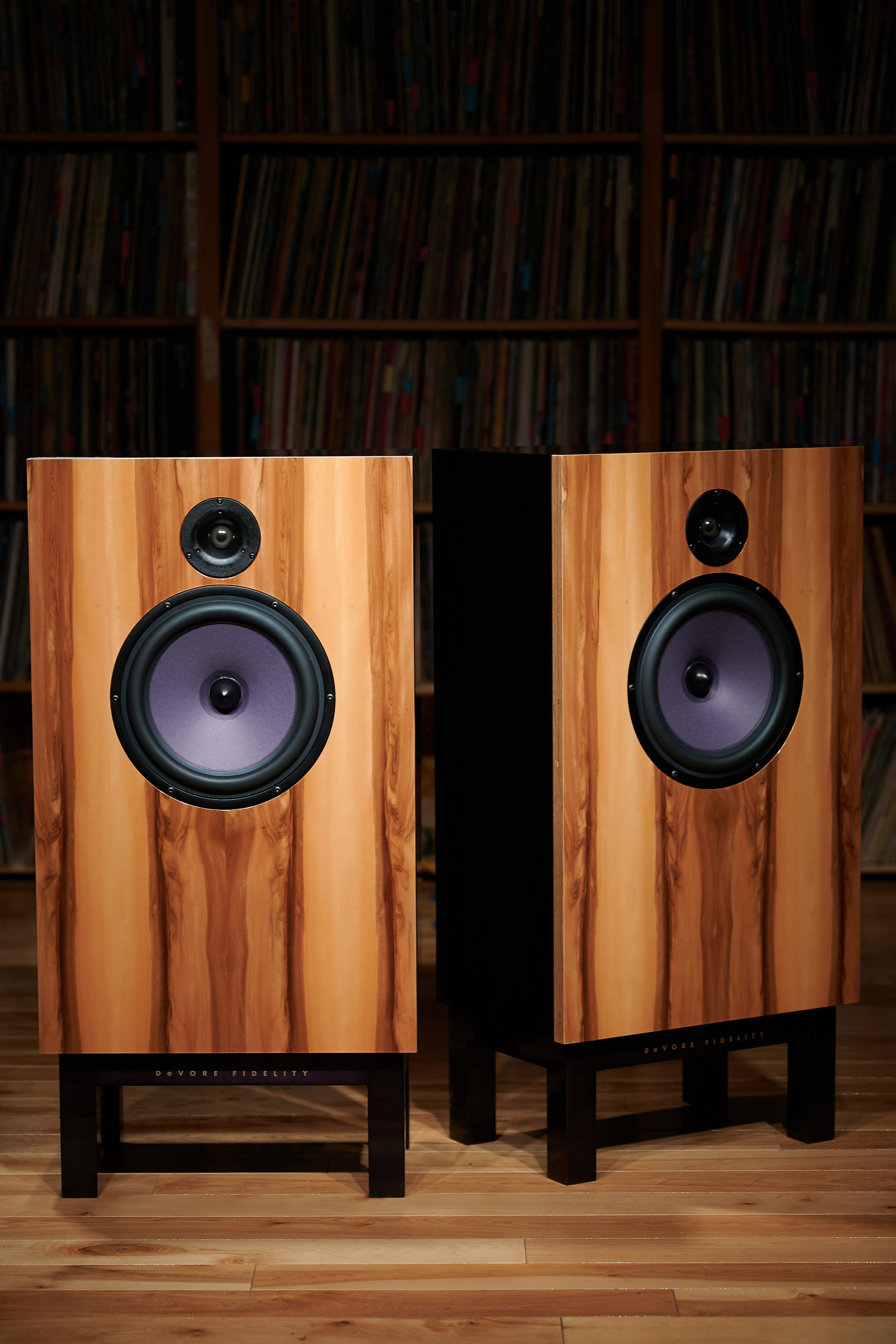
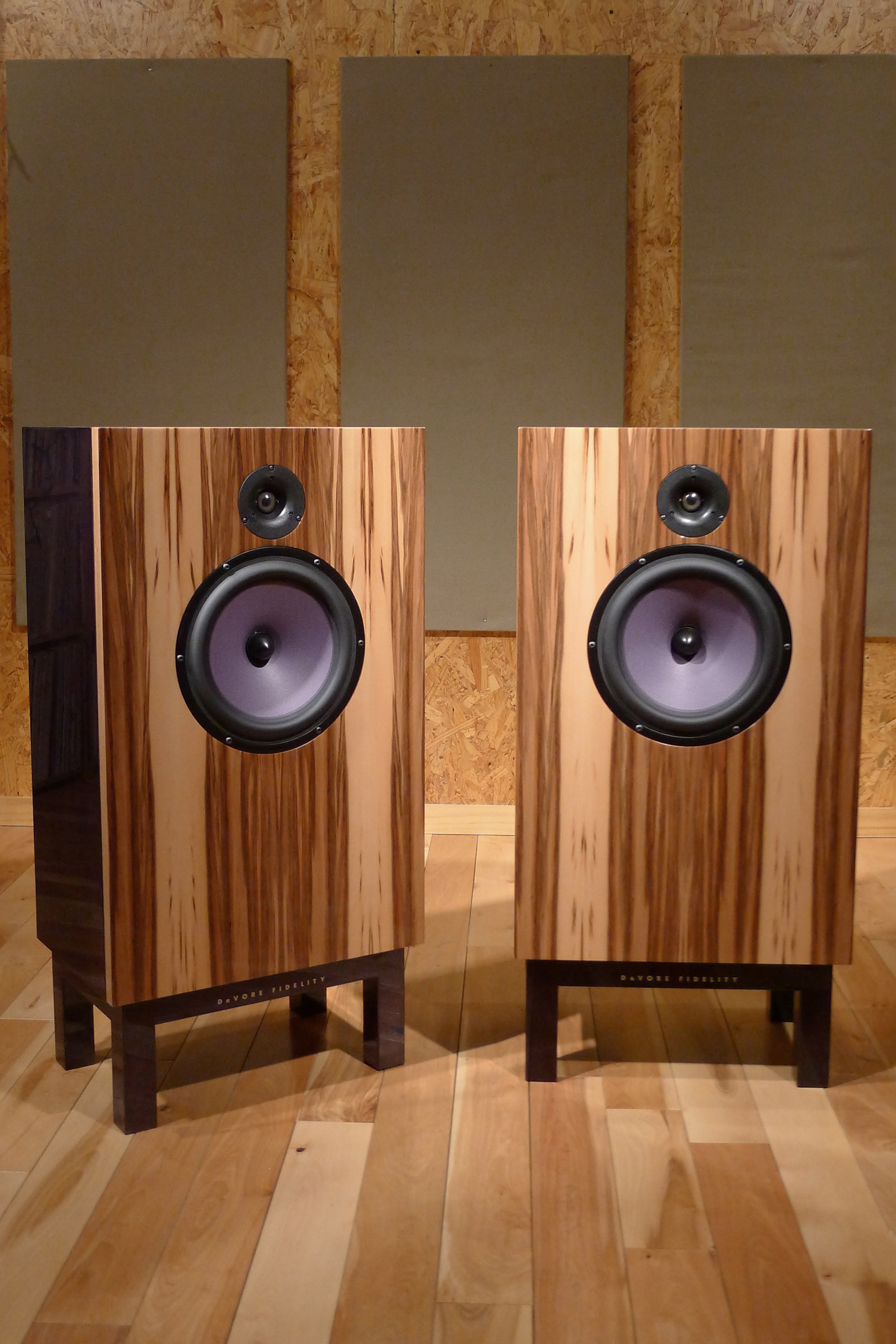
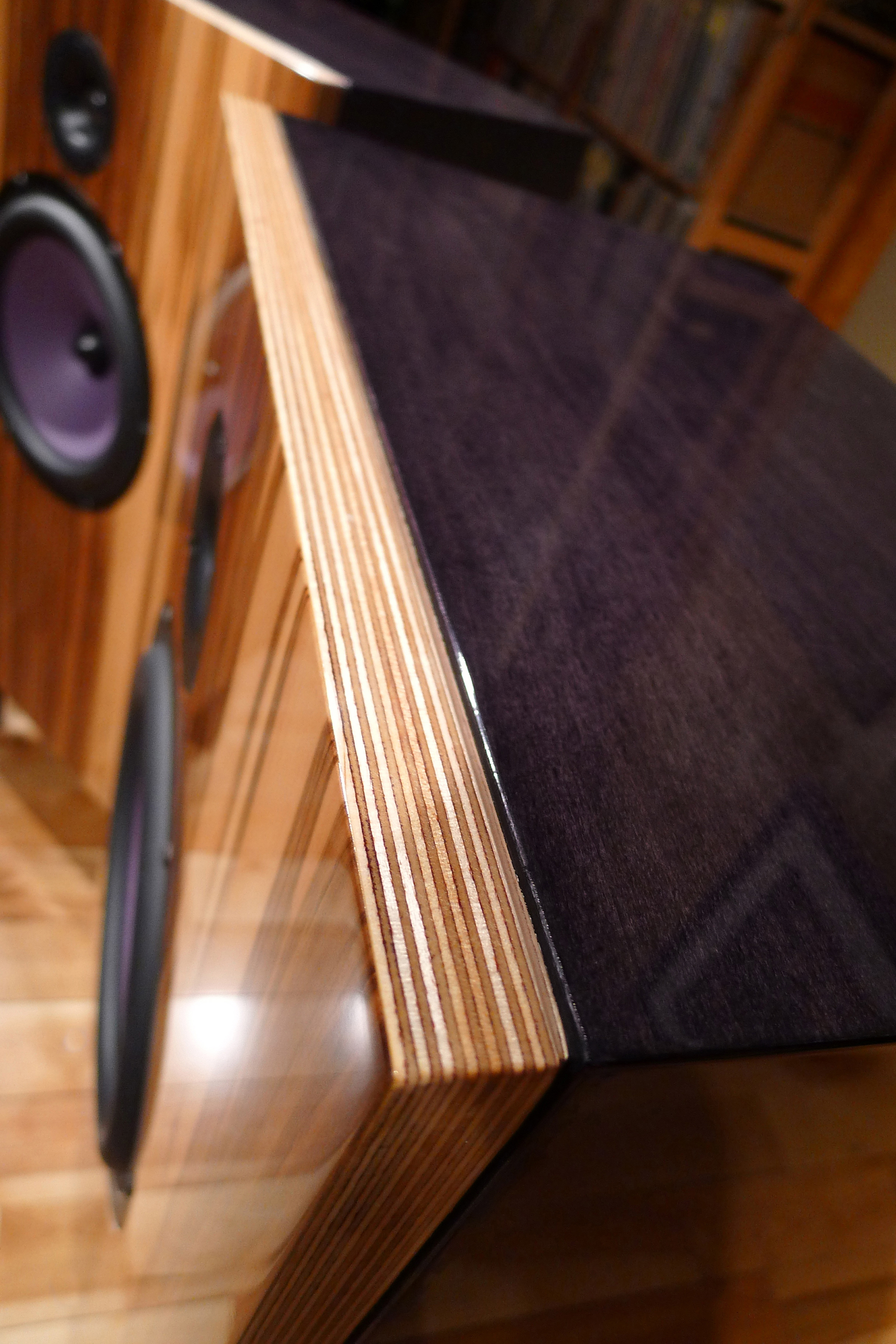
DeVore Orangutan O/96
Nagrody
DeVore Orangutan O/96 – Part-Time Audiophile – Best Floorstanding Speakers 2025 Buyers Guide

While Rafe Arnott reviewed the O/96s a few years ago, Brian Hunter followed up with renewed appreciation for this now classic two-way, one of 2025’s best floorstanding designs. An ideal match with low-powered SET amplifiers, the DeVore offers a sound that is “clear as a bell” with a tone that is rich without being too sweet. Plus, Brian found that “the extension downward is phenomenal, exceptional considering the two-way design.”
Link: DeVore Orangutan O/96 – Part-Time Audiophile – Best Floorstanding Speakers 2025 Buyers Guide
DeVore Orangutan O/96 – Twittering Machines – Favorite Speakers

Link: DeVore Orangutan O/96 – Twittering Machines – Favorite Speakers
DeVore Orangutan O/96 – Stereophile – Stereophile's Products of 2017

Link: DeVore Orangutan O/96 – Stereophile – Stereophile's Products of 2017
DeVore Orangutan O/96 – HiFi Pig – 5 Hearts Award

Devore Orangutan O/96 – AudioKey Reviews – Diamond Award

This is a reviewer’s dream speaker, no doubt, and why so many reviewers have adopted the Orangutan O/96s. And while I don’t know the numbers, I feel as though there are too few audiophiles and music lovers who are familiar with these incredible speakers. To them I say, if you want a system whose voice you can radically change without replacing the speakers, add amp, then look no farther than the Orangutan O/96s.
They are of course easy winners of our DIAMOND AWARD, BEST OF THE YEAR AWARD, and EDITOR’s CHOICE AWARD. This is the Best of the Year Issue, after all.
Link: DeVore Orangutan O/96 – AudioKey Reviews – Diamond Award
DeVore Orangutan O/96 – Audiophilia – Star Component
The DeVore 0/96 Orangutan Loudspeaker is a unique, brilliant sounding, beautifully made loudspeaker. It'll weather any type of amplification and replicate fine recordings with twist and shout that'll have mainstream audiophiles and music lovers wanting something incredibly musical but different, running to the nearest dealer. Very highly recommended.
DeVore Orangutan O/96 – Part-Time Audiophile – Editors Choice

Link: DeVore Orangutan O/96 – Part-Time Audiophile – Editors Choice
DeVore Orangutan O/96 – Stereophile – Recommended Components 2023

Link: DeVore Orangutan O/96 – Stereophile – Recommended Components 2023
DeVore Orangutan O/96 – Stereophile – Recommended Components 2023

Link: DeVore Orangutan O/96 – Stereophile – Recommended Components 2023
DeVore Orangutan O/96 – Stereophile – Recommended Components 2022

Link: DeVore Orangutan O/96 – Stereophile – Recommended Components 2022
DeVore Orangutan O/96 – Stereophile – Recommended Components 2022

Link: DeVore Orangutan O/96 – Stereophile – Recommended Components 2022
DeVore Orangutan O/96 – Stereophile – Recommended Components 2021

Link: DeVore Orangutan O/96 – Stereophile – Recommended Components 2021
DeVore Orangutan O/96 – Stereophile – Recommended Components 2021

Link: DeVore Orangutan O/96 – Stereophile – Recommended Components 2021
DeVore Orangutan O/96 – Stereophile – Recommended Components 2020

Link: DeVore Orangutan O/96 – Stereophile – Recommended Components 2020
DeVore Orangutan O/96 – Stereophile – Recommended Components 2020

Link: DeVore Orangutan O/96 – Stereophile – Recommended Components 2020
DeVore Orangutan O/96 – Stereophile – Recommended Components 2019

Link: DeVore Orangutan O/96 – Stereophile – Recommended Components 2019
DeVore Orangutan O/96 – Stereophile – Recommended Components 2019

Link: DeVore Orangutan O/96 – Stereophile – Recommended Components 2019
DeVore Orangutan O/96 – Stereophile – Recommended Components 2018

Link: DeVore Orangutan O/96 – Stereophile – Recommended Components 2018
DeVore Orangutan O/96 – Stereophile – Recommended Components 2018

Link: DeVore Orangutan O/96 – Stereophile – Recommended Components 2018
DeVore Orangutan O/96 – Stereophile – Recommended Components 2017

Link: DeVore Orangutan O/96 – Stereophile – Recommended Components 2017
DeVore Orangutan O/96 – Stereophile – Recommended Components 2017

Link: DeVore Orangutan O/96 – Stereophile – Recommended Components 2017
DeVore Orangutan O/96 – Stereophile – Recommended Components 2016

Link: DeVore Orangutan O/96 – Stereophile – Recommended Components 2016
DeVore Orangutan O/96 – Stereophile – Recommended Components 2016

Link: DeVore Orangutan O/96 – Stereophile – Recommended Components 2016
DeVore Orangutan O/96 – Stereophile – Recommended Components 2015

Link: DeVore Orangutan O/96 – Stereophile – Recommended Components 2015
DeVore Orangutan O/96 – Stereophile – Recommended Components 2015

Link: DeVore Orangutan O/96 – Stereophile – Recommended Components 2015
DeVore Orangutan O/96 – Stereophile – Recommended Components 2014

Link: DeVore Orangutan O/96 – Stereophile – Recommended Components 2014
DeVore Orangutan O/96 – Stereophile – Recommended Components 2013

Link: DeVore Orangutan O/96 – Stereophile – Recommended Components 2013
DeVore Orangutan O/96
Galeria
Zobacz także

Devore Fidelity
Cennik
Cennik DeVore Fildelity
Link: Cennik DeVore Fidelity
Devore
Dealerzy
Dealerzy Devore Fidelity
Link: Dealerzy Devore Fidelity