
Yuki AP-01
Dane techniczne
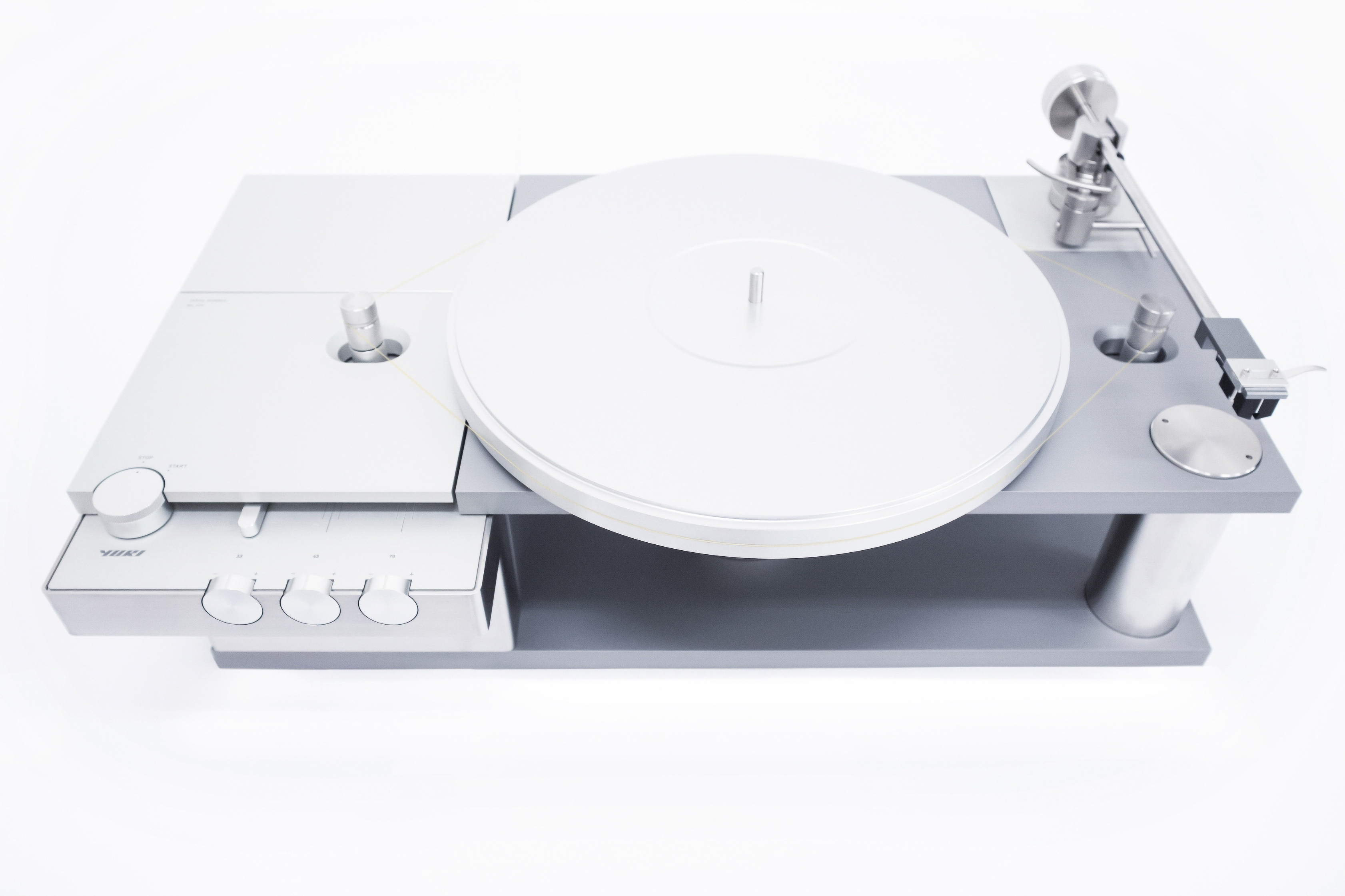
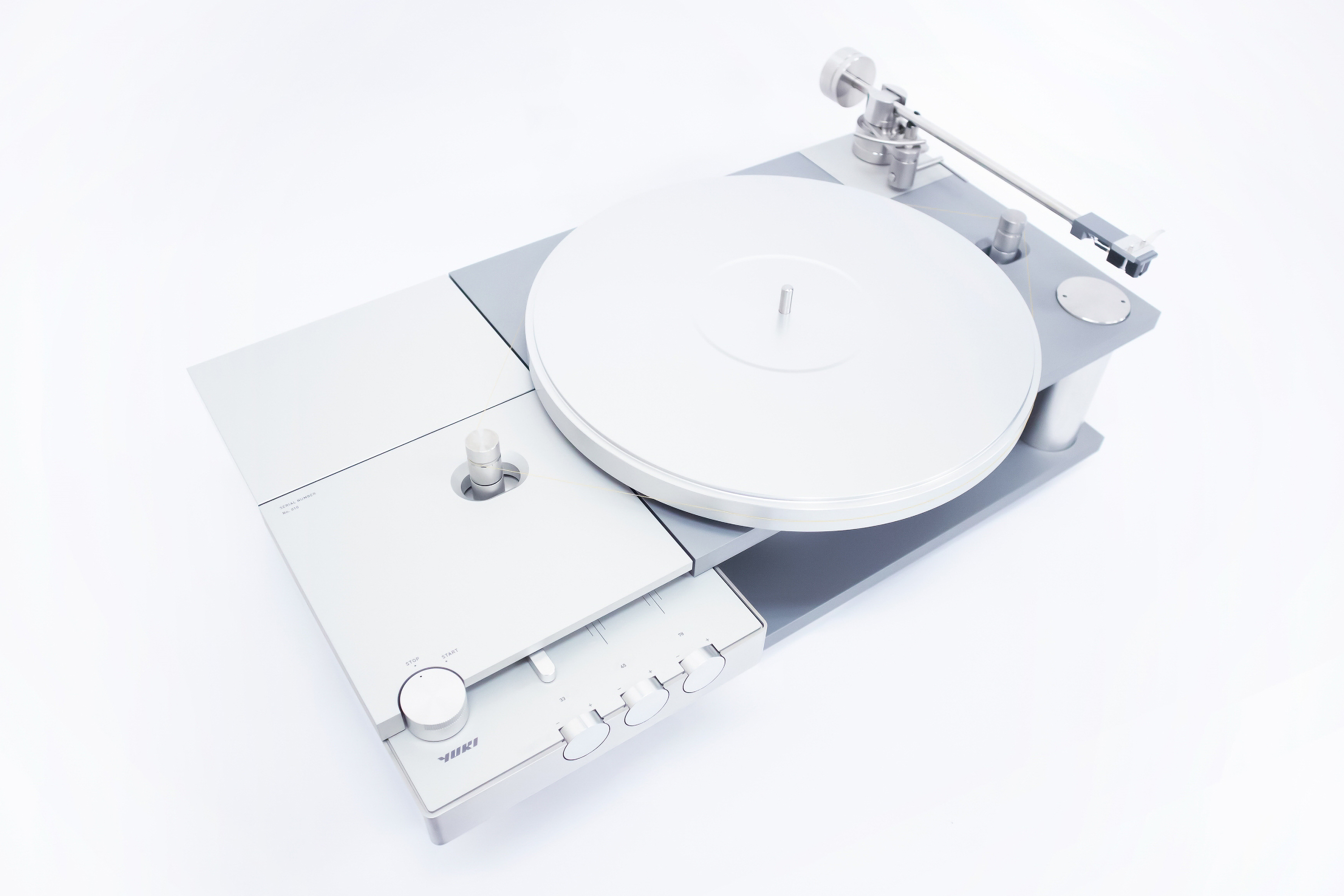
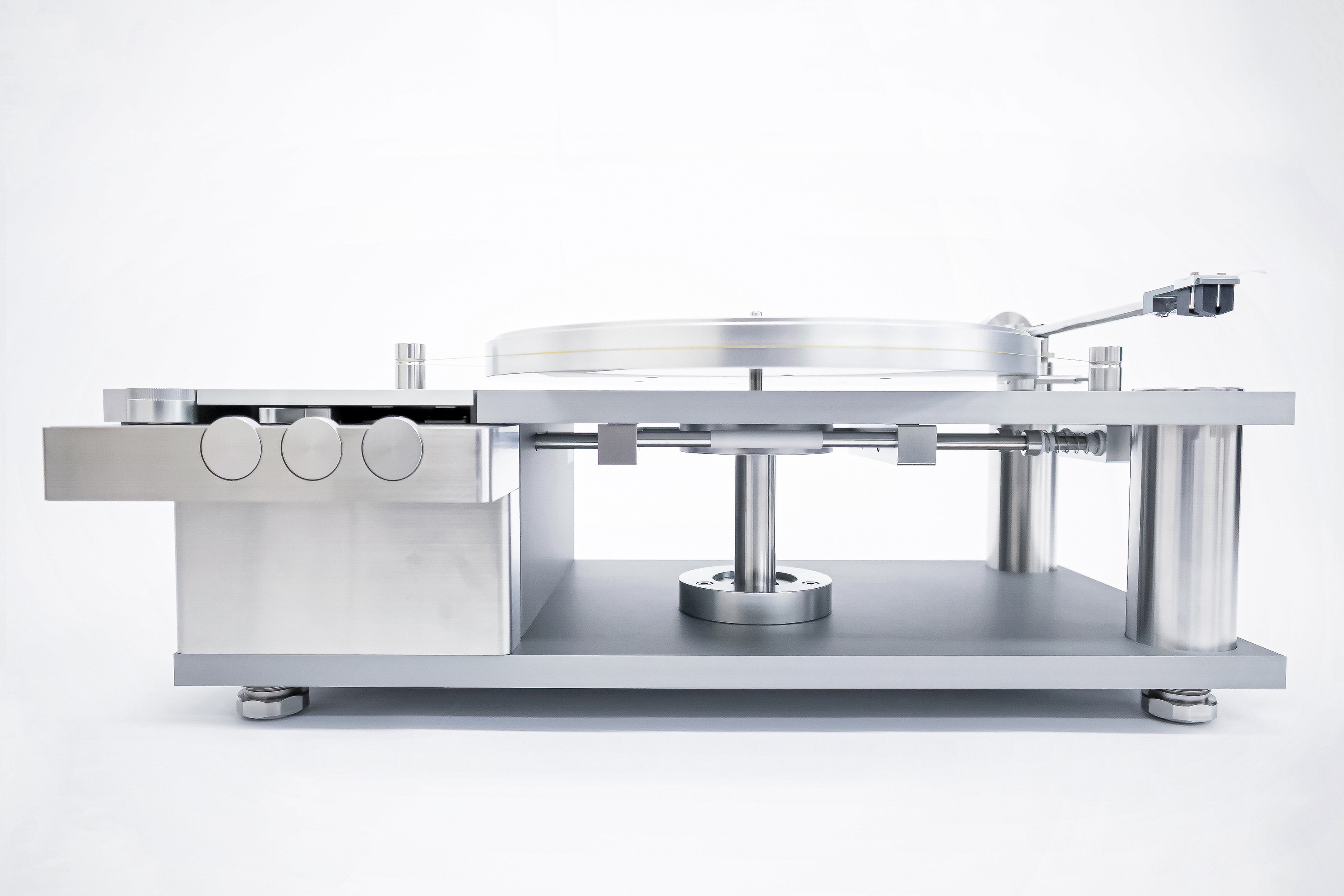
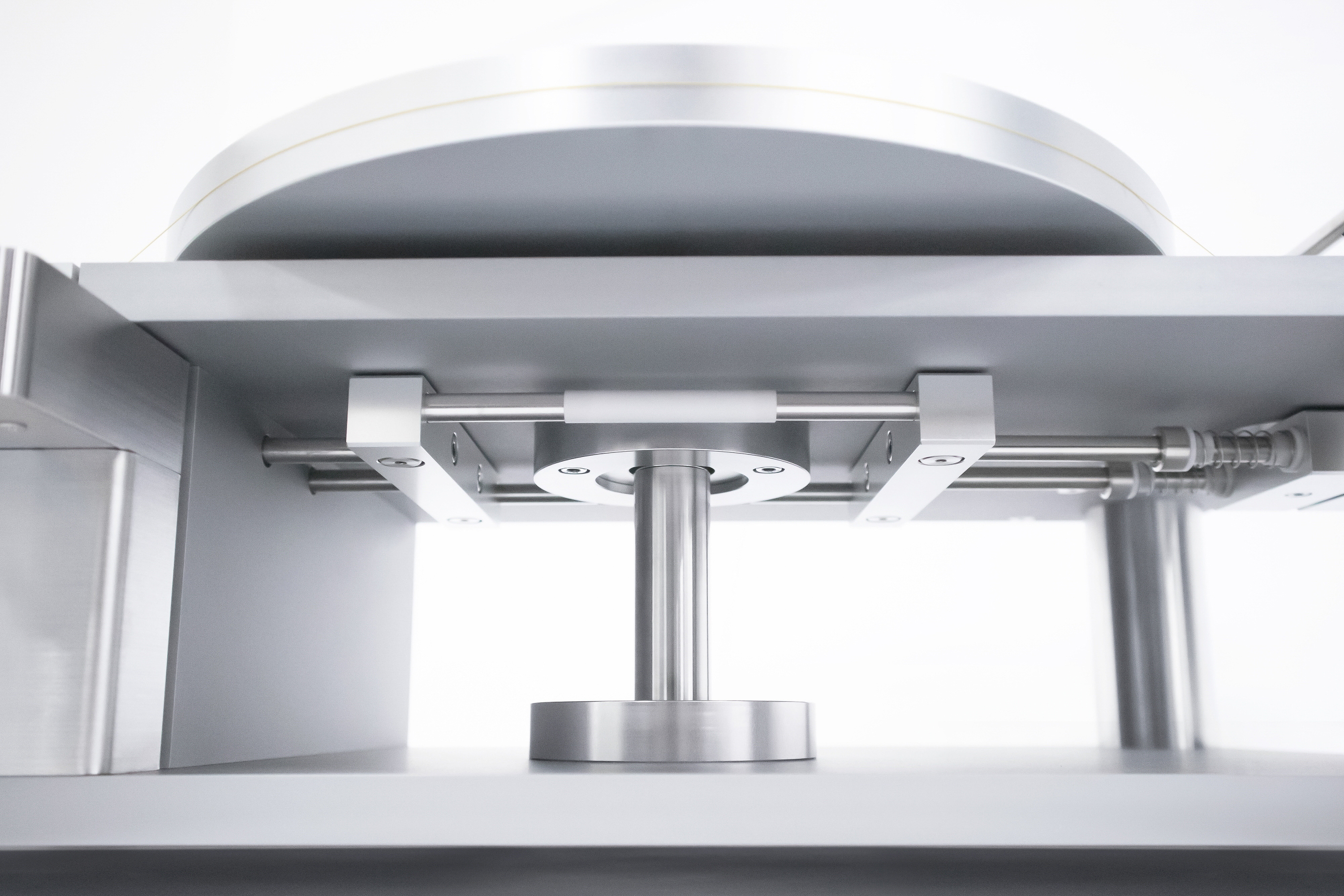
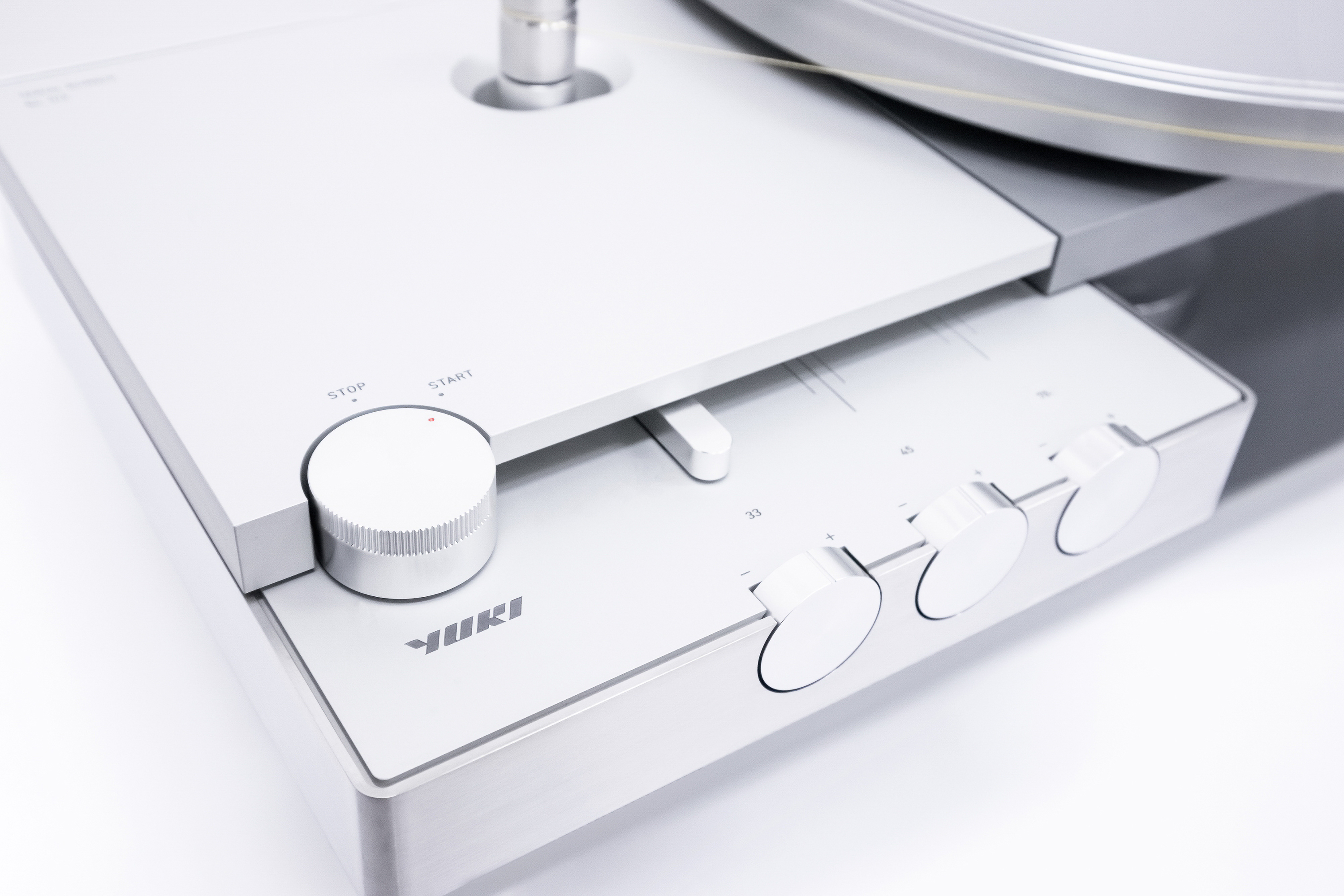
Napęd nieelastyczna nić teflonowa
Silnik bezrdzeniowy, bezszczotkowy silnik DC z enkoderem
Sterowanie elektroniczne, PLL / sprzężenie zwrotne
Prędkości 33⅓ / 45 / 78 obr./min
Łożysko talerza magnetyczne, bezstykowe, radialne
Talerz Aluminium
Średnica talerza 310 mm
Grubość talerza 20 mm
Waga talerza ok. 4 kg
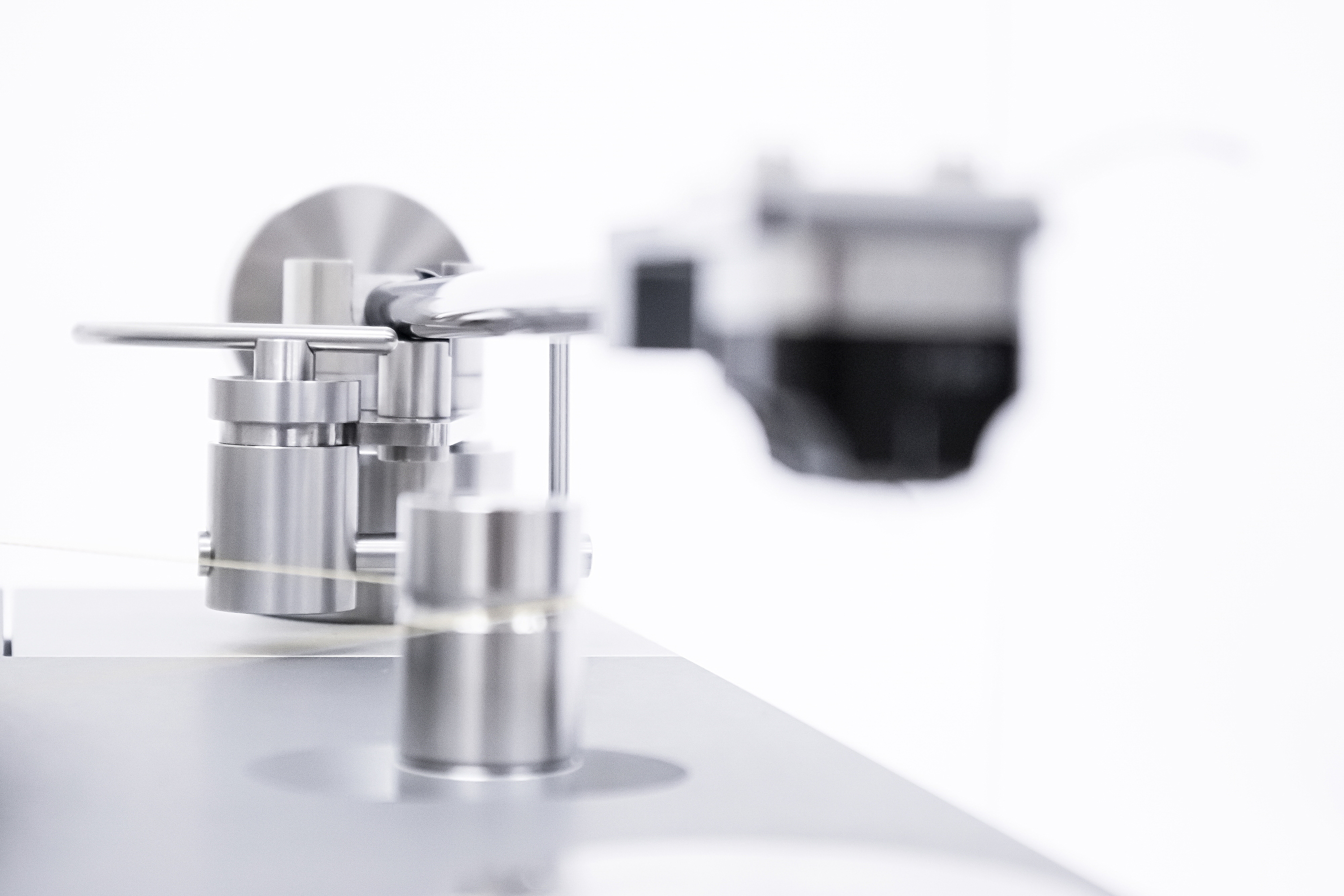
Ramię statycznie wyważone, proste
Długość ramienia 240 mm
Overhang - 15 mm
Regulacja wysokości ramienia 0-10 mm
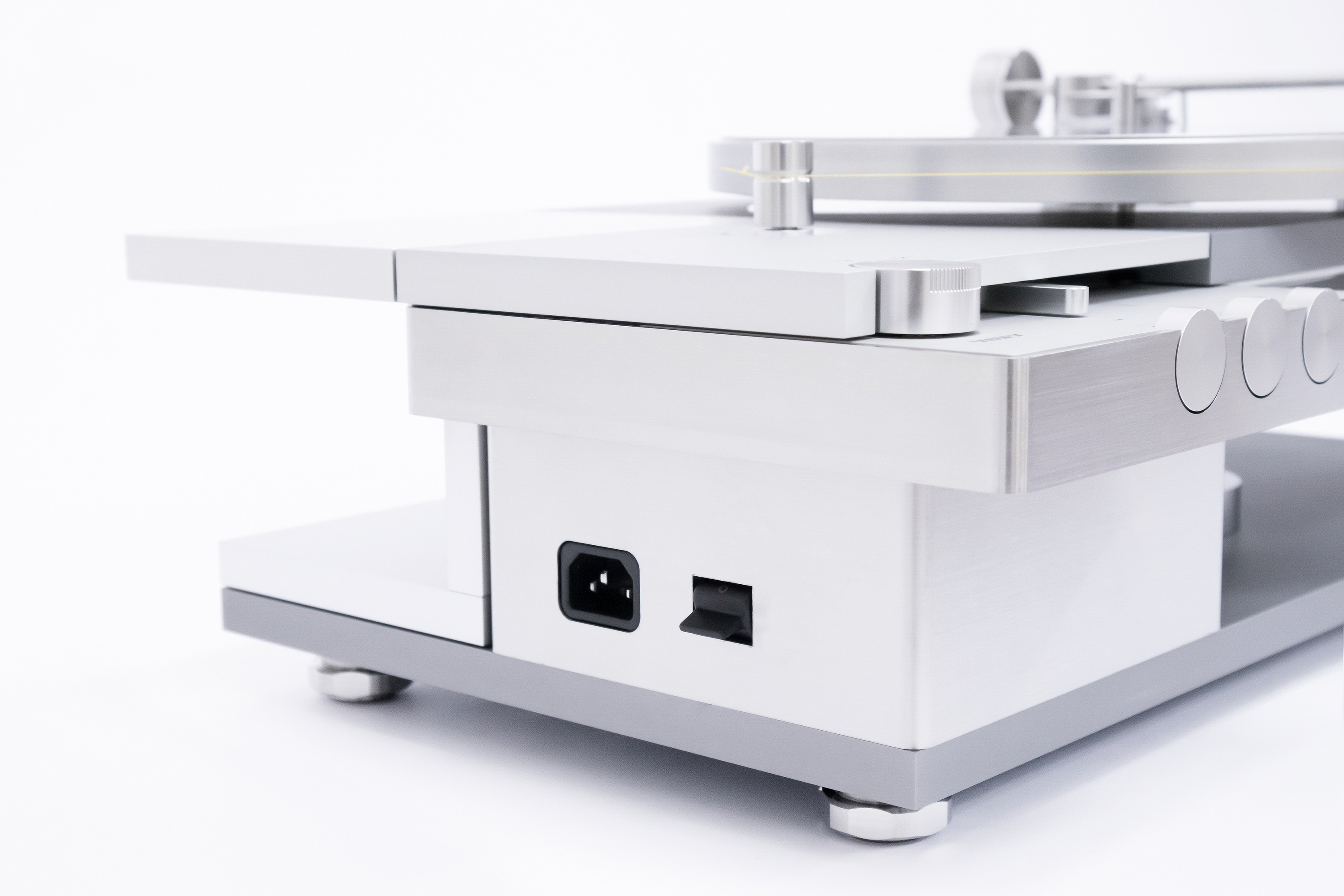
Wyjście RCA
Wymiary (szer. x wys. x gł.) 560 × 213 × 352 mm
Waga ok 29,5 kg
Zasilanie AC 100–240 V, 50/60 Hz
Yuki AP-01
Recenzje
Recenzja Yuki AP-01 w The Absolute Sound
In my review of the Masterline 7 phono preamp (Issue 355), I used an AudioNautes reissue of the BIS release La Spagna (AN-1401). After turning in the review, I ordered off Discogs an original pressing (BIS LP 163-164). I used the AP-01 to compare the two pressings. Wow. God bless the late Stan Ricker, but though he claimed no EQ and I believe him, either his rig adds bottom end elsewhere or the original cuts it, because the original is far more open and transparent and has far greater attack precision and longer sustain on high-frequency percussive transients. And the bottom end on the one track containing a small Spanish drum that excites the recording space is far more natural on the original. It’s bloated on the reissue. Glad I made the small investment.
This comparison demonstrated the table’s overall neutrality, its resolving power, and its exceptionally low noise floor. Listening through the entire double LP brought the kind of listening pleasure Nagamatsu Jun surely intended. It brought me into the space.
Set against a jet-black backdrop, Rostropovich’s cello and Britten’s piano were reproduced with no audible distortion artifacts. With precisely drawn pizzicato plucks, the enticing sheen from Rosty’s cello, and lingering wow-free sustains massaged all pleasure zones throughout the two sides in ways, I’m here to tell you, no digits deliver, and it did so, despite the underhang, minus any audible analog blemishes or less than epoxy-solid imaging.
Before packing it in and declaring another review complete, I had to check out this table’s bass capabilities, so out came an old audiophile warhorse I’ve not played for decades. Don’t ask why I chose Michael Murray Playing The Great Organ in the Methuen Memorial Music Hall (Telarc 5035 DD-2), a direct-to-disc record with measured response down to 16Hz, but I did. The Yuki sounded firm, full, clean, and in complete control all the way down. When I repeated on the OMA K3/SAT CF1-12 arm combo, there was a difference in brute-force scale and wall-shaking extension, so yes, the big gun delivered the bang.
This double decker is surely one of the coolest pieces of analog kit. It doesn’t take up a great deal of space, and the top platform offers real estate for accessories. The build-quality and ease and pleasure of use are off the visual and tactile charts. Even the peripheral ring is easy to use thanks to the precision machining.
I’m overwhelmed by the underhung tonearm and still processing how and why it sounds so convincing and full of life despite the added distortion, but it’s no doubt like why tubes entice (as long as the distortion is even-order and held to a dull 2-3% roar). WallyTools’ J.R. Boisclair posits that the lack of elastomer stress is key to the arm’s sonic performance, despite the added LTE. I now understand why some designers make the underhung choice.
I’m also overwhelmed by the unusual background quiet. I’m used to quiet backgrounds from top-tier turntables. The AP-01 is in the top tier of the top tier of quiet.
Link do recenzji: Yuki AP-01 – The Absolute Sound
Recenzja Yuki AP-01 w HiFiReport
Moving to more energetic music, I selected the “Whiplash” movie soundtrack, featuring big band jazz performances. The opening of the title track “Whiplash” is a powerful blast of brass, met by the responsive interplay of double bass and piano. The AP-01, paired with the “Hana” cartridge, rendered the brass instruments with vivid clarity – bright but not strident. The infectious swing of the jazz rhythm was palpable, and the turntable conveyed the expansive soundstage of the big band. The complex harmonies of the brass section were rich, full of character and dynamism. Given the film’s focus on drummers, the impact and articulation of the jazz drums were particularly impressive. I was compelled to continue to the next track, “Fletcher’s Song in Club,” a lyrical and mellow Bossa Nova, which provided a striking contrast to the fiery intensity of “Whiplash.”
To evaluate a more audiophile-grade recording, I selected Katja Werker’s album “Contact Myself 2.0,” a live recording from the renowned Stockfisch Records studio in Germany. Listening to “Yes,” the opening track on side A, the arpeggiated chords of two acoustic guitars intertwined beautifully. As Katja Werker began to sing, the distinct notes of the double bass emerged centrally, providing a solid foundation for the full-bodied vocals and overall sonic image. The AP-01 painted a beautiful soundstage. Stockfisch recordings are known for their generous bass response, and the AP-01 faithfully reproduced this characteristic of the recording.
Returning to classical music, I chose Jacqueline du Pré and Daniel Barenboim’s rendition of “Haydn Cello Concerto No. 1.” In the spirited theme of the first movement, the AP-01 conveyed the joyous and luminous quality of the orchestral tutti. The string sections articulated the musical theme with verve, and within the expansive soundstage, there was a palpable density of analog warmth. When the cello solo commenced, the analog richness presented by the AP-01 became even more pronounced. Du Pré’s cello solo was not only emotionally resonant, but the original recording also preserved subtle details like Du Pré’s breathing and even the faint sounds of her left hand contacting the cello fingerboard, enhancing the recording’s sense of immediacy and life. The AP-01 effortlessly reproduced these nuanced details. The natural extension of the musical lines, combined with the wealth of recorded detail, made the cello solo even more captivating and uplifting.
Lastly, I selected Anne-Sophie Mutter and John Williams’ “Across the Stars,” listening to the theme from “Harry Potter and the Sorcerer’s Stone.” The delicate, chime-like sounds of the celesta resonated throughout the soundstage, ethereal and floating. The violin solo was focused in the center of the soundstage, conveying the acoustic spaciousness of the recording venue while simultaneously establishing the violin as the central focus. The AP-01 effortlessly communicated the recording’s spatial qualities. When the violin solo subsided and the orchestra took over the thematic material, with the violin adding ornate flourishes, the AP-01 beautifully and vividly rendered the layers of each instrumental section. Being a crossover classical recording, the low frequencies are subtly enhanced. The AP-01 did not overlook this, reproducing the bass notes with enhanced fullness and dynamic energy. Listening to “Across the Stars” in this manner was a genuine pleasure.
Link do recenzji: Yuki AP-01 – HiFiReport
Recenzja Yuki AP-01 w Haute Fidelite
L’attraction de la nouveauté est toujours excitante, mais il est évident que l’AP-01 distille quelque chose de rare à l’écoute. Cette supériorité est difficile à bien décrire, car c’est un ensemble de qualités intimement liées. Avant tout, c’est la sensation de ne pas écouter de la hi-fi. La présence immanente des musiciens est perceptible presque par leur souffle et leur mouvement dans l’espace, dans un continuum temporel où se singularisent la signature des voix et des instruments acoustiques. La stature incomparable de l’interprète fait qu’il est là devant vous, tout simplement.
Dynamique l’aplomb est sidérant, comme rarement une source est capable de le faire. Cette platine redéfinit la notion de grave et d’extrême grave, à la fois d’une présence palpable, mais aussi léger et aérien quand il le faut, changeant au gré des prises de son, qui sont d’ailleurs immédiatement identifiables.
L’AP-01 a été conçue pour extraire méticuleusement les infimes informations gravées dans le sillon. Cette faculté permet de restituer une scène sonore de dimension réelle, à laquelle on croit totalement, comme sur le rare vinyle Le Nozze di Figaro de Mozart par Teodor Currentzis, enregistré par l’excellent Nicolas Bartholomée, qui recherche le plus de naturel possible dans le rendu des timbres.
Ce que la platine retranscrit à merveille par sa richesse tonale, mais également par un splendide étalement des pupitres, qui vivent dans un espace de dimension plausible, changeant selon les prises, mais génial quand l’enregistrement est réalisé avec maestria.
Sur Brexit Music de Baptiste Trotignon, le piano impose sa présence naturelle, percussive et aussi chaleureuse, alors que les cymbales de Greg Hutchinson sont admirables de vérité et de finesse. C’est un privilège permis seulement aux ensembles analogiques de rang noble. L’AP-01 en bonne compagnie donne vraiment envie de redécouvrir toute sa collection de 33 tours.
Or cette AP-01 est vraiment précieuse, moins par son apparence parfaite que par sa restitution musicale exceptionnelle, grandeur nature, incarnant profondément la musique. La sensation indescriptible qu’on y est vraiment s’impose, presque sans obstacle entre la reproduction et les musiciens. C’est rare de la part d’un constructeur pour qui c’est une première, mais qui dépoussière les idées reçues avec audace. Une nouvelle référence.
Link do recenzji: Yuki AP-01 – Haute Fidelite
Recenzja Yuki AP-01 w hifitest.de
Rabih Abou-Khalils ägyptische Laute klingt einmalig zart und feingliedrig, ihr Ton schwebt fast schwerelos im Raum. Die begleitenden Instrumente erden das Geschehen bestens, es klingt lebendig und engagiert – große Klasse. Steely Dan’s „Hey Nineteen“ geht ebenso beschwingt und rhythmisch bestens akzentuiert zur Sache. Einer Empfehlung des Herstellers folgend, habe ich im Anschluss ein schlichtes Denon DL-103 montiert, was zumindest auf dem Papier deutlich besser für den schweren Arm geeignet sein sollte. In Sachen Wucht kommt der Klassiker dem DS Audio hier tatsächlich erstaunlich nahe, es hat aber nicht den Tiefgang und die Zeichnung im Bass. Insgesamt klingt das DL-103 hier aber sehr ausgewogen und stimmig und ich bin mir ziemlich sicher, dass es beim „Voicing“ des Gerätes zum Einsatz kam. Insgesamt zeigt der Yuki deutlich, dass auch Konzepte abseits der Lehrbuchmeinungen ausgezeichnet funktionieren können – schade nur, dass diese Erfahrung ausgesprochen gut betuchten Interessenten vorbehalten bleiben wird.
Dieses japanische Prachtstück dürfte eines der gelungensten Erstlingswerke der HiFi-Geschichte sein, der AP-01 klingt überragend frei, fein und leicht.
Link do recenzji: Yuki AP-01 – hifitest.de
Yuki AP-01
Nagrody
Yuki AP-01
Galeria
Zobacz także

Yuki
Cennik
Cennik Yuki
Link: Cennik Yuki
Yuki
Dealerzy
Dealerzy Yuki
Link: Dealerzy Yuki