
Skyanalog P-1G
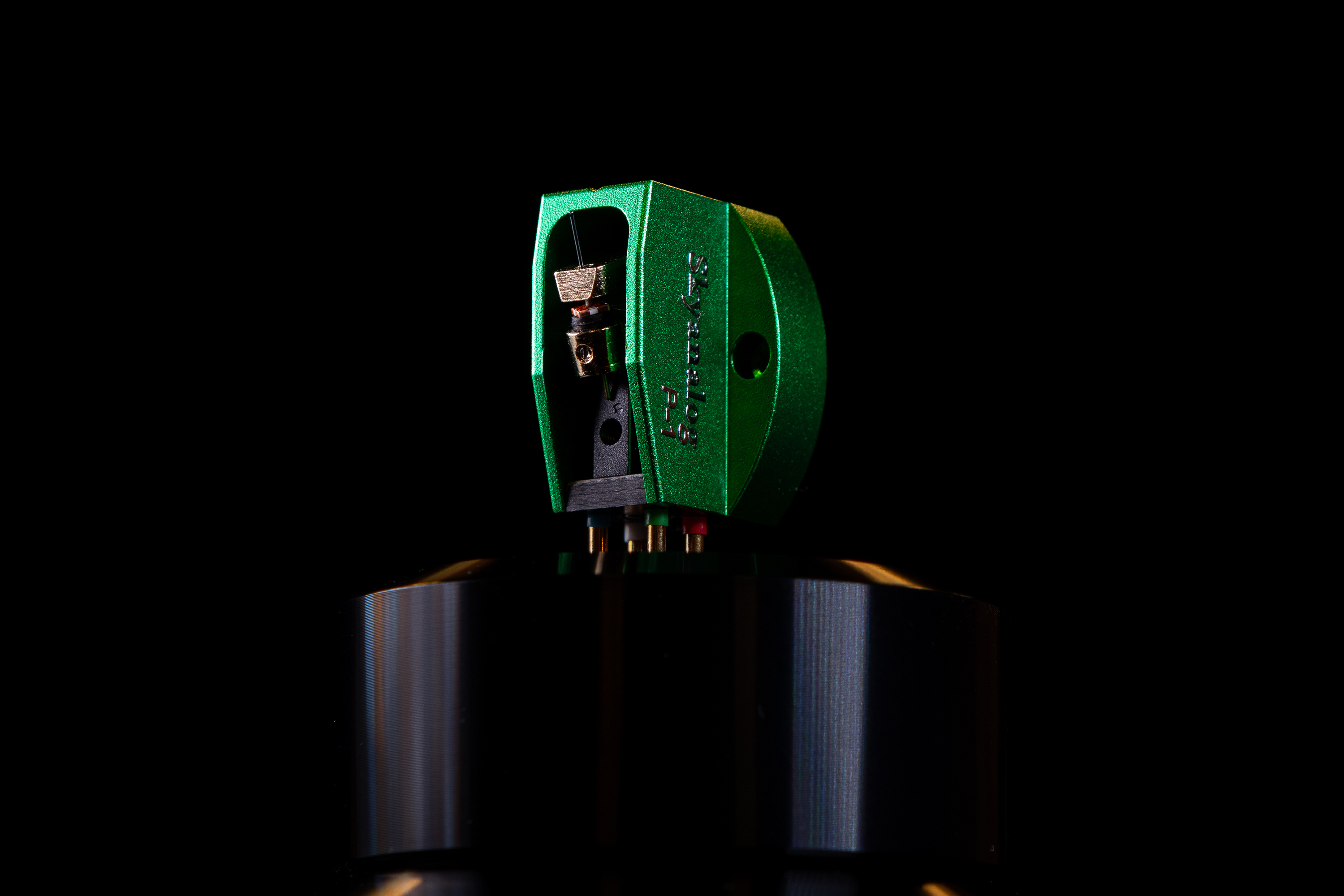
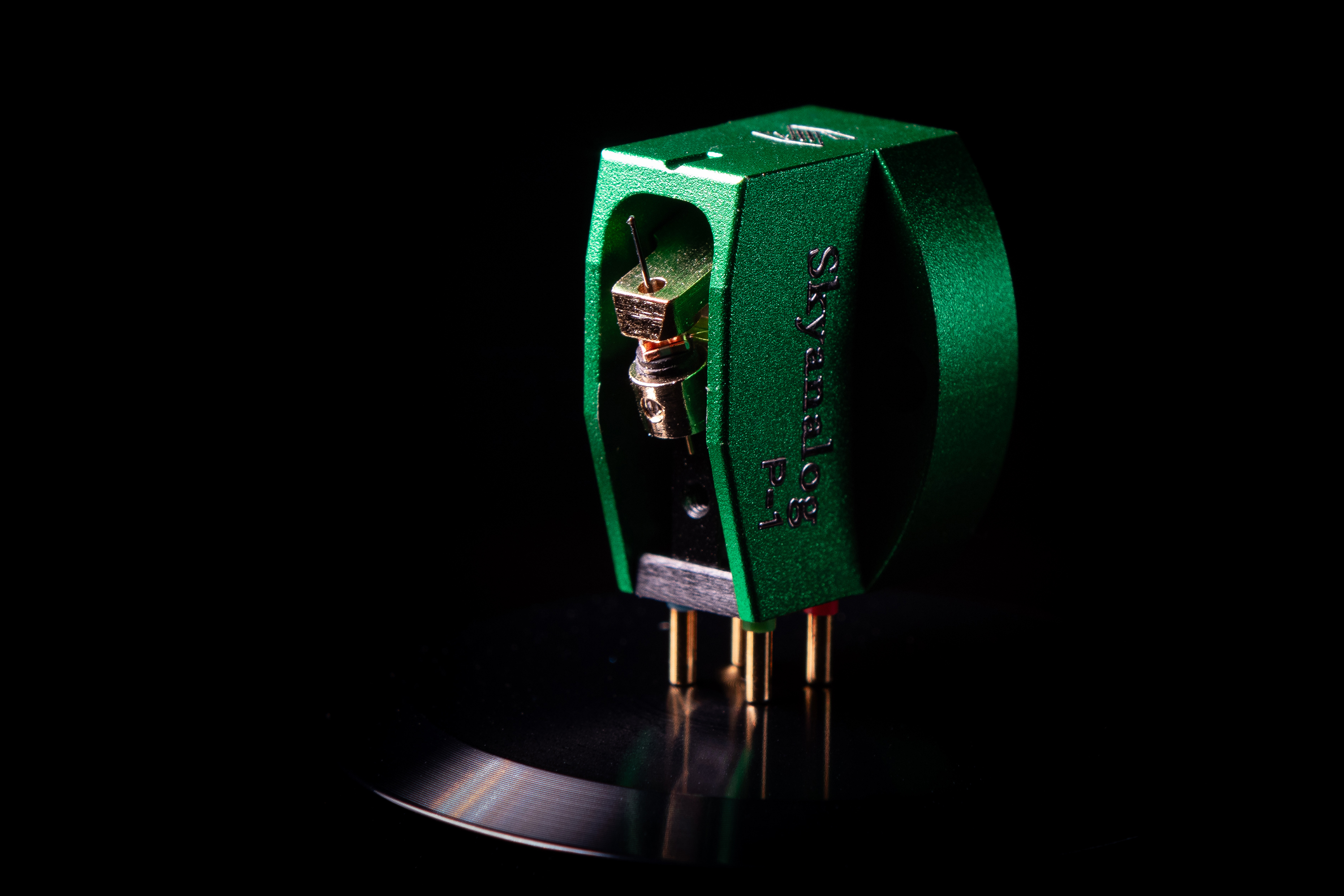
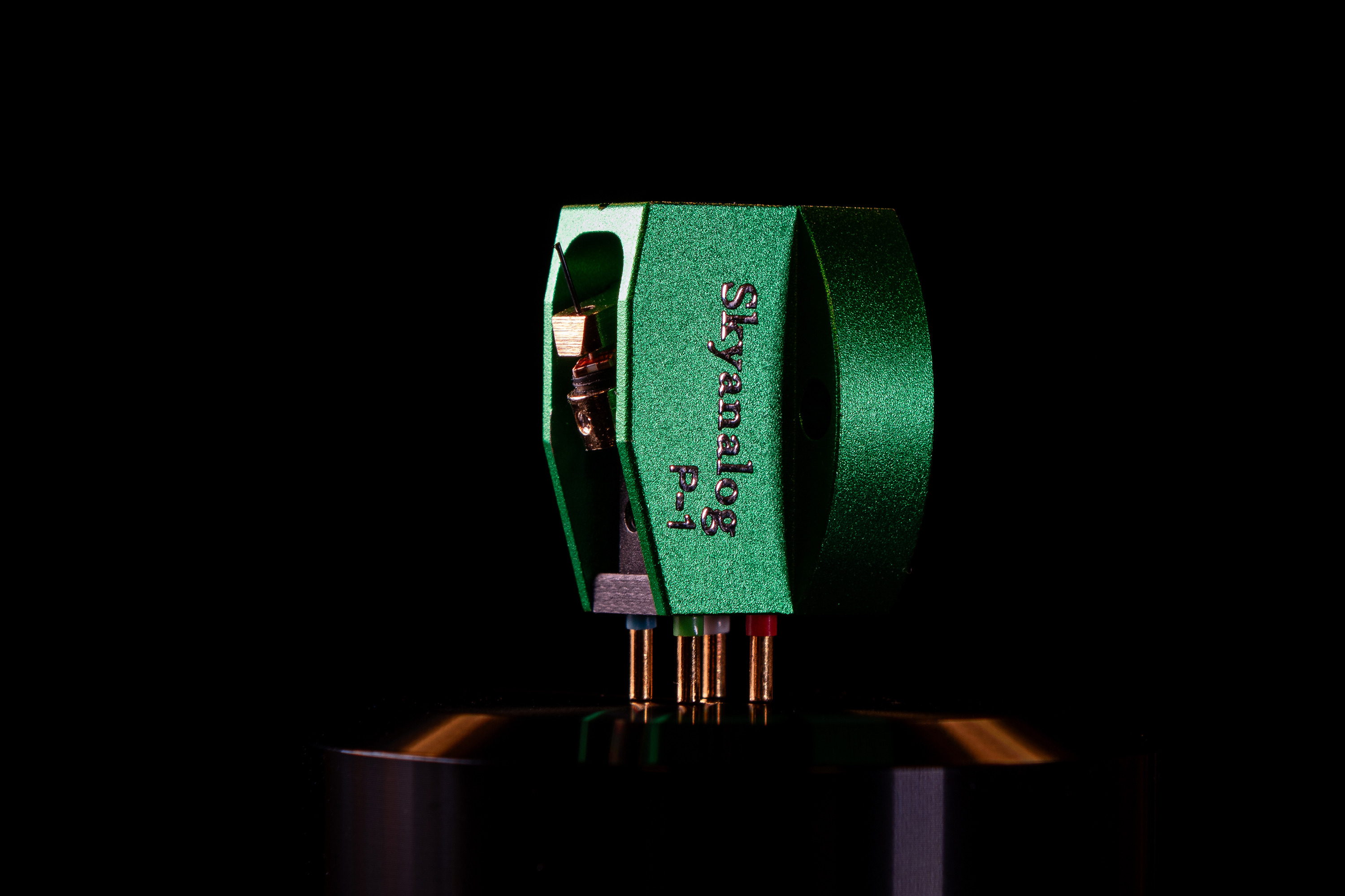
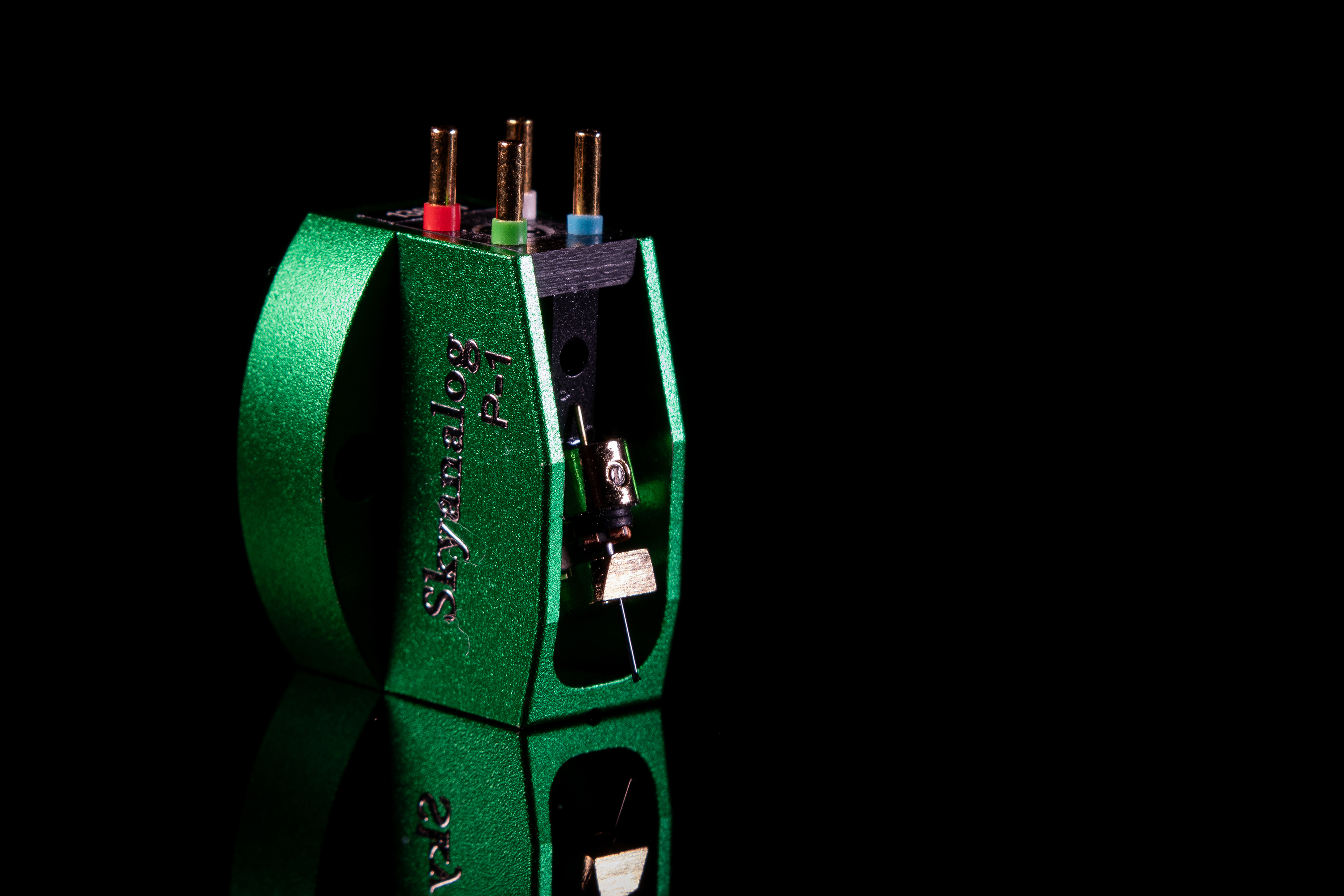
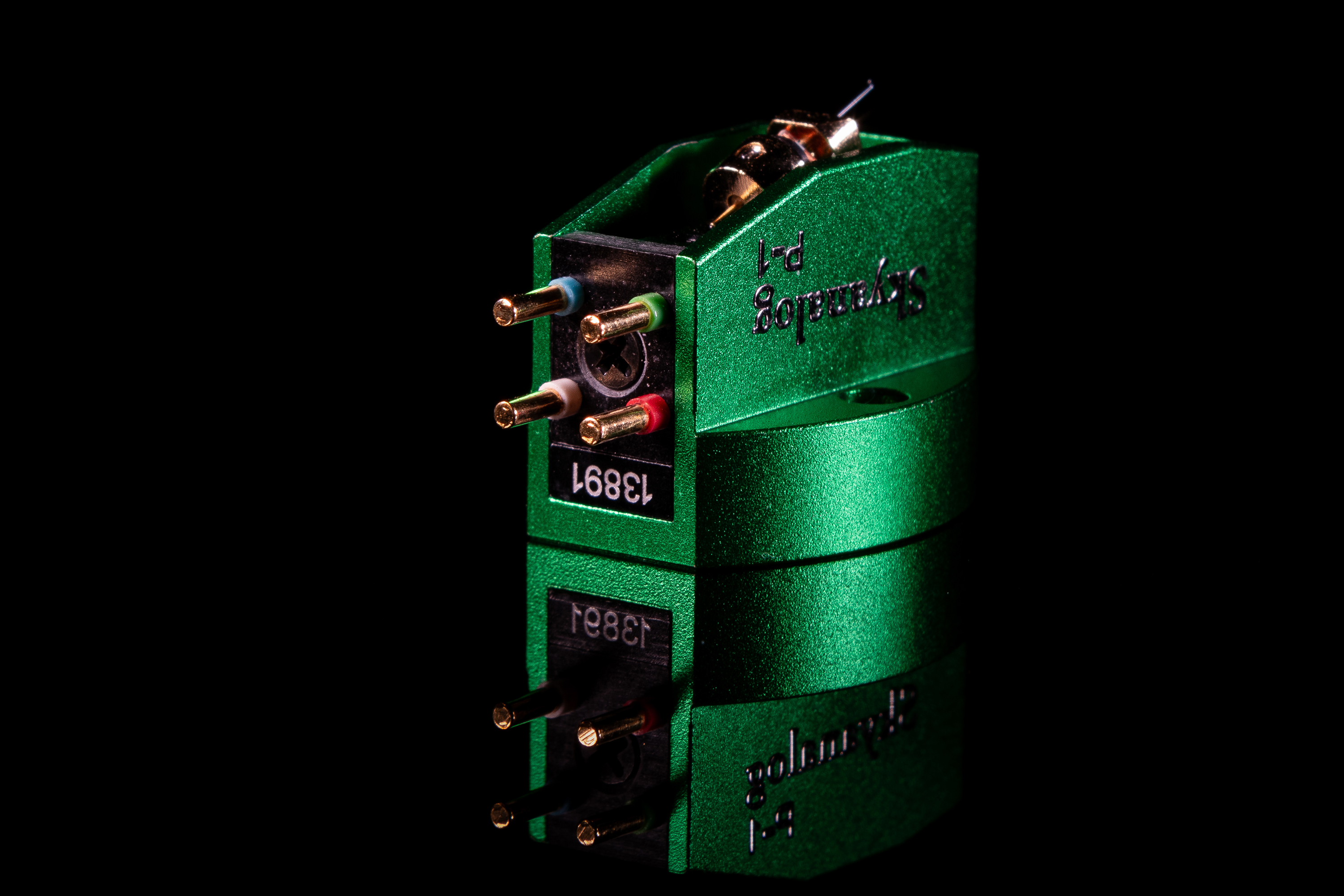
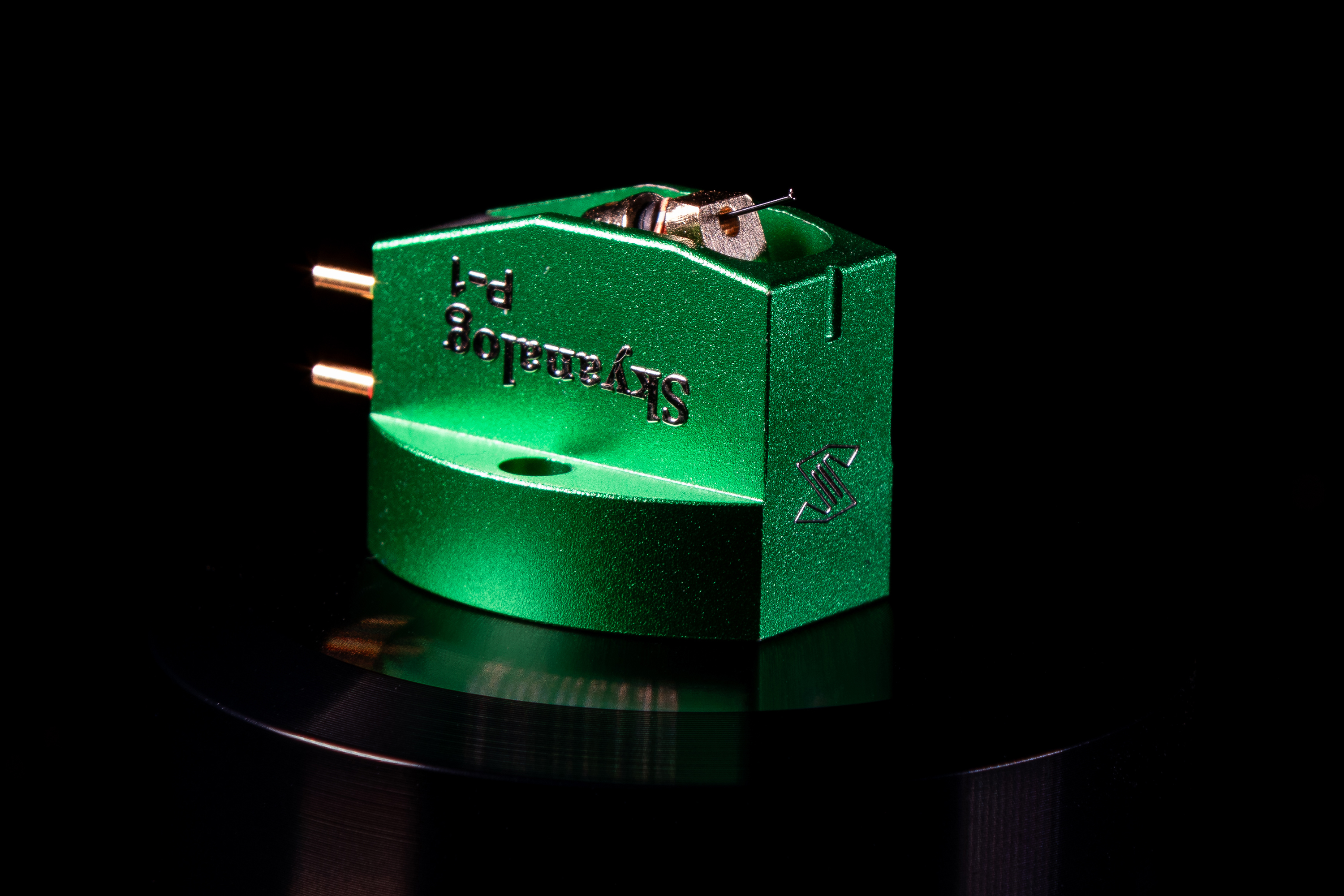
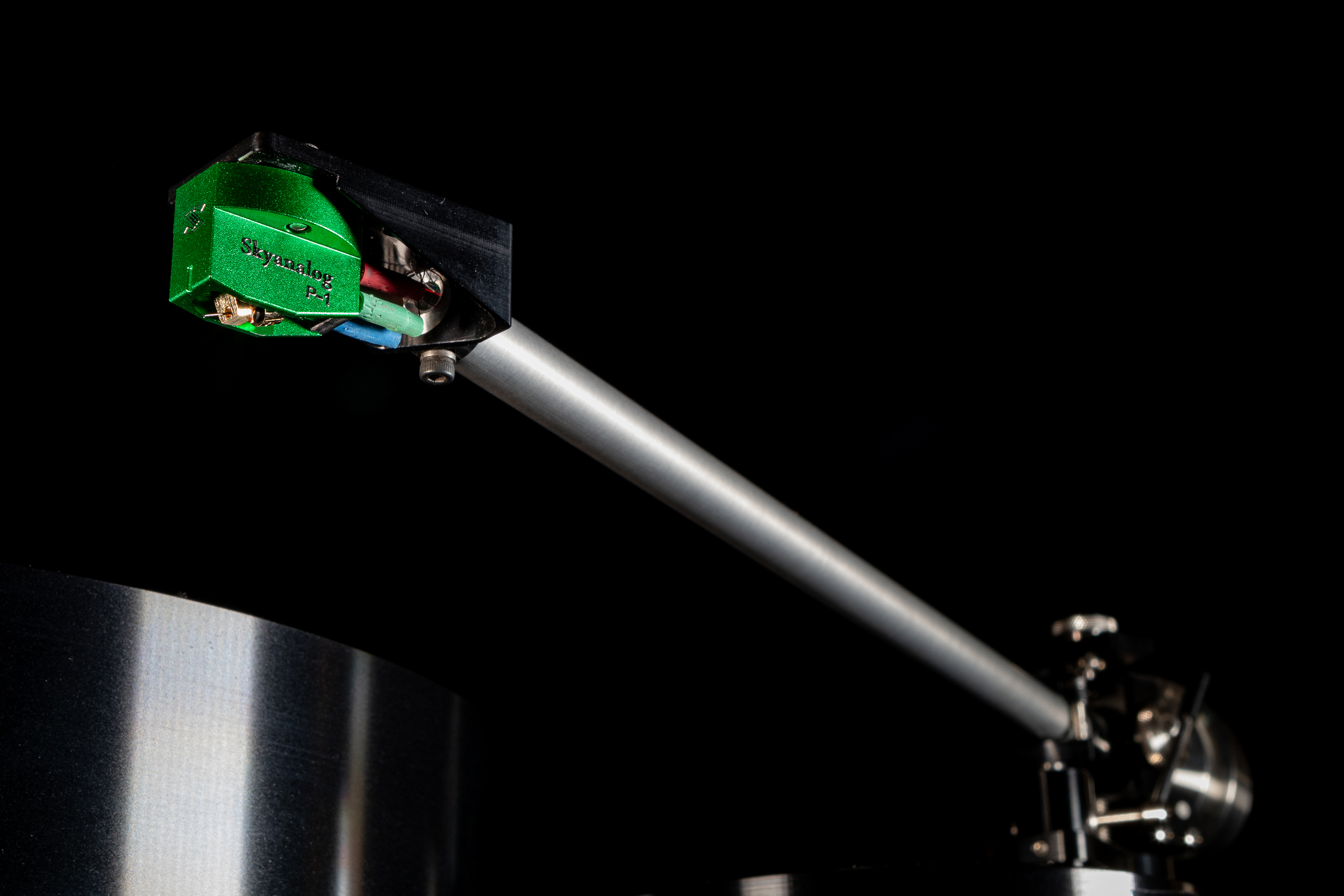
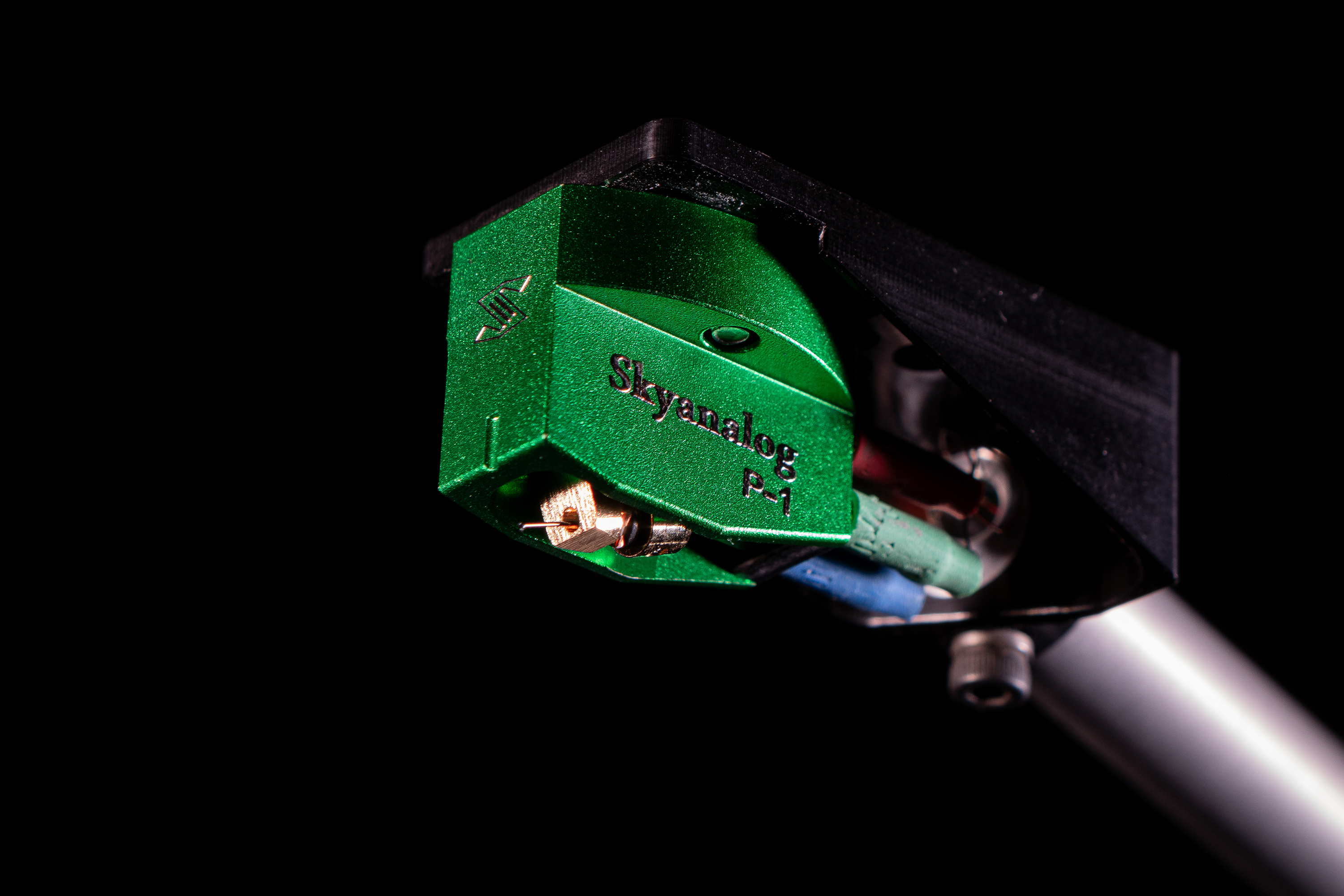
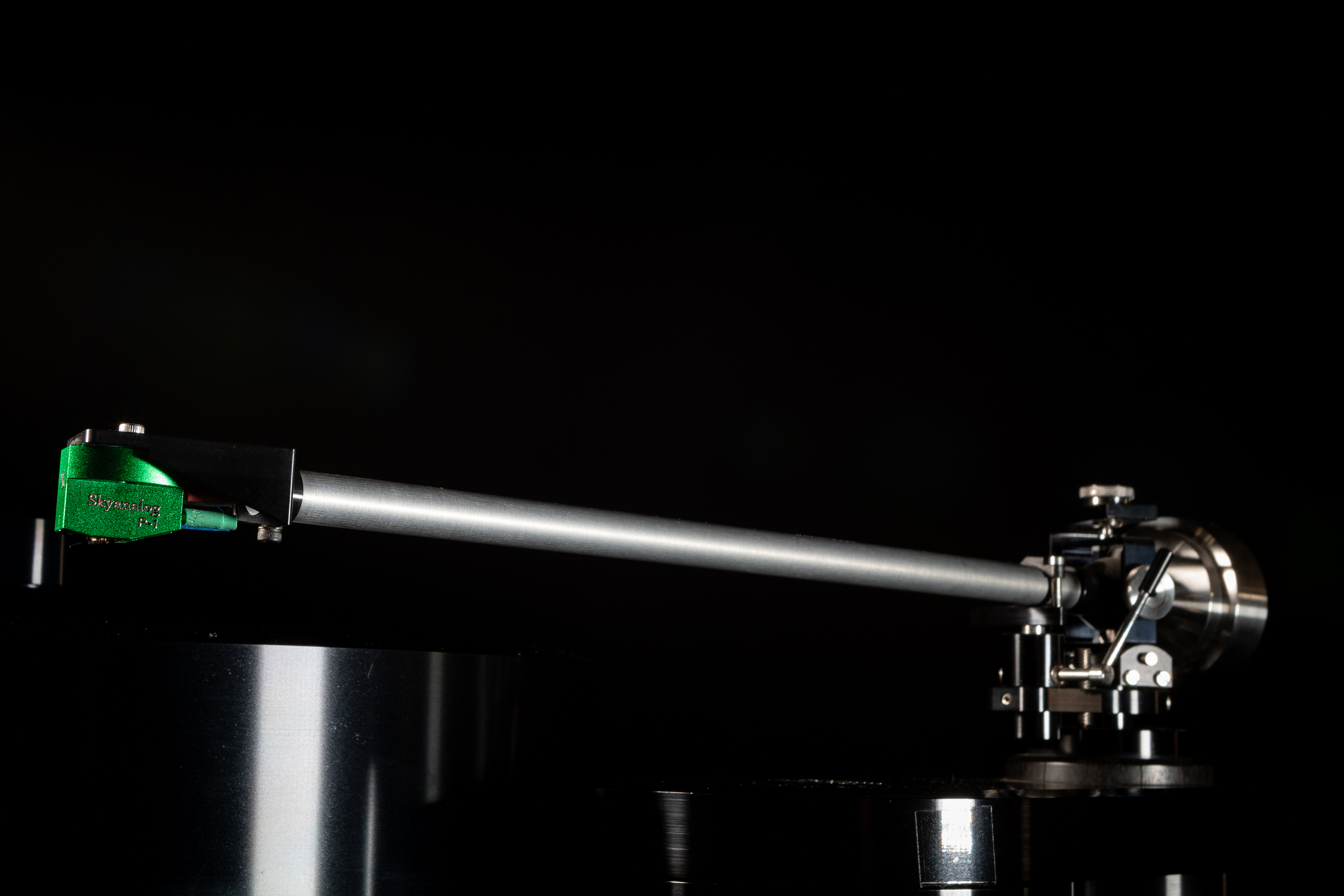
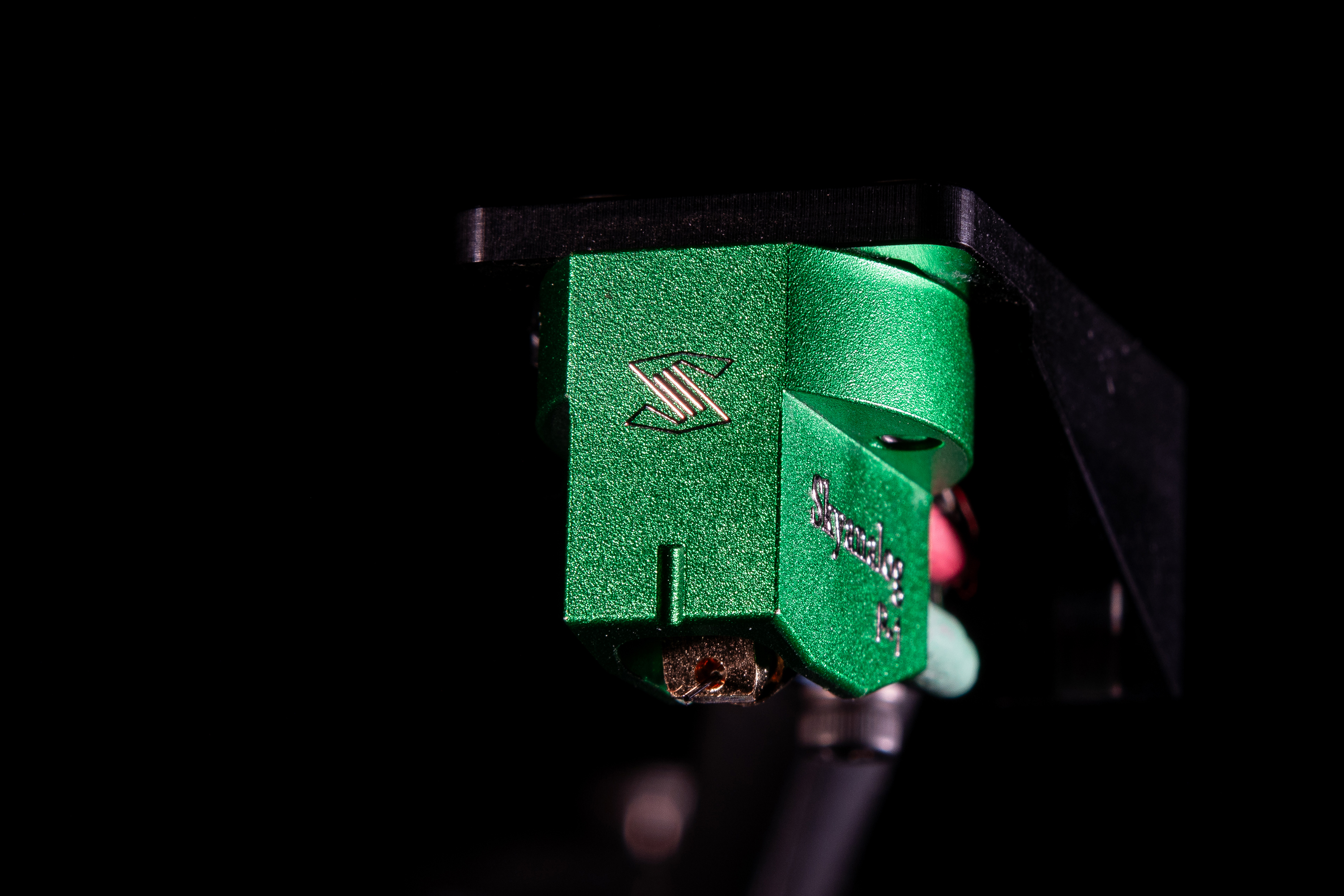
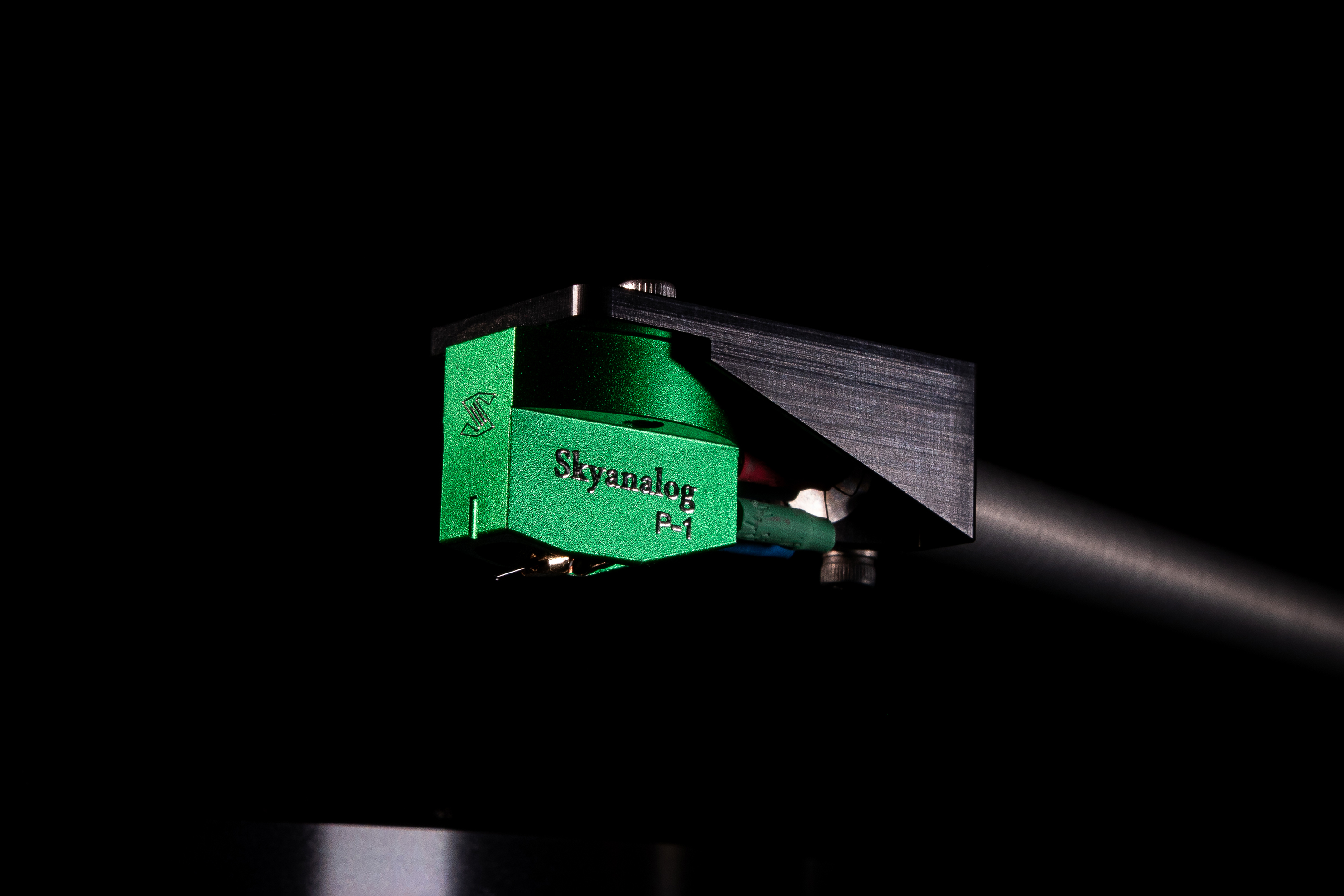
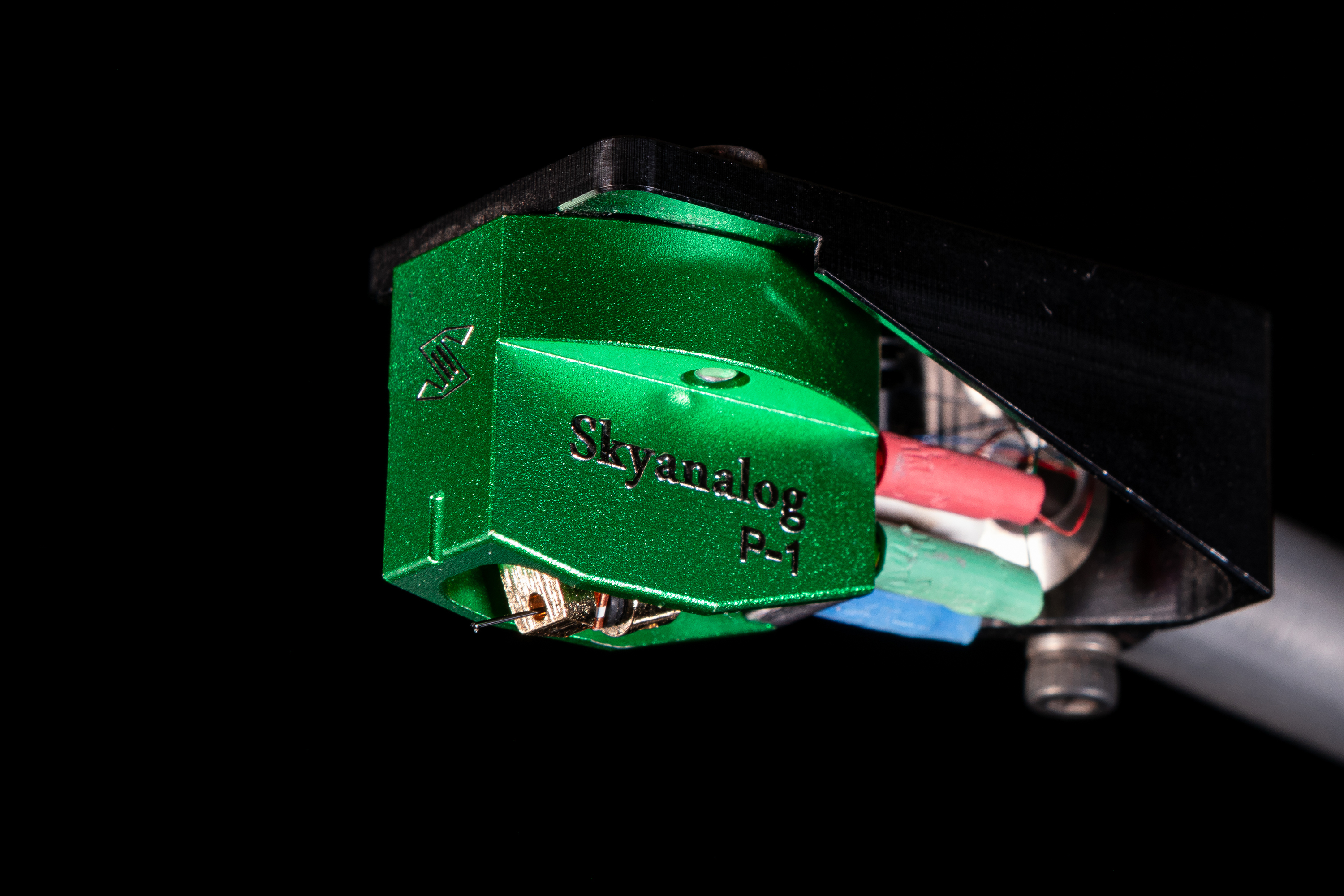
Dane techniczne - Cechy fizyczne
Wspornik Boronowy
Szlif eliptyczny
Promień igły r/R=5/15Um
VTA 20 stopni
Cewka czyste żelazo ułożone symetrycznie kwadratowo
Waga 10 gramów
Skyanalog P-1G
Dane techniczne - Właściwości elektryczne
Napięcie 0,35mV
Rezystancja wewnętrzna 5 Ohm
Odpowiedź częstotliwościowa 20-25000 Hz
Separacja międzykanałowa 30dB, przy 1 Khz
Równowaga kanałów 1 dB
Skyanalog P-1G
Dane techniczne - Właściwości dynamiczne
Zdolność śledzenia 70uM
Podatność(dynamiczna) 12uM/mN
Rekomendowane obciążenie 100-470 Ohms
Rekomendowany nacisk 1.1 do 1.5 gramów
Optymalna siła nacisku 1.35 grama
Rekomendowana masa efektywna ramienia średnia
Optymalna temperatura pracy 23 stopnie C
Okres docierania 30 godzin
Skyanalog P-1G
Recenzje
Recenzja Skyanalog P-1G w Hi-Fi i Muzyka
P-1G to mistrz rytmu i instruktor tańca. Sala ożywia się i młodnieje. Stopy bezwiednie wystukują rytm. Dźwięki narastają szybko, a jednak zachowują kontrolę i porządek. W muzykę nie wkrada się bałagan ani przypadkowość. Wkładka łączy najlepsze cechy analogowego brzmienia. Określiłbym jej styl jako casualowy, oddający atmosferę swobody i dopuszczalnego luzu, a przy tym dbałość o jakość zestawienia, o umiejętne i z klasą dopasowanie elementów. Bo ten najniższej jakości mógłby wpłynąć na ocenę ogólną, tymczasem nic takiego się nie dzieje. W tej konwencji nie ma głębokiej czerni, więc kontrasty zostają lekko złagodzone. Barwy są wyraźne, lecz nie jaskrawe. Lekką powściągliwość czy przygaszenie w oddaniu harmonicznych można wychwycić jedynie w porównaniu do modeli G i to chyba główna różnica.
Rozciągniecie pasma jest podobne. Niskie tony dochodzą jak z czeluści pod podłogą. Odczuwa się je ciałem, a jednak nie są przeciągane. Nie wzbudzają dudnienia, nie powodują przesytu. Są odmierzone akurat. Elektronika zyskuje szczególną energię i przyjemną masę, a jej bas wnosi atrakcyjną w odsłuchu konsystencję i prężność. Podobnie jak dźwięki gitary basowej i stopa perkusji.
Średnica zachowuje to analogowe wypełnienie i czar, które sprawiają, że winyl nie ustępuje pola.
Dobrze się słucha fortepianu, smyczków i głosu kontratenora. Dźwięki wiolonczeli są śpiewne i nieco mniej pogrubione niż w przypadku P-1M. Wysokie tony – lekko zaokrąglone, raczej z gatunku delikatniejszych – dekorują brzmienie, zamiast wprawiać w zakłopotanie szelestami lub trzaskami. Interesujący efekt przynosi odsłuch płyty 45 RPM, kiedy wkładka reaguje pewnym rozbudzeniem wysokich tonów. Generalnie to P1-G lubi pograć głośniej. Lubi też muzykę o złożonej dynamice, czym nieco się odróżnia od P-1M.
Skyanalog hoduje niezwykle barwne stadko. Dawno nie słuchałem z takim zaciekawieniem i zaangażowaniem. Każda z ocenianych wkładek ma swoje zalety i w sumie żadna nie ma wad. Jako że w obu swoich gramofonach zamontowałem po dwa ramiona, to prawdopodobnie wybrałbym zestaw dwóch modeli. Skyanalog G-1 MKII pasuje mi brzmieniowo jako przetwornik główny, do degustacji i delektowania się, zaś P-1M jako codzienny i do bardziej zużytych płyt. W przypadku gramofonu z jednym ramieniem wybór uzależniłbym od budżetu i preferencji. Skyanalog P-1G w cenie 2500 zł to wtedy wyjątkowo mocna propozycja. Nie brak jej muzykalności ani barw, a minimalne niedomogi w cyzelowaniu mikrodynamiki nadrabia energią i żywiołowością.
Skyanalog G-1 MKII idzie o krok dalej w dziedzinie wyrafinowania, do którego dokłada mistrzostwo w oddaniu akustyki, literalnie warte drugie tyle. Skyanalog G-2 MKII to już elita, elegancko wystrojona, z przynależnymi jej zaszczytami i blaskiem, ale też wymaganiami dyscypliny i stateczności, jednak bez popadania w manieryzm. Widać także różnice pomiędzy seriami P i G. Wyższa G to postęp w kreowaniu przestrzeni i pełni wybrzmień. Wybór jest duży, więc nie wahajcie się z niego korzystać.
Link do recenzji: Skyanalog P-1G – Hi-Fi i Muzyka
Recenzja Skyanalog P-1G w Audiomuzofans
Odsłuchy rozpocząłem od modelu Skyanalog P-1G, który od razu pokazał charakter: bas szybki jak kuchenny nóż rabina – czysty, „koszerny”, bez zbędnego balastu i z doskonałą definicją. Niskie tony były zwarte, sprężyste, przypominały bardziej dobrze nastrojony kontrabas niż rozmiękczony z klubowej sceny. Całość brzmiała z energią i pewną dozą dyscypliny, którą z reguły oferują tylko wkładki ze znacznie wyższej półki, dostarczając jednocześnie wysokiej jakości, otwartego i bardzo szczegółowego analogowego brzmienia z płynnymi przejściami między zakresami. Nieco zaokrąglone krawędzie pasma dodawały muzyce emocji i płynności, pozwalając w pełni oddać piękno dźwięku z płyt winylowych.
Środek pasma – absolutny wyróżnik testowanych Skyanalogów – cechuje się neutralnością i swobodą, która kojarzy się z dobrym single-ended na lampach 2A3, na którym gram. Wokale, smyczki, dęciaki – wszystkie te źródła brzmią lekko, nieprzyciężko, a zarazem z bardzo dobrą fakturą. Słychać doskonale barwę instrumentów, drobne zmiany dynamiki we frazach. Wersje G-2 i G-3 pokazują średnicę bardziej analitycznie, P-1 jest bardziej organiczna – ale w żadnym wypadku nie brakuje tu życia. To brzmienie nieprzerysowane, bez maniery.
Z kolei Seria P to alternatywna tańsza linia MC, również skierowana do wymagającego użytkownika, ale z nieco innym podejściem do barwy, dynamiki i prezentacji sceny. Pojawiają się tu również subtelne, lecz znaczące różnice w konstrukcji mechanicznej, użytych materiałach i – co równie ważne – w filozofii strojenia. Modele z tej serii mogą przypaść do gustu tym, którzy szukają większej dostępności i nie mniejszej intymności, może bardziej zaokrąglonej i cieplejszej średnicy i nieco bardziej „analogowego” feelingu w klasycznym rozumieniu tego słowa. To brzmienie, które otula, zaprasza do głębokiego zanurzenia w muzykę, koncentrując się na barwie i spójności przekazu z poszanowaniem dla gorzej zrealizowanych nagrań.
Podsumowując, Skyanalog ma wszelkie predyspozycje, aby zwojować rynek wkładek gramofonowych w Polsce. Oferując szeroką gamę produktów, od wszechstronnej serii P po bardziej intymną serię G, marka udowadnia, że doskonale rozumie potrzeby współczesnego audiofila. Ich innowacyjne podejście do konstrukcji, dbałość o detale i zdolność do zaoferowania różnorodnych charakterystyk brzmienia, przy zachowaniu wyjątkowej jakości, stawiają Skyanalog w czołówce. Mają potencjał nie tylko konkurować z uznanymi gigantami, ale wręcz przejąć znaczną część rynku, stając się nowym punktem odniesienia dla wszystkich poszukujących wybitnego dźwięku z czarnej płyty.
Link do recenzji: Skyanalog P-1G – Audiomuzofans
Recenzja Skyanalog P-1G w The Ear
Mussorgsky’s Night on a Bare Mountain (CFP101 – a much underrated performance in my view) with the LPO conducted by Mackerras has much to commend it. There’s a real rasp to the brass, and the bass drum and lower strings have a real weight and dexterity to them. The P-1G didn’t fault at all, remaining transparent throughout (despite the busyness of the performance) and even the strings playing sforzando failed to unsettle it. Included on the same disc is Tchaikovsky’s 1812 with the much revered cannon fire. Again the P-1G performed flawlessly. It’s not as dynamic a disc as the revered Telarc rendering, but creditable nevertheless. There was an obvious contrast between the thump of the cannon shot and the ringing tones of the tubular bells, neither being compromised by the other in the aural mix.
Many regard the female voice as the acid test of whether a cartridge can perform. I didn’t inflict Florence Foster Jenkins on either variant this time – there’s a time and place for everything, and this, frankly, wasn’t it. However, Kiri Te Kanawa’s schmalzy album Blue Skies on Decca (414 666-2) presents a more mellow side of the female voice. Despite being a digital recording (proudly boasted on the cover) this has a really nice analogue feel. Nelson Riddle’s arrangements are really quite exceptional, and while it’s easy-listening stuff the recording is really rather fine. Crooning her way through a variety of songs Te Kanawa’s voice is velvety, warm, engaging and pure.
I then tried BG The Small Groups, a Benny Goodman compilation on RCA Victor (RD-7775). This is a stunning set of recordings. Full of huge dynamics, massive transient attacks and deep heavy bass lines. When the brass blow, they blow and the P-1G gave a superlative representation of the musical events captured in the grooves. There really was nothing to fault at all. The slight increase in surface noise (most noticeable between tracks), didn’t really show itself during musical parts (except in a couple of more-exposed quieter sections) and the overall effect was of being drawn into the music, dragged into tapping your feet and almost humming along with BG himself.
The level of performance that these Skyanalog MCs offer represent a serious challenge to other cartridges at twice the price. The differences between the two are marginal at best, and almost come down to whether you prefer a slightly warmer presentation, or a slightly leaner one. Both have aluminium-bodies, share a common set of electrical specifications (loading etc) and only really differ in cantilever material (aluminium for the P-1M and boron for the G) and stylus profile.
When I went back to my own much more esoteric cartridge I was disappointed to find that it really wasn’t that much better, so I’m now looking forward to having a play with Skyanalog’s better cartridges in due course. The P-1M and P-1G are an absolute bargain, and worth every penny. It’s clear that Skyanalog has learned a great deal from years spent manufacturing cartridges for other people, and its own offerings are a fine example of how to put learned experience to good use. Rather more than heartily recommended.
Link do recenzji: Skyanalog P-1G – The Ear
Recenzja Skyanalog P-1G w Stereonet
All this detail arrives without brittleness. The P-1G’s treble is not etched or exaggerated, but effortlessly revealed. While my aforementioned Denon DL-103R delivers a cavernous soundstage, the P-1G illuminated it with enhanced contours. This was evidenced by Guitarissimo Confiança by Peter Horton and Siegfried Schwab, with its palpable guitar bodies, raw percussive cues, and melodic songwriting. On mediocre equipment, it fails to engage, but on a good system, it becomes captivating – as it did here.
The Skyanalog revealed one guitar to be an Ovation, its unique jangly attack rendered with newfound texture and truth. Then came the surprise: Jon Eardley’s flugelhorn on No More Love Songs. The cartridge unveiled another talent, rendering wind and brass with stunning realism, the artist’s reedy breath blending sumptuously with the horn’s metallic harmonics. The spatial resolution heightened my deep appreciation of this desert-island disc. Crucially, this transparency never led to fatigue, as the cartridge’s balance between revelation and listening comfort is perfectly judged.
The midband is where its musical soul resides. The P-1G sounds very neutral, which lets it showcase all frequencies to the exclusion of none, granting vocals and instruments a spooky, lifelike palpability. By comparison, the Denon DL-103R sounded overblown and unfocused. For example, k.d. lang’s Ingénue LP was presented in a highly accurate way. This is a mercilessly revealing recording, leaving nowhere for any component to hide. From the opening moments of Save Me, the Skyanalog launched a dense, expansive soundscape, with the true revelation being Lang’s voice. The P-1G rendered it intimately, capturing every nuance of her haunting delivery. It was a joy to experience, and a demonstration of this moving coil’s midband mastery.
The P-1G’s solid-alloy body hints at its foundation of authority and control, most apparent in its bass performance. This is not a cartridge that just suggests bass; rather, it delivers power, depth, and articulation, yet there’s no excess bloat. This lets it reveal the full melodic line of a bass riff, rather than just a few emphasised notes that lesser cartridges spotlight. For example, where Denon’s celebrated upper-bass warmth obfuscated the foundational lower notes, the Skyanalog unearthed the entire harmonic structure with pace and clarity.
Its explosive dynamics match the DL-103R, but where the Denon concentrates its thrust in the midband and upper-bass, the P-1G delivers a balanced spread across the entire frequency spectrum. The result is an energised performance that feels complete. Daft Punk’s disco-infused Random Access Memories proved a joy, and from the first track Give Life Back to Music, I felt as if I was hearing a completely different mix. The set was so openly laid bare that I devoured the entire album anew. This cartridge energised its deceptively dynamic beat and unveiled the subtlety of its tight and chunky, evolving groove. It was a powerful testament to the cartridge’s ability to unlock vibrancy and insight.
Link do recenzji: Skyanalog P-1G – Stereonet
Recenzja Skyanalog P-1G w Stereo
War das bisherige P-1M leicht grundtonorientiert abgestimmt und zudem in der Entfaltung ein wenig zäh – beides, um sich gut in schlanker abbildende, in den oberen Lagen tendenziell nervöse Ketten einzufügen, löst der Yan-modifizierte Nachfolger den kleinen Knoten, spielt freier, offener, ungestümer; bewahrt dabei jedoch seine Kernigkeit. Diese rührt zum Gutteil aus der verwendeten Rundnadel. Sie macht die Wiedergabe angenehm „dicht“, gibt Pauken drallen Punch und dem gesamten Auftritt Nachdrücklichkeit.
Feiner akzentuiert, weiträumiger und eher noch spritziger wie auch draufgängerischer präsentierte sich das P-1G. Hatten sich nach unserem Test gerade erst die neuen S-Hanas aus Japan den Thron in der 750-Euro-Liga erobert, spielte das grüne MC so frisch und unbekümmert, dabei jedoch ausgefeilt und finessiert auf, als wolle es diese gleich schon wieder von diesem herunterstoßen.
Dies passierte zwar nicht, da sich Hanas SL MKII den die Höhen leicht prononcierenden Herausforderer durch seine etwas ausgeglichenere Tonalität vom Leib hielt. Doch groß fielen die Unterschiede zwischen den asiatischen Kontrahenten nicht aus. Eingedenk der Tatsache, dass das Skyanalog P-1G rund 160 Euro günstiger ist, kommen da bestimmt einige Interessenten ins Grübeln. Zumal Chinas grüner MC-Kracher hinsichtlich der Auffächerung und inneren Ordnung der Klangbilder ebenfalls nichts anbrennen lässt.
Beim Blick auf ihre Frequenzgänge erkennt man, mit wie viel Fingerspitzengefühl die Skyanalogs abgestimmt sind. Vom keinesfalls unterrepräsentierten Bass bis hinauf zur Fünf-Kilohertz-Marke fallen sie für ein Quäntchen mehr Sonorität im Bereich von zwei Dezibel ganz sachte ab. Darüber erscheint ein Anstieg zu den obersten Höhen hin. Das vermeidet, dass die P-1-MCs auch nur in der Tendenz matt tönen, sondern eine Prise zusätzlicher Frische bringen. Keine Angst, in den Höhen überzogen wirkt das Duo nicht. Denn selbst das den Hochton etwas stärker anziehende P-1G liegt bei 12 kHz erst wieder auf dem Niveau bei 30 Hz. Insgesamt wirkt dies ausgewogen, farbig und feinsinnig.
Welchen Anteil dem Yan-Dämpfer an der überzeugenden Performance der Pick-ups zukommt, ist schwierig zu sagen. Natürlich ist ein Tonabnehmer ein in allen Teilen raffiniert aufeinander bezogenes System. Als Fazit bleibt festzustellen, dass das neue P-1M zum noch heißeren Tipp avanciert als sein preisgleicher Vorgänger. Dies gilt eine Stufe höher aber ebenso fürs erstaunlich hochklassige P-1G.
Link do recenzji: Skyanalog P-1G – Stereo
Recenzja Skyanalog P-1G w hifitest.de
Die Montage im Reed 1X gestaltete sich völlig unproblematisch, Die gerade Vorderkante des Gehäuses hilft bei der Justage, der Nadelträger ragt erfreulich gerade aus dem Generator heraus. Beim Abschluss landete ich wieder einmal in der 100-Ohm-Region, damit hat der Abtaster einfach die beste Balance zwischen Druck im Bass und Zeichnung im Hochtonbereich. Achtung: Das P1-G ist ein ernstzunehmendes Tonabnehmer-Rennpferd. Es empfiehlt sich, Mühe in die Justage zu stecken, das klangliche Ergebnis dankt es mit einem sehr feinen und hoch aufgelösten Klangbild. Es klingt merklich feinstofflicher als das Benz ACE-L, es wirkt etwas weniger wuchtig, was sich allerdings über die Abschlussimpedanz beeinflussen lässt. Es zeichnet sehr präzise im Raum, stellt Ereignisse kompakt, aber ausgezeichnet voneinander separiert dar. Der edle Klangcharakter erinnert sehr an das teurere Modell G1, was nicht verwundert – viele dessen Komponenten sind auch im P1-G zu finden. Der Abtaster ist eindeutig ein Nina Simone-Fan, er trifft die Charakteristika des einmaligen Organs ganz genau. Mein Ehrgeiz, schnell wieder auf ein noch deutlich teureres System zu wechseln, hält sich jedenfalls sehr in Grenzen.
Ein betont edel und fein klingendes MC ohne Allüren zu einem ausgesprochen fairen Preis – das P1-G wird sicher das nächste Erfolgsmodell aus dem Hause Skyanalog.
Link do recenzji: Skyanalog P-1G – hifitest.de
Skyanalog P-1G
Nagrody
Skyanalog P-1G– Audiomuzofans – Recommendation

Skyanalog P-1G – Stereonet – Applause Award

The Skyanalog P-1G solidifies its position as a benchmark for neutral, unvarnished musical truth at or near this price. Anchored by an open, calm, and unfailingly honest midband, its sound achieves great stability – manifesting as a holistic, real-time event. In many respects, it surpasses the far costlier Shelter 501 II, showing itself to be a paragon of balanced design.
Skyanalog P-1G– The Ear – Best Of 2024

Skyanalog P-1G– The Ear – Best Buy

Skyanalog P-1G
Galeria
Zobacz także

Skyanalog
Cennik
Cennik Skyanalog
Link: Cennik Skyanalog
Skyanalog
Dealerzy
Dealerzy Skyanalog
Link: Dealerzy Skyanalog