
PSI Audio AVAA C20
Recenzje
Recenzja PSI Audio AVAA C20 w Stereophile
I'm hooked: The AVAA C20 is a revolutionary product that puts the final polish on the sound of a fine playback system. Attention, PSI Audio: I'm going to have to buy these—or else you'll have to tear them out of my hands!
The differences I heard with and without the AVAAs educated my ears about some weaknesses of my room that I'd never noticed: It's amazing what we can get used to, and never know how much better something can sound—until we hear it.
Traditional trapping solutions are compromised: usually, they overdamp a room while trying to fix the bass—and ineffectively at that. The AVAA C20s set a new standard of excellence: most recordings I played benefited greatly, some only subtly—but I never heard any negative artifacts. I no longer felt the desire to boost the bass, because the missing frequencies had been filled in. The bass was fuller, more impacting and microdynamic, each note audible in front of a curtain of black, presented without a smeary resonant hangover. Without the AVAAs, music sounded defocused.
One of my reference recordings is the Bombay Dub Orchestra's "Egypt by Air," from my mastering of their album 3 Cities (CD, Six Degrees). More than 75 Indian musicians participated in this album, playing acoustic instruments—plus the producers' deep bass synthesizer, which goes down to the center of the earth. I once played it for brilliant engineer Bruce Swedien, who was so impressed that he wouldn't give my CD back. With the AVAAs, the ambience and depth were improved. The electric bass and the deep bass synth sounded much tighter, and bass notes were better defined while losing no bloom or punch. A major improvement.
Another reference is "Fascinating Rhythm," from Dave Grusin's The Gershwin Connection (CD, GRP GRD-2005). This jazz album has a big, bangin' rhythm section and bass drum, with tight, impacting backbeats on snare, and lots of body. It's all about swinging and dynamics. When I switched off the AVAA C20s, I immediately noticed the low rhythm resonating from the rear corners, disturbing the clarity of the direct sound. I was amazed that I'd tuned out this problem—most of us are used to catching some low-frequency buildup in the rear of a listening room, but it shouldn't be there. Standing against the rear wall with the AVAAs switched back on, I noticed a phenomenon I've experienced in only a handful of the world's finest rooms: There was no bass boom—it was as if the wall had disappeared. Most impressive. Later, I discovered a Daft Punk record that somewhat resonated at the rear wall, but with less aggressive material, this was completely gone.
Link do recenzji: PSI Audio AVAA C20 – Stereophile
Recenzja PSI Audio AVAA C20 w Audiodrom
What I can say is that the PSI Audio AVAA C20 active velocity absorber is not my first take on taming the low frequency modes in my room, however, it is the only one really effective. Neither bulky Isover rolls, nor passive Vicoustic’s Vari Bass units, nor a three-sub set-up came even close to what I achieved with the AVAAs. Another feature that I like is if I change the listening parameters by installing a different pair of loudspeakers or an additional sub, it is a breeze to ‘recalibrate’ the AVAAs in the room, for they are not a part of a fixed installation. And should I wish, I can deactivate one or both AVAAs in a second to restore the previous ringing state, which is hardly possible with conventional acoustic treatment.
The bass lines became better delineated from and within the mix. The music gets easier on ears, as if the pressure on eardrums had dropped. The soundstage got much deeper and transformed one level up in lateral separation, as if the instruments were less bleeding between the channels. The mono signal of the electric bass got centered in the exact middle without any of its harmonics travelling left or right from the center line as the guitar pitch changed. All of this is a result of the bass transients not hanging in the room and thus not obscuring next-in-line musical events. It takes several tracks to adapt, though. A certain amount of ringing can be mistaken for “deeper bass” sometimes, for the time and phase delays cause the bass to sound thicker and weightier through smearing. This fattening, often heard in vintage recordings, may sound quite attractive. However, if you spend thirty minutes listening to the “no ringing” sound provided by the AVAA, then - when the unit is off – your ears will immediately pick up the flabbiness and loose timing. And I can guarantee that you will not like it a bit.
The Finale of Saint-Saens’ organ Symphony No.3 (Eschenbach, Philadelphia Orchestra, Telarc) sends seismic waves of pipes, crashing cymbals, and brass fanfares into the room, framed by swelling strings and keys, all encompassed by large and transparent ambience. With the AAVAs, the orchestra became much better discernible, as if the speakers were allowed to draw a floor plan. The brass had better bite, the strings had better bloom, and the depth stretched into a continuum as if the front wall had been erased. PSI Audio suggests that installing the AVAA is like removing a part of a wall, and I cannot agree more. Before the AVAAs, when I leaned forward or shifted backwards, I could feel the unevenness of bass mode distribution in the room. I was pretty much confined in an ‘ideal’ spot to maintain a reasonable balance. This was gone with the AVAAs and moving forward or backward on the central line between the speakers had no effect on the bass spectra perception. When I stand in a corner behind the right speaker, there is no low frequency build-up whatsoever. Switch the AVAA off and the loud rumble is back.
Link do recenzji: PSI Audio AVAA C20 – Audiodrom
PSI Audio AVAA C20
Nagrody
PSI Audio AVAA C20 – Stereophile – Recommended Components 2026

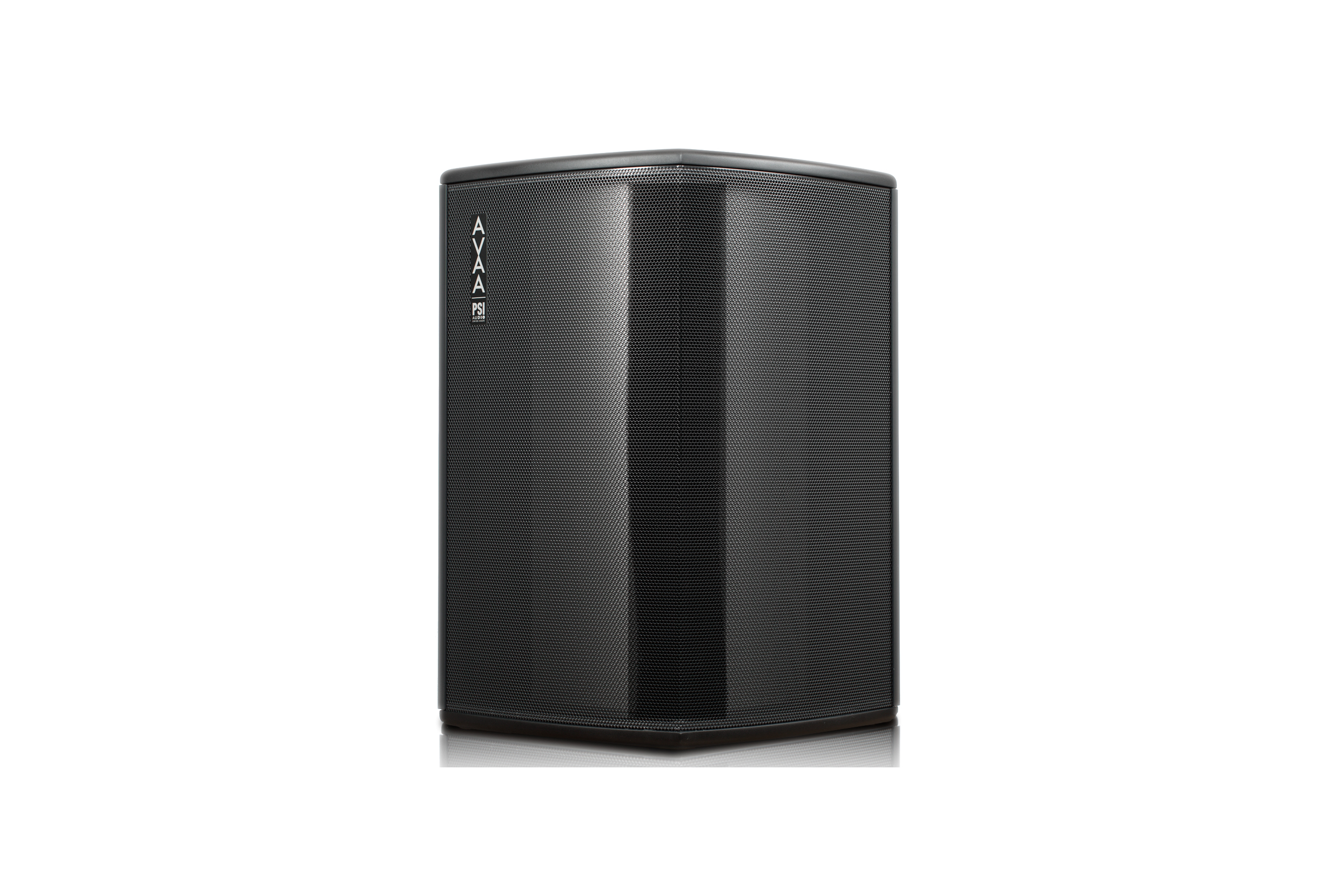
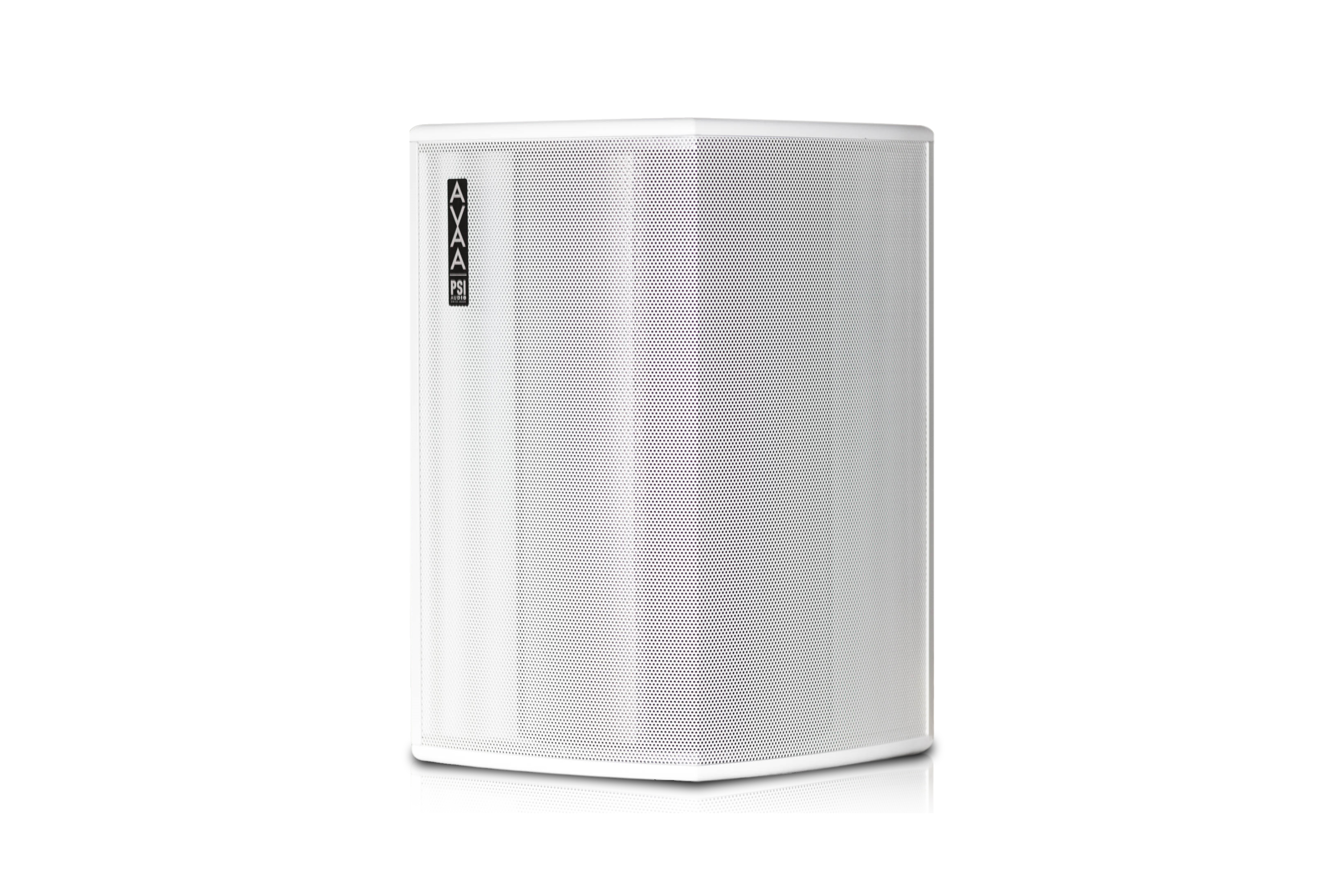
In a field dominated by DSP products, the AVAA C20 stands out: this response-correction device uses pure analog technology. Inside the AVAA C20—its name stands for Active Velocity Acoustic Absorber—is a microphone, a perforated membrane, a velocity transducer, and an amplifier with feedforward and feedback. In principle, the C20 converts incoming pressure waves into velocity waves, thus absorbing them.
Link: PSI Audio AVAA C20 – Stereophile – Recommended Components 2026
PSI Audio AVAA C20 – Stereophile – Recommended Components 2025

In a field dominated by DSP products, the AVAA C20 stands out: this response-correction device uses pure analog technology. Inside the AVAA C20—its name stands for Active Velocity Acoustic Absorber—is a microphone, a perforated membrane, a velocity transducer, and an amplifier with feedforward and feedback. In principle, the C20 converts incoming pressure waves into velocity waves, thus absorbing them.
Link: PSI Audio AVAA C20 – Stereophile – Recommended Components 2025
PSI Audio AVAA C20 – Stereophile – Recommended Components 2025

In a field dominated by DSP products, the AVAA C20 stands out: this response-correction device uses pure analog technology. Inside the AVAA C20—its name stands for Active Velocity Acoustic Absorber—is a microphone, a perforated membrane, a velocity transducer, and an amplifier with feedforward and feedback. In principle, the C20 converts incoming pressure waves into velocity waves, thus absorbing them.
Link: PSI Audio AVAA C20 – Stereophile – Recommended Components 2025
PSI Audio AVAA C20 – Stereophile – Recommended Components 2024

In a field dominated by DSP products, the AVAA C20 stands out: this response-correction device uses pure analog technology. Inside the AVAA C20—its name stands for Active Velocity Acoustic Absorber—is a microphone, a perforated membrane, a velocity transducer, and an amplifier with feedforward and feedback. In principle, the C20 converts incoming pressure waves into velocity waves, thus absorbing them.
Link: PSI Audio AVAA C20 – Stereophile – Recommended Components 2024
PSI Audio AVAA C20 – Stereophile – Recommended Components 2024

In a field dominated by DSP products, the AVAA C20 stands out: this response-correction device uses pure analog technology. Inside the AVAA C20—its name stands for Active Velocity Acoustic Absorber—is a microphone, a perforated membrane, a velocity transducer, and an amplifier with feedforward and feedback. In principle, the C20 converts incoming pressure waves into velocity waves, thus absorbing them.
Link: PSI Audio AVAA C20 – Stereophile – Recommended Components 2024
PSI Audio AVAA C20 – Stereophile – Recommended Components 2023

In a field dominated by DSP products, the AVAA C20 stands out: this response-correction device uses pure analog technology. Inside the AVAA C20—its name stands for Active Velocity Acoustic Absorber—is a microphone, a perforated membrane, a velocity transducer, and an amplifier with feedforward and feedback. In principle, the C20 converts incoming pressure waves into velocity waves, thus absorbing them.
Link: PSI Audio AVAA C20 – Stereophile – Recommended Components 2023
PSI Audio AVAA C20 – Stereophile – Recommended Components 2023

In a field dominated by DSP products, the AVAA C20 stands out: this response-correction device uses pure analog technology. Inside the AVAA C20—its name stands for Active Velocity Acoustic Absorber—is a microphone, a perforated membrane, a velocity transducer, and an amplifier with feedforward and feedback. In principle, the C20 converts incoming pressure waves into velocity waves, thus absorbing them.
Link: PSI Audio AVAA C20 – Stereophile – Recommended Components 2023
PSI Audio AVAA C20 – Stereophile – Recommended Components 2022

In a field dominated by DSP products, the AVAA C20 stands out: this response-correction device uses pure analog technology. Inside the AVAA C20—its name stands for Active Velocity Acoustic Absorber—is a microphone, a perforated membrane, a velocity transducer, and an amplifier with feedforward and feedback. In principle, the C20 converts incoming pressure waves into velocity waves, thus absorbing them.
Link: PSI Audio AVAA C20 – Stereophile – Recommended Components 2022
PSI Audio AVAA C20 – Stereophile – Recommended Components 2022

In a field dominated by DSP products, the AVAA C20 stands out: this response-correction device uses pure analog technology. Inside the AVAA C20—its name stands for Active Velocity Acoustic Absorber—is a microphone, a perforated membrane, a velocity transducer, and an amplifier with feedforward and feedback. In principle, the C20 converts incoming pressure waves into velocity waves, thus absorbing them.
Link: PSI Audio AVAA C20 – Stereophile – Recommended Components 2022
PSI Audio AVAA C20 – Stereophile – Recommended Components 2021

In a field dominated by DSP products, the AVAA C20 stands out: this response-correction device uses pure analog technology. Inside the AVAA C20—its name stands for Active Velocity Acoustic Absorber—is a microphone, a perforated membrane, a velocity transducer, and an amplifier with feedforward and feedback. In principle, the C20 converts incoming pressure waves into velocity waves, thus absorbing them.
Link: PSI Audio AVAA C20 – Stereophile – Recommended Components 2021
PSI Audio AVAA C20 – Stereophile – Recommended Components 2020

In a field dominated by DSP products, the AVAA C20 stands out: this response-correction device uses pure analog technology. Inside the AVAA C20—its name stands for Active Velocity Acoustic Absorber—is a microphone, a perforated membrane, a velocity transducer, and an amplifier with feedforward and feedback. In principle, the C20 converts incoming pressure waves into velocity waves, thus absorbing them.
Link: PSI Audio AVAA C20 – Stereophile – Recommended Components 2020
PSI Audio AVAA C20 – Stereophile – Recommended Components 2020

In a field dominated by DSP products, the AVAA C20 stands out: this response-correction device uses pure analog technology. Inside the AVAA C20—its name stands for Active Velocity Acoustic Absorber—is a microphone, a perforated membrane, a velocity transducer, and an amplifier with feedforward and feedback. In principle, the C20 converts incoming pressure waves into velocity waves, thus absorbing them.
Link: PSI Audio AVAA C20 – Stereophile – Recommended Components 2020
PSI Audio AVAA C20 – Stereophile – Recommended Components 2019

In a field dominated by DSP products, the AVAA C20 stands out: this response-correction device uses pure analog technology. Inside the AVAA C20—its name stands for Active Velocity Acoustic Absorber—is a microphone, a perforated membrane, a velocity transducer, and an amplifier with feedforward and feedback. In principle, the C20 converts incoming pressure waves into velocity waves, thus absorbing them.
Link: PSI Audio AVAA C20 – Stereophile – Recommended Components 2019
PSI Audio AVAA C20 – Stereophile – Recommended Components 2019

In a field dominated by DSP products, the AVAA C20 stands out: this response-correction device uses pure analog technology. Inside the AVAA C20—its name stands for Active Velocity Acoustic Absorber—is a microphone, a perforated membrane, a velocity transducer, and an amplifier with feedforward and feedback. In principle, the C20 converts incoming pressure waves into velocity waves, thus absorbing them.
Link: PSI Audio AVAA C20 – Stereophile – Recommended Components 2019
PSI Audio AVAA C20 – Stereophile – Recommended Components 2018

In a field dominated by DSP products, the AVAA C20 stands out: this response-correction device uses pure analog technology. Inside the AVAA C20—its name stands for Active Velocity Acoustic Absorber—is a microphone, a perforated membrane, a velocity transducer, and an amplifier with feedforward and feedback. In principle, the C20 converts incoming pressure waves into velocity waves, thus absorbing them.
Link: PSI Audio AVAA C20 – Stereophile – Recommended Components 2018
PSI Audio AVAA C20 – Stereophile – Recommended Components 2018

In a field dominated by DSP products, the AVAA C20 stands out: this response-correction device uses pure analog technology. Inside the AVAA C20—its name stands for Active Velocity Acoustic Absorber—is a microphone, a perforated membrane, a velocity transducer, and an amplifier with feedforward and feedback. In principle, the C20 converts incoming pressure waves into velocity waves, thus absorbing them.
Link: PSI Audio AVAA C20 – Stereophile – Recommended Components 2018
PSI Audio AVAA C20 – Stereophile – Recommended Components 2017

In a field dominated by DSP products, the AVAA C20 stands out: this response-correction device uses pure analog technology. Inside the AVAA C20—its name stands for Active Velocity Acoustic Absorber—is a microphone, a perforated membrane, a velocity transducer, and an amplifier with feedforward and feedback. In principle, the C20 converts incoming pressure waves into velocity waves, thus absorbing them.
Link: PSI Audio AVAA C20 – Stereophile – Recommended Components 2017
PSI Audio AVAA C20 – Stereophile – Recommended Components 2017

In a field dominated by DSP products, the AVAA C20 stands out: this response-correction device uses pure analog technology. Inside the AVAA C20—its name stands for Active Velocity Acoustic Absorber—is a microphone, a perforated membrane, a velocity transducer, and an amplifier with feedforward and feedback. In principle, the C20 converts incoming pressure waves into velocity waves, thus absorbing them.
Link: PSI Audio AVAA C20 – Stereophile – Recommended Components 2017
PSI Audio AVAA C20 – Stereophile – Recommended Components 2016

In a field dominated by DSP products, the AVAA C20 stands out: this response-correction device uses pure analog technology. Inside the AVAA C20—its name stands for Active Velocity Acoustic Absorber—is a microphone, a perforated membrane, a velocity transducer, and an amplifier with feedforward and feedback. In principle, the C20 converts incoming pressure waves into velocity waves, thus absorbing them.
Link: PSI Audio AVAA C20 – Stereophile – Recommended Components 2016
PSI Audio AVAA C20
Galeria
Zobacz także

PSI Audio
Cennik
Cennik PSI Audio
Link: Cennik PSI Audio
PSI Audio
Dealerzy
Dealerzy PSI Audio
Link: Dealerzy PSI Audio