
Marten Mingus Septet
Dane techniczne
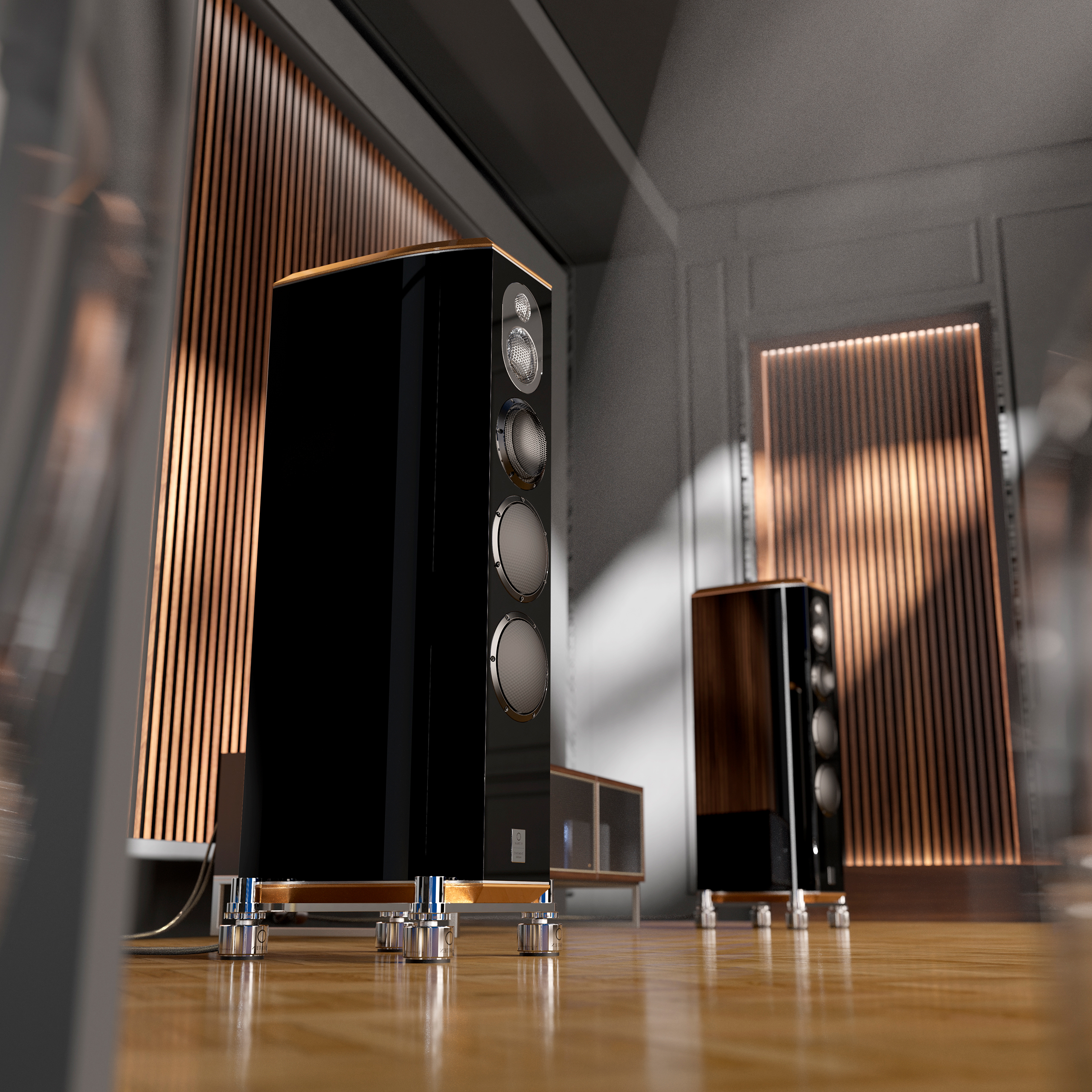
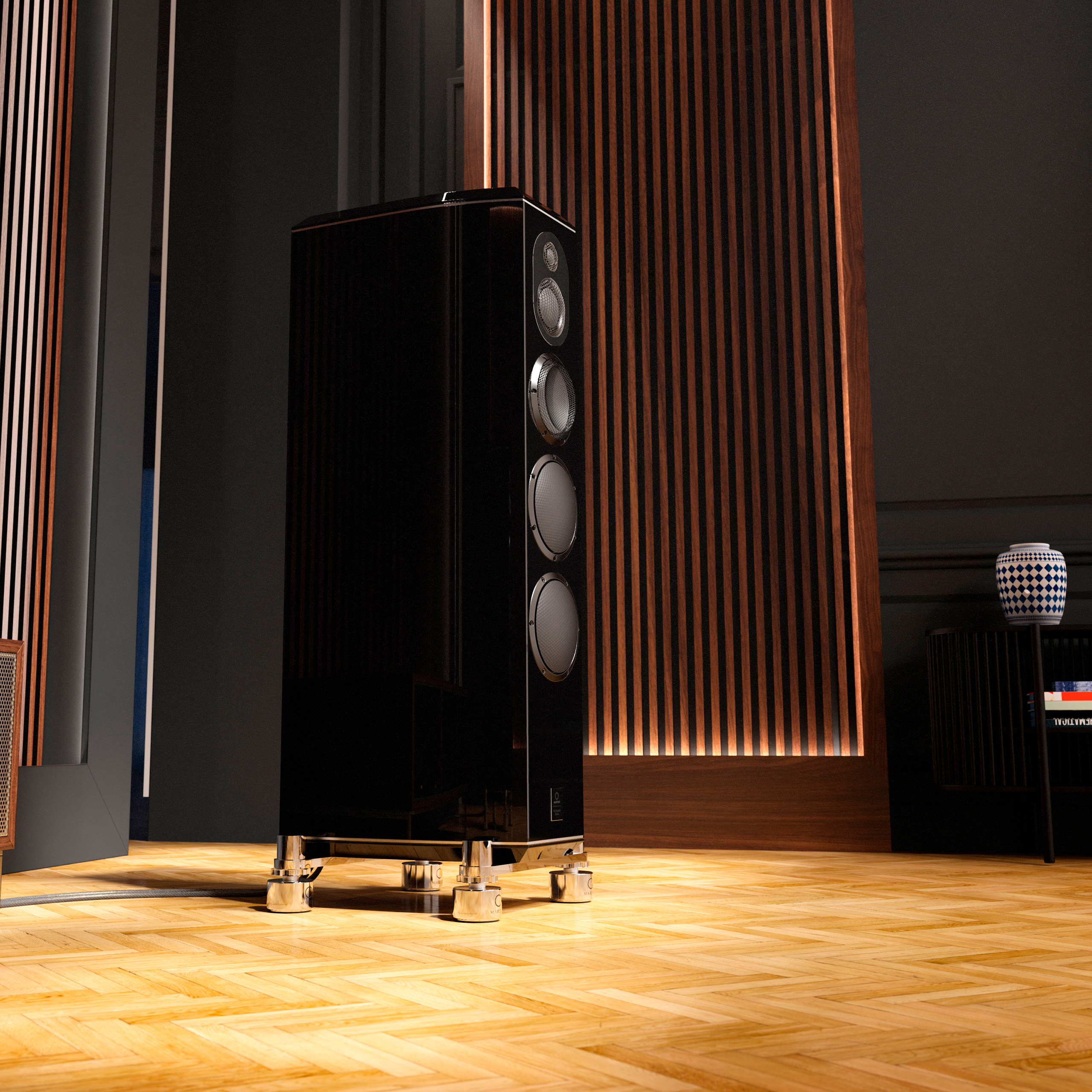
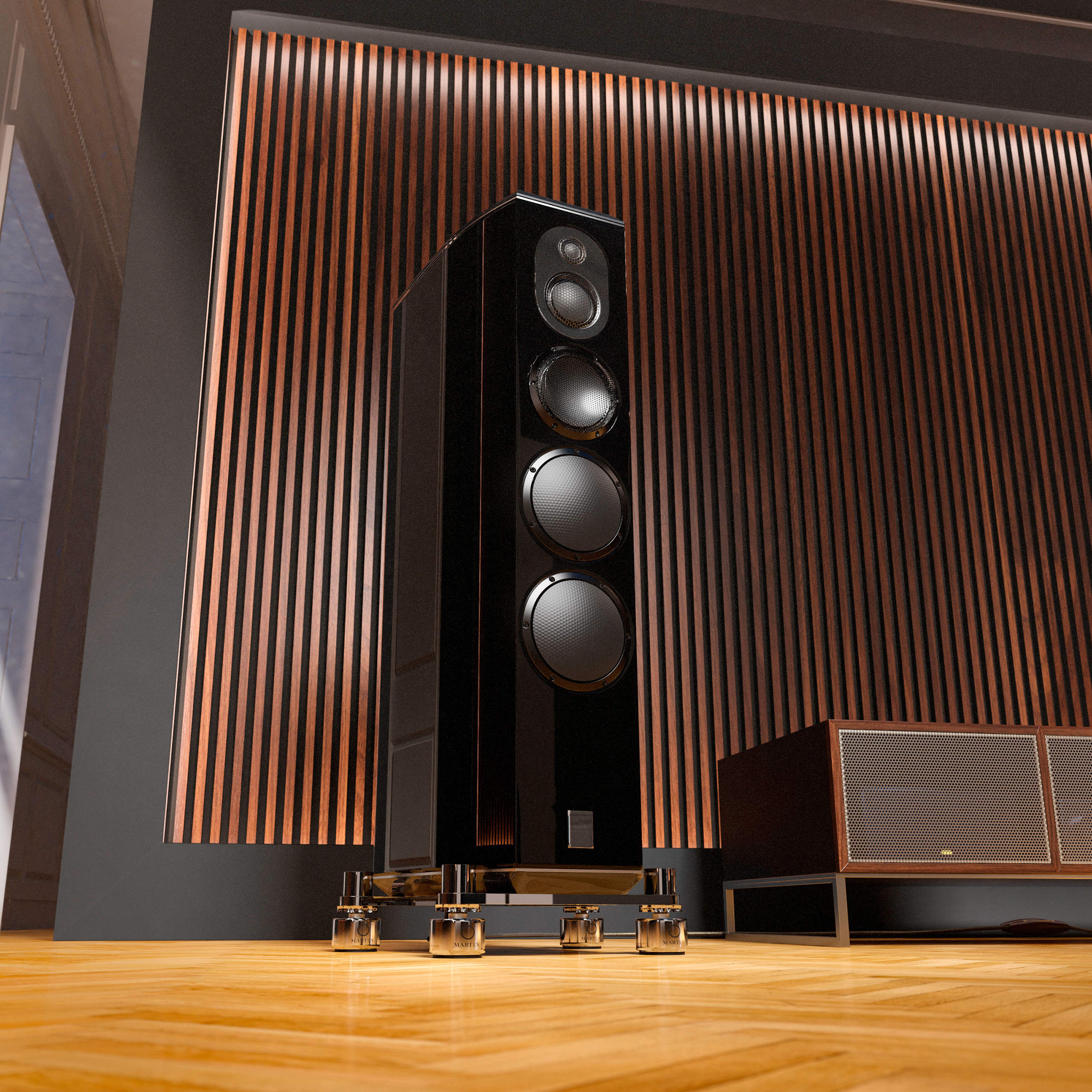
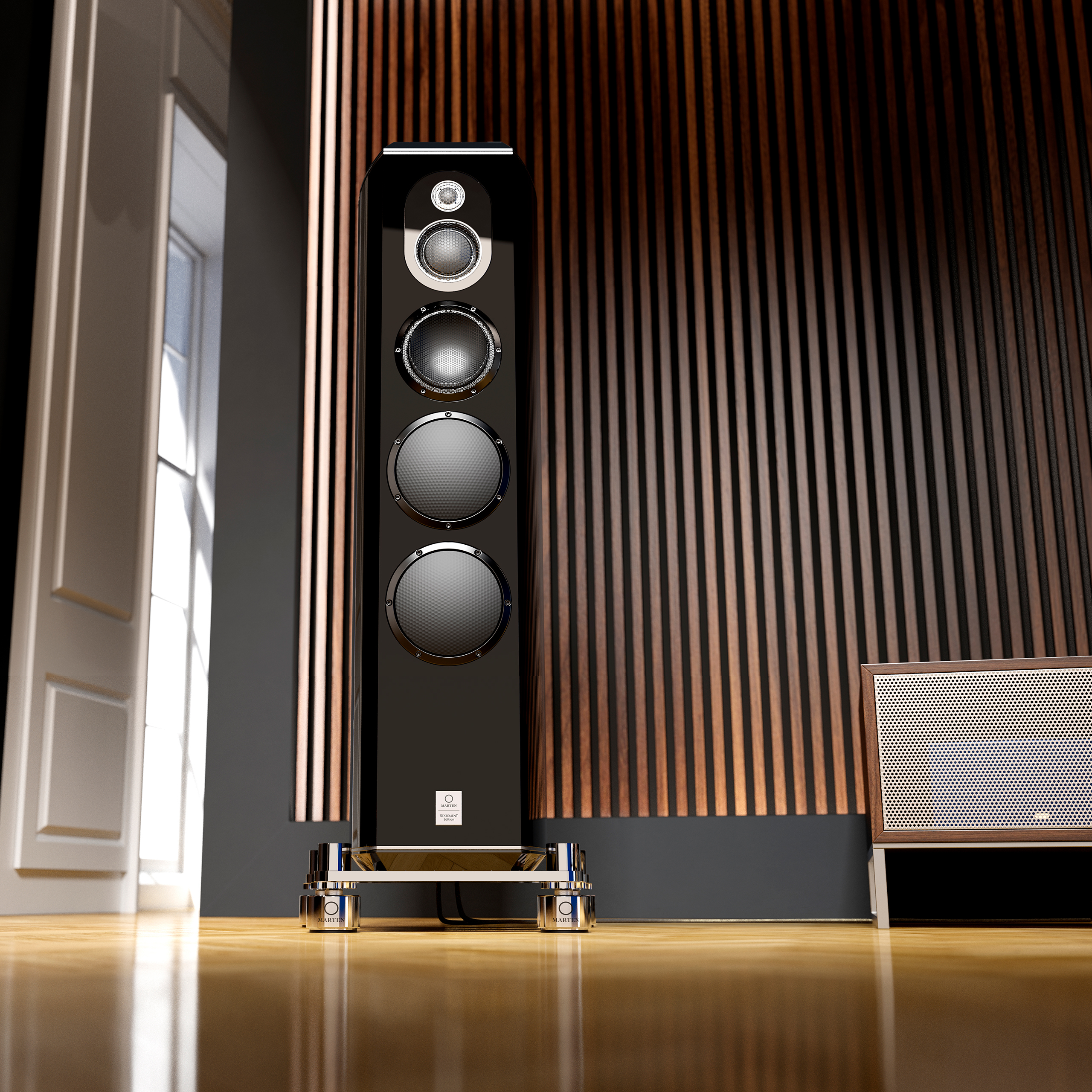
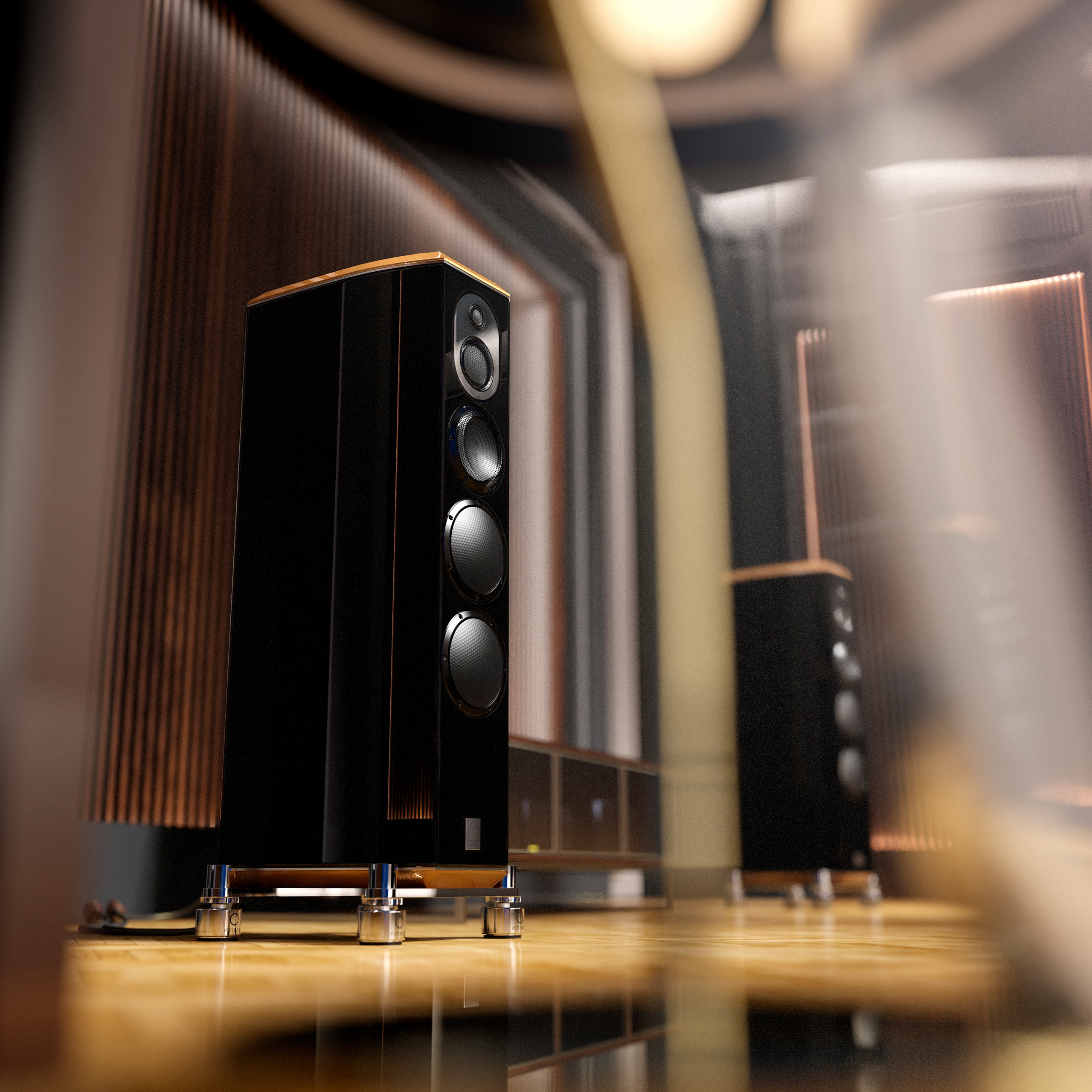
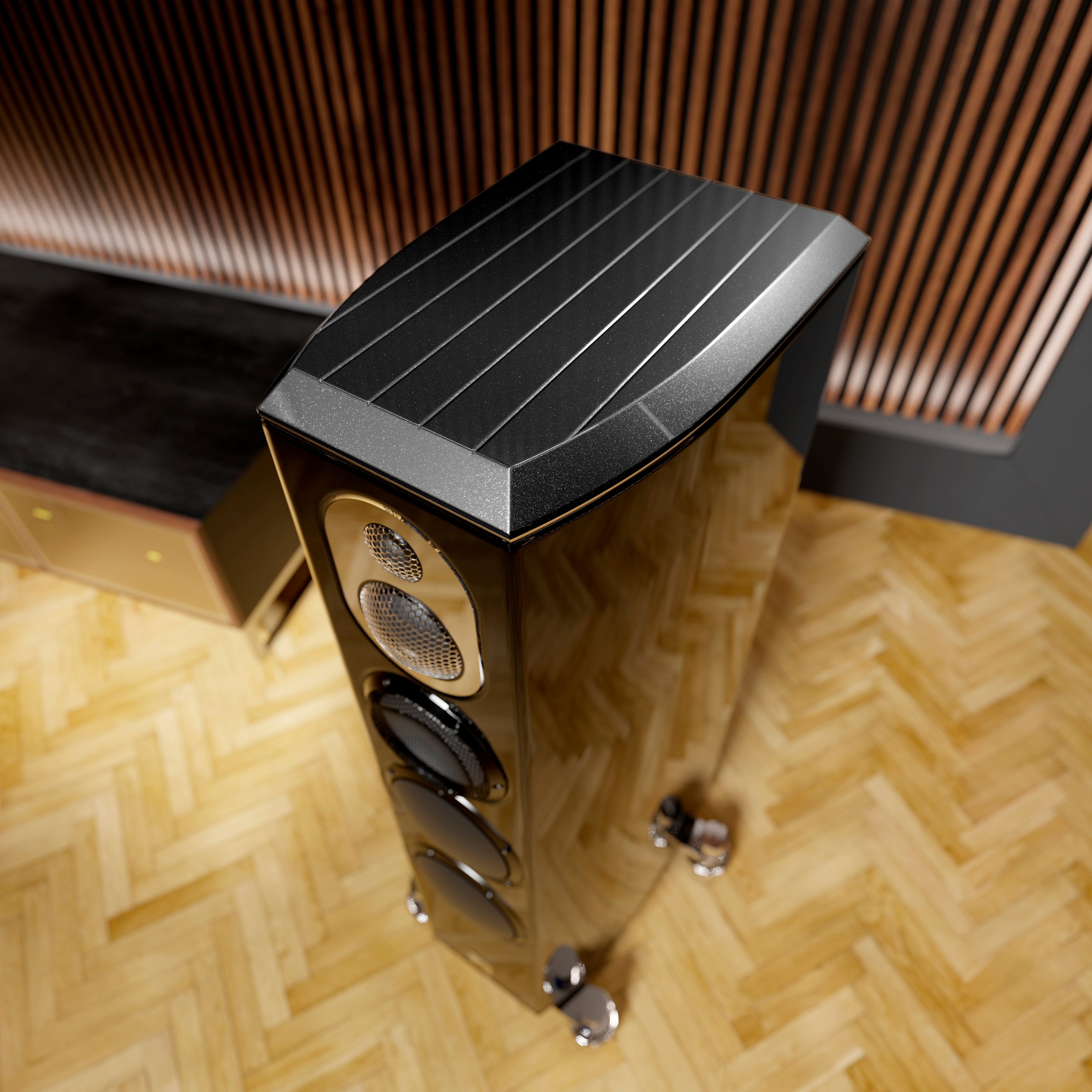
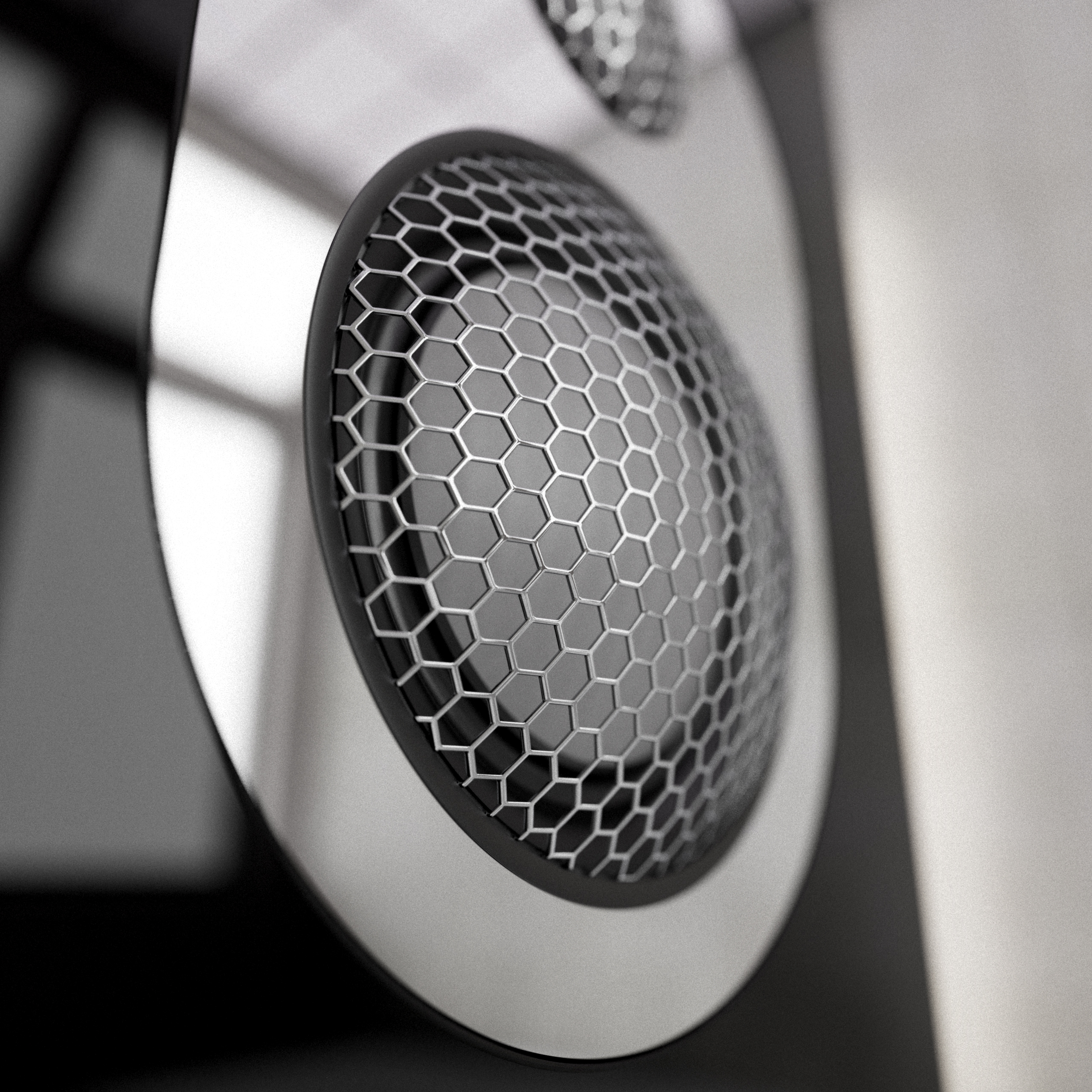
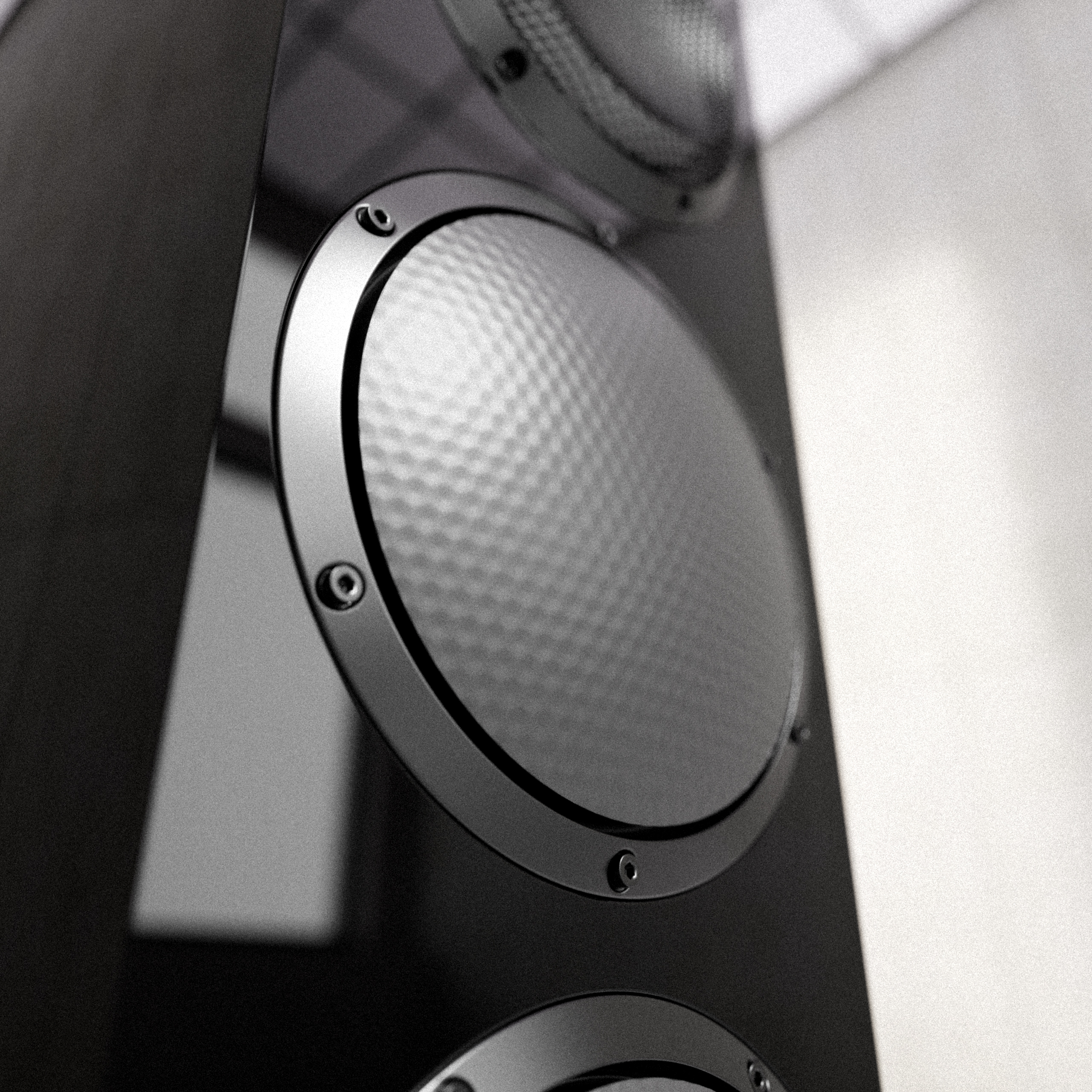
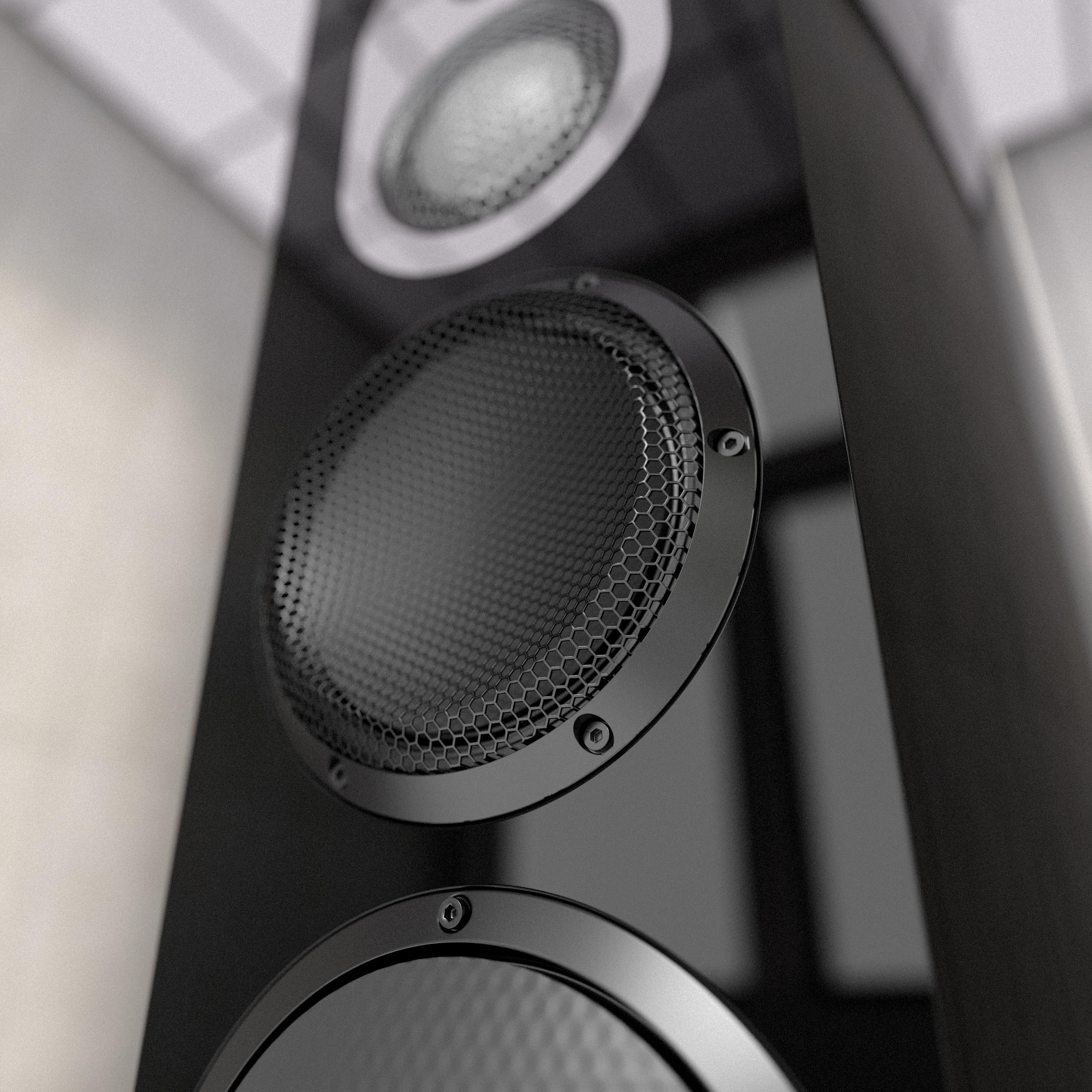
Przetworniki front 1” diamentowy; 3” beryl; 7” ceramika; 2 x 8” aluminiowa membrana warstwowa
Przetworniki tył 2 x 10″ membrana bierna
Pasmo przenoszenia 23–60000 Hz +-2 dB
Moc znamionowa 300 W
Skuteczność 88 dB / 2,83 V
Impedancja 4 omy (min. 2,7 oma)
Typ 4-drożny
Częstotliwość podziału zwrotnicy 200, 800, 6000 Hz, pierwszego rzędu
Złącza WBT Nextgen Bi-wire
Okablowanie wewnętrzne Jorma (opcjonalnie Statement)
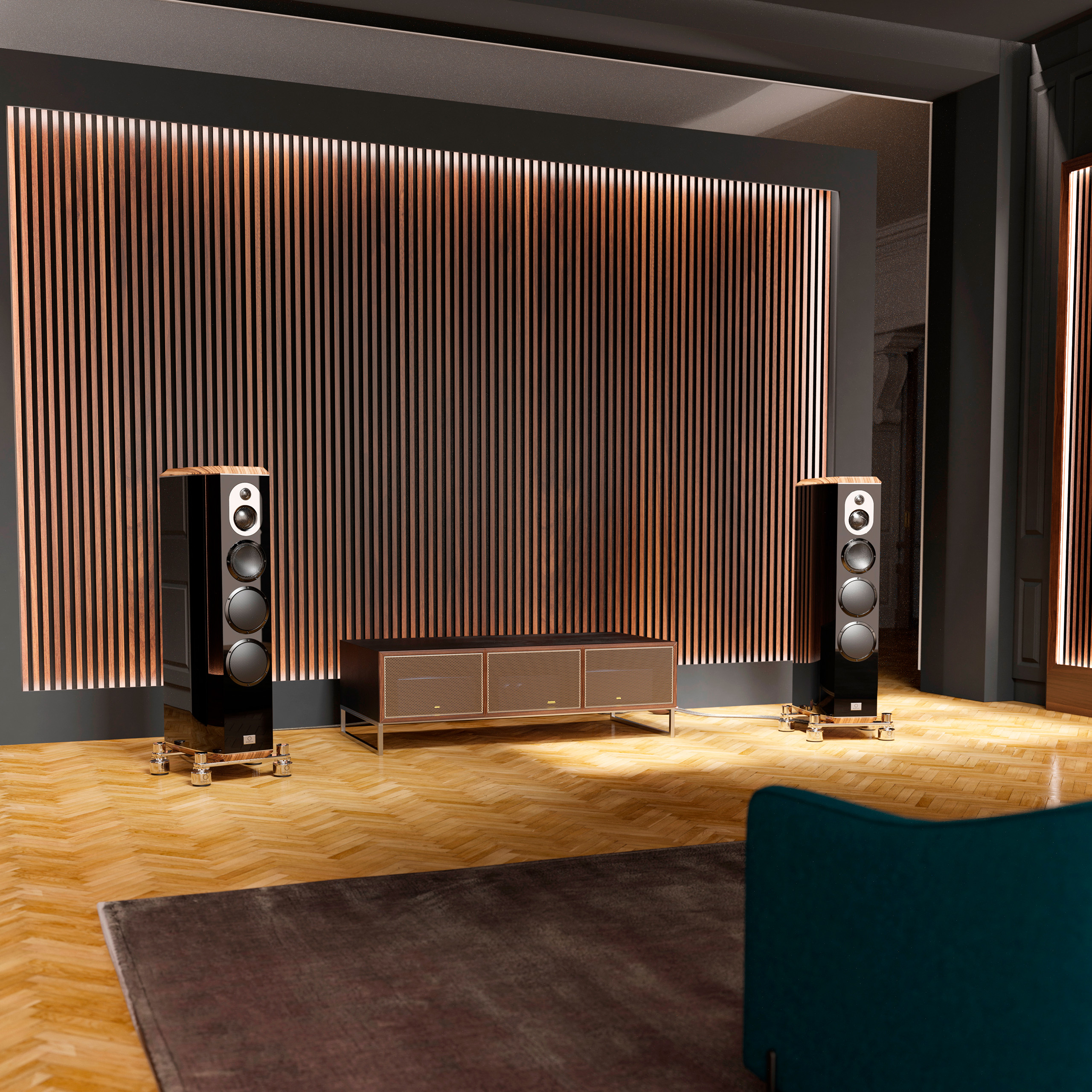
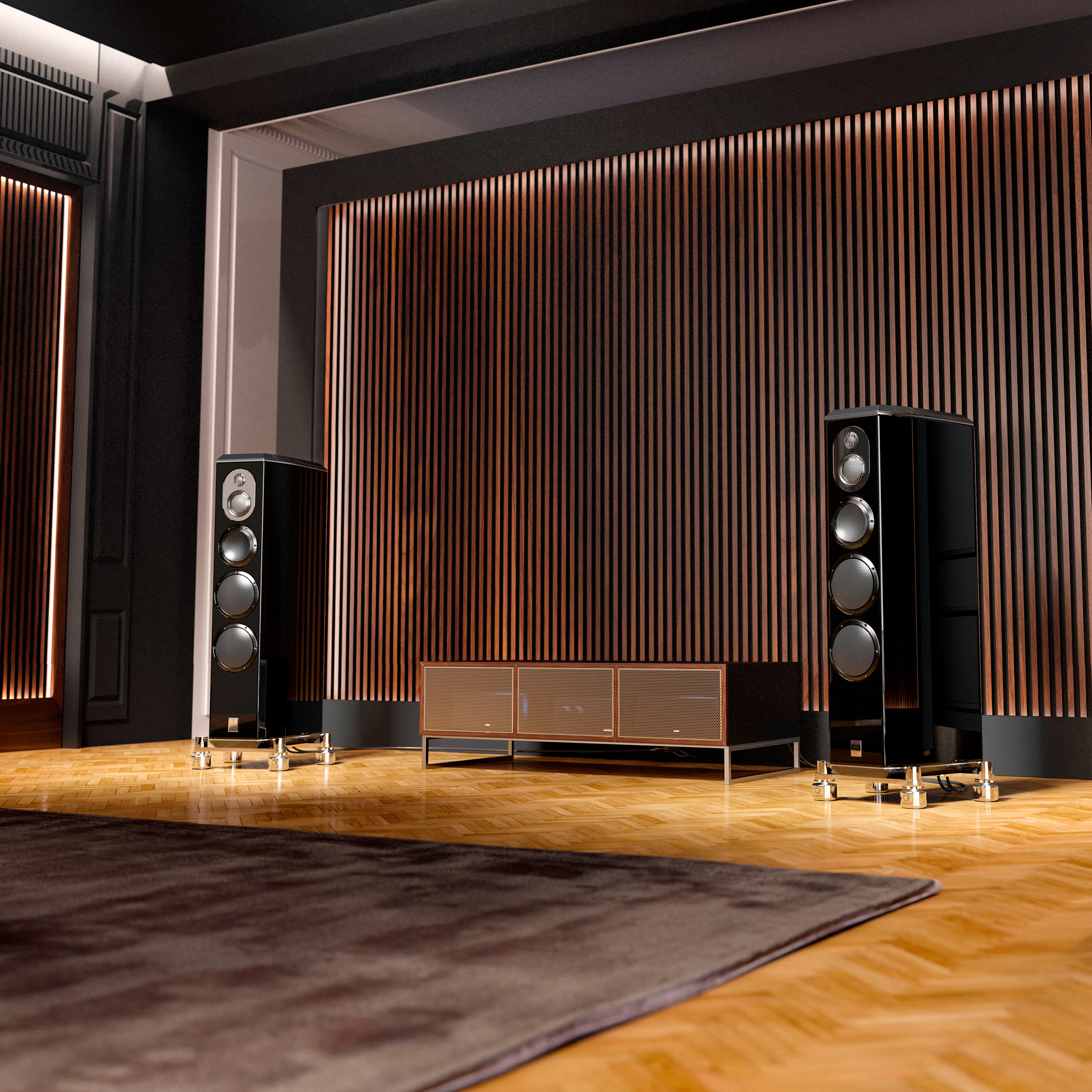
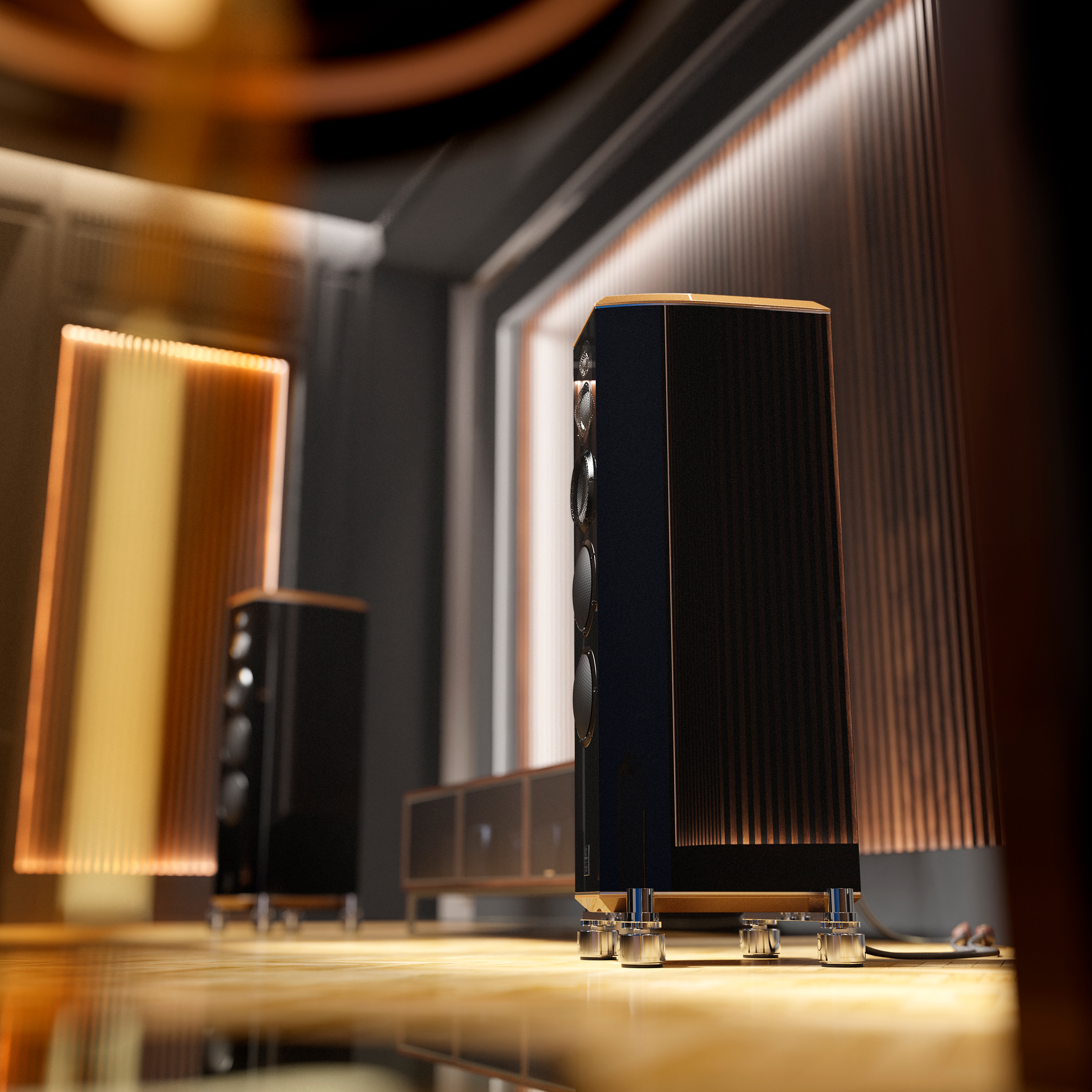
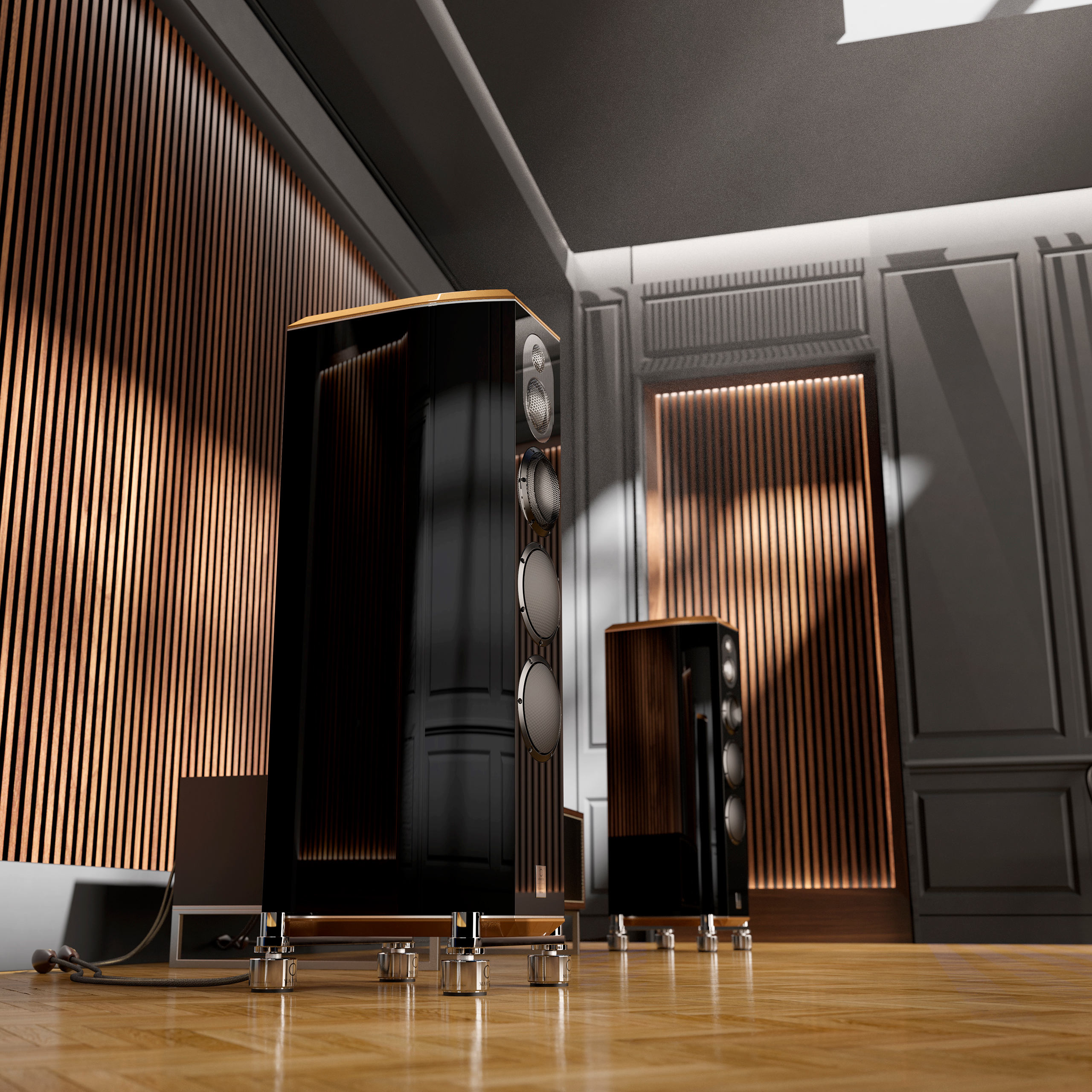
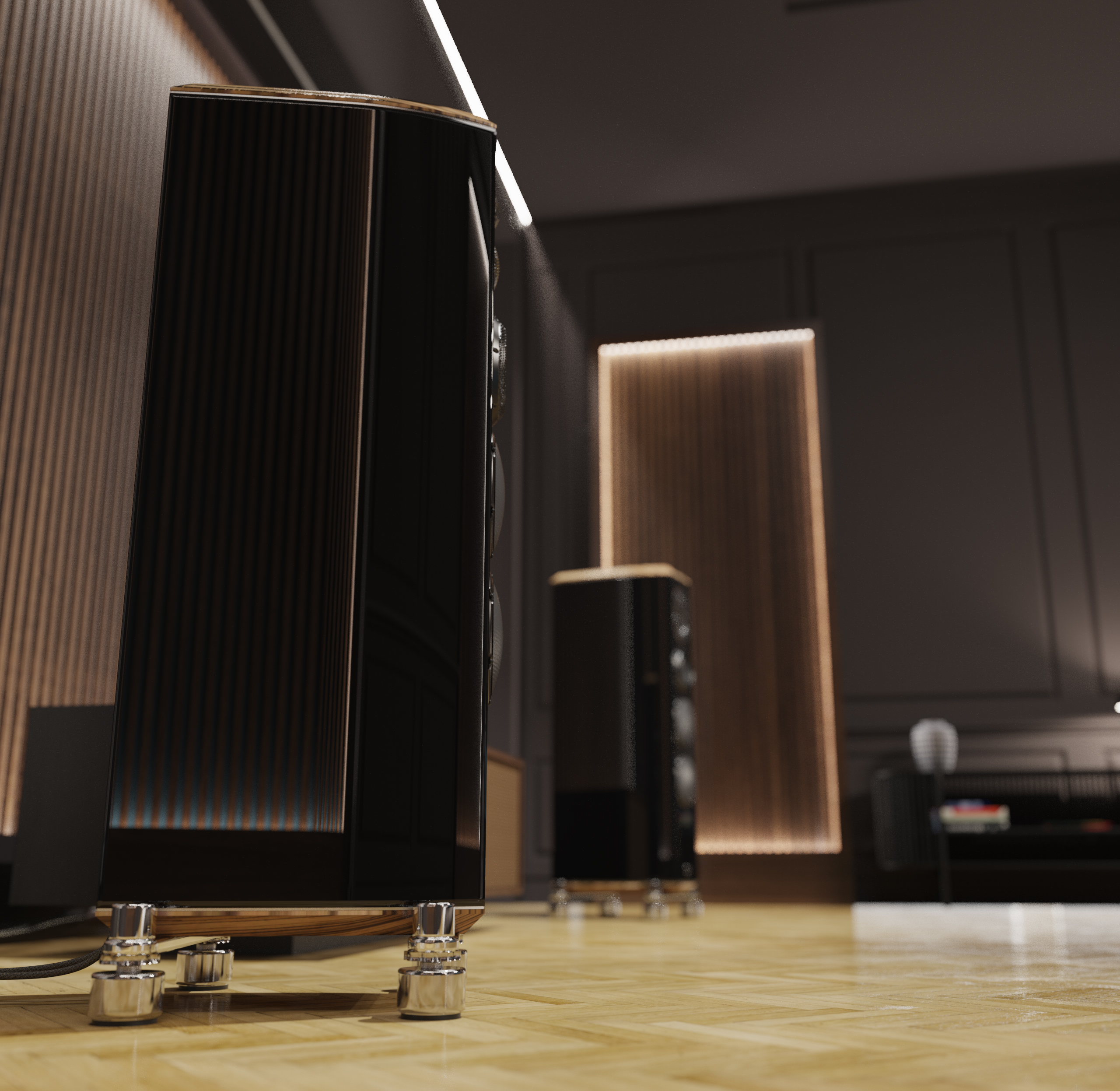
Obudowa Obudowa z włókien drzewnych laminowanych o grubości 25–40 mm w lakierze Piano Black; górne i dolne części z litego drewna lub lakierowane w różnych kolorach; zaawansowana mata tłumiąca.
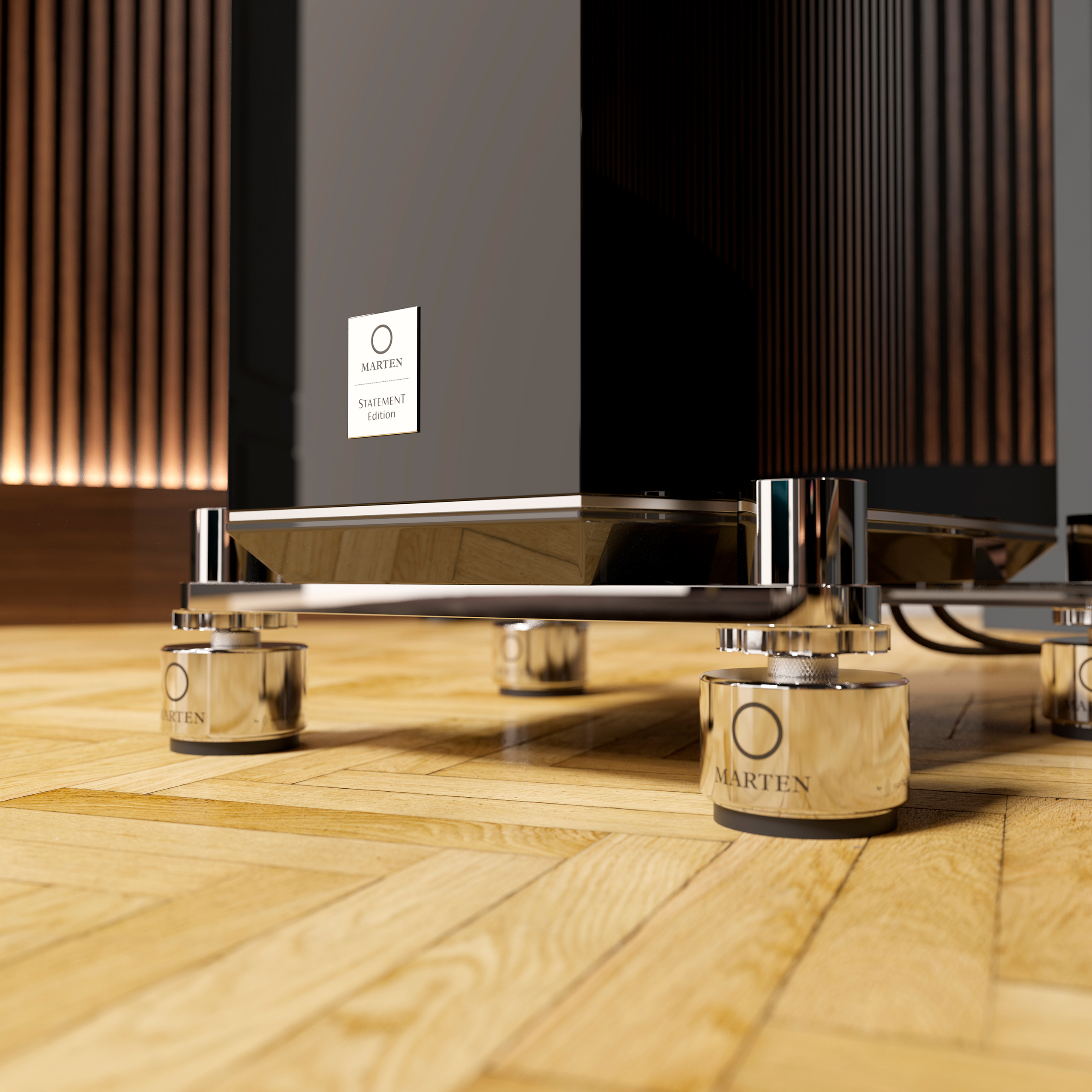
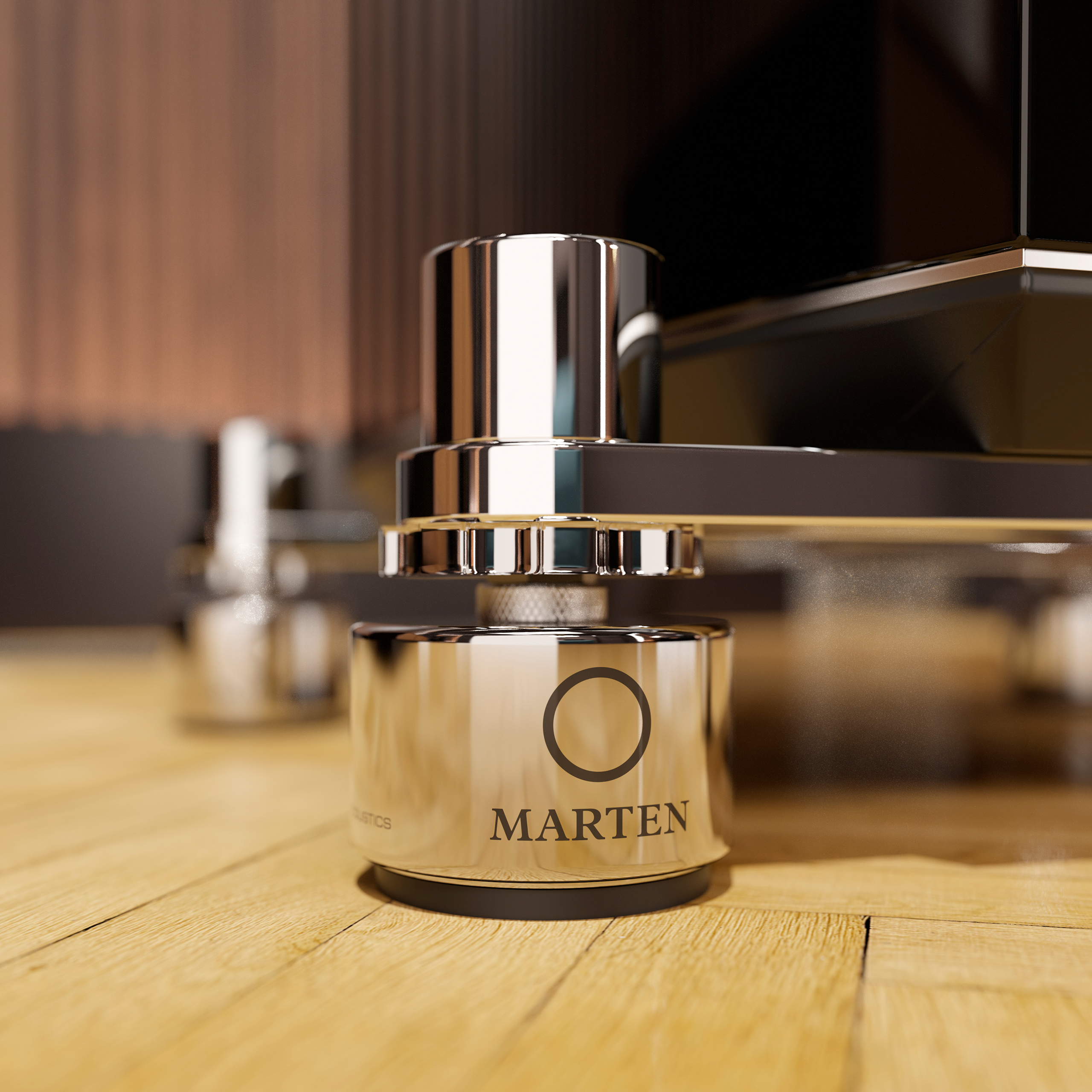
Podstawy Polerowana stal nierdzewna z izolatorami Marten
Wymiary (szer. x wys. x gł.) 33,5 x 126 x 46 cm
Waga 95 kg
Marten Mingus Septet
Recenzje
Recenzja Marten Mingus Septet w HiFi Report
Listening to Myung-Whun Chung conducting the Orchestre de l’Opéra Bastille in Saint-Saëns’ Symphony No. 3, the opening of the first movement, with its dreamy interplay of strings and woodwinds, was beautifully delicate and nimble, like ethereal music. When the lower strings emerged, the Mingus Septet effortlessly delivered elastic and spacious low frequencies.
The Adagio section in the latter half of the first movement, as rendered by the Mingus Septet, was unbelievably beautiful. The organ’s bass was deep and resonant, reaching profound depths, almost ethereal, like enveloping air or swirling mist. The Mingus Septet’s ability to depict sonic texture is exceptional. The string sound was both supple and delicate, with a beautiful sheen, like the sunburst finish on a watch dial, shimmering and shifting with the light, imbued with vibrant life.
In the second movement’s Allegro moderato, the complex orchestration was clear and layered, with distinct individual instruments. The woodwinds, taking turns to shine, each had clear texture and timbre, with precise localization and well-defined images. The music unfolded layer by layer, revealing all the secrets within the kaleidoscope.
The bass remained full but also revealed layers of detail.And so, I let Myung-Whun Chung and the Orchestre de l’Opéra Bastille play through the entire movement. The color, the layering, the weight – simply brilliant.
Switching to a simpler piano and violin duet showcased different aspects of its excellence. Take “Tango, Song and Dance” by Anne-Sophie Mutter and Andre Previn, for example. The violin and piano tones were focused, dense, and solid. Played through the Mingus Septet, the sonic density of the violin and piano was truly impressive. It’s not just about “thickness,” but also “density,” like fabric. You can distinguish between thick and thin fabrics, and also the thread count. Applying this to sound description, the former is “thickness,” the latter is “density.” The Mingus Septet’s sonic density is top-tier. At this point, I finally grasped how remarkable the Accuton beryllium midrange driver is. High density, yet with a balanced and appropriate thickness, gives the sound considerable agility. It doesn’t become sluggish or overly thick, nor does it become hollow and insubstantial in pursuit of liveliness. This sonic thickness is very healthy, making the music sound very real.
Healthy sonic thickness alone isn’t enough to achieve realism; other conditions are necessary. The Mingus Septet can accurately reproduce the inherent timbre of instruments. I could perceive bright luster and color, observe sharp lines and clear shapes, and sense the layers of light and shadow and three-dimensionality. This experience is akin to watching a high-brightness, high-resolution OLED TV or laser projector, which faithfully restores the texture, color, layering, and lines of the video. The Mingus Septet, in the realm of sound, recreates a live performance. Furthermore, dynamic performance is crucial.
The Mingus Septet’s sonic performance is truly comprehensive. Whether it’s timbre, sonic texture, density, dynamics, layering, or soundstage presentation, it achieves extremely high standards.
I later told Mr. Chang that this was the most expensive Marten speaker I had ever heard in Soundray’s listening room. The texture of this mid-high range was something I had never experienced here before.
Link do recenzji: Marten Mingus Septet – HiFi Report
Recenzja Marten Mingus Septet Statement Edition w Stereophile
Proper reproduction of well-recorded piano is one of my most important criteria in evaluating a loudspeaker; apparently it isn't easy to achieve. Coloration in almost any frequency range affects it, and good piano sound is highly dependent on the accuracy of transients. Well-recorded piano sounded natural and lifelike.
When the sound is new and fresh, you want to hear everything at once; I'm sure you know the feeling. I pulled out a new ECM record—from the label's Luminessence vinyl reissue series—and put it on. The album was Making Music, by Zakir Hussain, Hariprasad Chaurasia, John McLaughlin, and Jan Garbarek (LP, ECM 1349, engineered by Jan Erik Kongshaug at Rainbow Studio in Oslo, Norway, and produced, of course, by Manfred Eicher). If I'd heard this album before, I didn't, and don't, remember it.
Did these speakers ever love this album! I couldn't get enough of the woody articulation of the tabla and the various other percussion instruments (a ghatam—clay pot—and what looks on the cover like a pakhavaj, a long drum from northern India). John McLaughlin's guitar—probably a Wechter custom steel string made to optimize transient clarity—sounded similarly crisp and articulate, its resonance full. Hussain's voice and Chaurasia's flutes simply hung there in space. All these sounds filled the space between the speakers and my front wall in a most natural, relaxed, intoxicating way. I closed my eyes and pictured little sonic sprites flashing around the room.
For certain test signals and crossover points—and certain carefully selected musical sounds—the audibility of time-domain distortion is indisputable, in this listener's opinion. Was this time-domain refinement what made my experience with these speakers so special, or was it something else? It seems very likely to me that the very special characteristics I heard—natural, pleasure-giving transients (piano, tabla, acoustic guitar), notable delicacy, and superb 3D imaging—are timing-related. After all, timing is the most obvious distinguishing feature of the Marten Mingus Septet Statement Edition. Timing, though, is just part of an uncommonly ambitious and thoughtful design, executed at a very high level.
What I am sure of is that I've just heard some of the best sound I've heard in my listening room, or even elsewhere, as in, top two or three. For certain aspects of the sound, including 3D imaging, it was the very best. This is at least partly due to the fortuitous setup I eventually achieved, which these speakers loved; nevertheless, it shows what the Septets are capable of.
This is one (rather, two) of a small handful of speakers I've auditioned that I've found to be free of meaningful faults—that recover so much music and deliver it in such a pleasurable way that I could happily live with them forever.
Link do recenzji: Marten Mingus Septet Statement Edition – Stereophile
Recenzja Marten Mingus Septet w u-Audio
這個色彩感,這個層次感,這個重量感,實在太精彩 聽鄭明勳指揮巴士底歌劇院管弦樂團演出聖桑第三號交響曲時,第一樂章前半開頭,弦樂和木管交織出富有夢幻感的樂音,那輕柔靈巧,猶如足不點地的樂音,煞是美好。低音弦樂湧現時,Mingus Septet 不費吹灰之力地送出了彈性且寬鬆的低頻。我不敢開大音量,這裡雖然加了低頻陷阱,但有限的空間,倘若音量催足,低音會滿出房間來的。要克制,我很想扭音量,Discete DAC 的音量轉到 87 已是我認為此處聆聽此曲的極限了,再大聲,消化不了的低頻會掩蓋掉其他訊息,會破壞整體的平衡。
第一樂章後半的緩板,在 Mingus Septet 的表現下,實在美到不像話。管風琴的低音說沉就沉,沉到深處,似有若無,像是空氣覆裹,又像是雲霧繚繞。Mingus Septet 描繪聲音質地的本領極高,弦樂聲音既柔韌又細緻,加上其漂亮的光澤感,就像是手錶錶盤的日耀紋,隨著光影流轉而轉動著,像是有生命的光彩。有時候,真的也不必放得很大聲,在這樣近距離聆聽下,反而可以聽見更多音樂中的訊息,聽見更多聲音的貴氣。
驚人的密度,健康的厚度,完整的動態,鮮明還原音樂演出 單一首聖桑管風琴交響曲,就明說了 Mingus Septet 的許多特點。換成編制簡單的鋼琴和小提琴二重奏,又能體現出不同的優越方面。以 Anne-Sophie Mutter 和 Andre Previn 合奏的「Tango, Song and Dance」為例,小提琴和鋼琴的琴音凝聚、綿密、扎實。在 Mingus Septet 播放下,小提琴和鋼琴的聲音密度實在讓人印象深刻。這不是只有「厚度」,還是「緻密」的。就像是織品,你可以分辨什麼是厚薄,什麼是紡織支數。用以此套在聲音描述上,前者是「厚度」,後者是「密度」。Mingus Septet 的聲音密度是第一流的;至此,我終於體會到這顆 Accuton 的鈹中音有多厲害。
就著真實感一面,我還想說一點。不是只有健康的聲音厚度就能寫實了,還有其他的條件。Mingus Septet 能夠準確地重現樂器本質的音色,我可以感受到明亮的光澤和色彩,可以觀得銳利的線條與清楚的形體,可以感知明暗與立體的層次。這經驗就像是觀看高亮度、高解析的 OLED 電視或雷射投影機一樣,把影片中的質感、色彩、層次、線條高度真實地還原出來,Mingus Septet 則是在聲音方面,還原了演出現場。
再者,聲音的動態表現很重要。雖然只是簡單的二重奏,但音樂裡面有許多的情緒,音樂家透過演奏的速度、力道的改變,製造出情緒的波動,和音樂的張力。我們不會說手機內建喇叭放出來的音樂很真實,因為動態和頻寬不足。可是,當一套音響系統,可以全域的頻響,完整還原音樂的動態,那就離真實不遠了。聽這小提琴激昂時的神態,聽這鋼琴沉下的重量,聽這二重奏對話的形貌,聽他們在不同樂章、不同標題、不同速度下所釋放的情感。這些加在一起,豈有不真、不善、不美之理。聲音透明且均衡
Link do recenzji: Marten Mingus Septet – u-Audio
Recenzja Marten Mingus Septet Statement Edition w image-hifi
Hören wir eine kritische Aufnahme, die mir schon das eine oder andere Mal abgeschmiert ist an den falschen Komponenten: Paavo Järvis Einspielung von Beethovens Pastorale mit der Deutschen Kammerphilharmonie Bremen entlockt der 6. mit seiner forschen, lebendigen und klanglich sehr dynamischen Herangehensweise ganz neue Seiten (Beethoven Sinfonien Zyklus, Acousence Records DDKB LP01, D 2010, 9-LP-Box). Bei ihm ist die Natur kein träumerischer Ort, hier passiert richtig etwas! Allerdings passiert eben auch etwas in Ketten, die nicht so ganz top spielen, da klingt es schnell streng und anstrengend. Nicht mit den Marten! Sie bieten einen tiefen, wie selbstverständlichen Blick in die Orchesterreihen und die dynamische Kernigkeit der Aufnahme entspricht gerade ihrem Naturell. Die sonst streckenweise leichte Bissigkeit scheint die Mingus Septet gar nicht zu rühren, sie fügt kein Gran Härte hinzu. Genauso geht sie auch mit wirklich schlechten Aufnahmen um: Dadurch, dass sie deren Härten und Verzerrungsanteile nicht anficht, spielt sie auch unterdurchschnittliches Material überdurchschnittlich, indem sie ihm gleichzeitig alle Details entlockt.
Journey To The One von Pharoah Sanders (Theresa Records 108/109, USA 1980, 2-LP) demonstriert die Fähigkeiten der Mingus Septet exemplarisch: Zunächst lässt Sanders seinen lyrischen Ton herrlich stark hören – an diese dynamische Unbegrenztheit, diese luftige und zugleich energiegeladene Freiheit gewöhnt man sich allzu schnell –, nur um ihn binnen Kurzem zu überblasen. Doch über die Marten darf er das eben ohne jeglichen Klangstress und Blick zum Lautstärkeregler tun, so als würde er live vor einem spielen (da wäre man ja auch nicht auf die Idee gekommen, ihn leiser drehen zu wollen). Im Gegenteil, jetzt bleibt auch die Band während solcher sonst schwierigen Momente – Sie ahnen es: völlig ungerührt und transparent bei ihrem Spiel. Kein Problem, dem frei dazu spielenden Ray Drummond am Bass zu folgen, falls man das möchte. Und erst John Hicks am Piano, einfach großartig seine kernigprononcierten Anschläge und wie er mit ihren Obertönen die Läufe erst so richtig in Bewegung bringt. Man kann es Mal um Mal erleben, wenn die Aufnahmen es verlangen: Auch in den Höhen scheint die Mingus Septet Statement Edition eine große Menge mehr an Kraft, Sauberkeit, Transparenz aufbieten zu können, wenn das gefragt ist. Für das Zusammenspiel erweist sich das immer wieder als fantastischer Vorteil, wenn es dadurch wie in „Doktor Pitt“ groovt und nach vorne treibt, dass es die reine Freude ist. Und obwohl Pharoah Sanders hier nicht frontal auftritt, sondern auf der mittleren Soundstage-Ebene, bleibt die Kraft seines Saxofons voll erhalten. Er ist einer meiner Lieblingsmusiker, und ich denke, ich habe ihn nicht annähernd so bewegt und energetisch, so strahlend im Hochton (damit ist nicht heller oder schärfer gemeint, im Gegenteil – eben strahlend) gehört wie mit den Marten. Auch beim Drumund Bass-Zwiegespräch am Ende zeigen sie, was sie auszeichnet: Was hat das für einen Griff, was für eine Energie, und wer den Klang einer Bassdrum live kennt, will sie nur so hören: Noch mal wunderbar!
Wenn er sagt, dass er beim Entwickeln seiner Weichen 1. Ordnung etwas gefunden hat, das es bisher noch nicht gab, glaube ich das. Eigentlich wollte ich ein günstigeres Modell von Marten testen, nachdem ich lange Jahre glücklicher Besitzer einer Marten Bird 2 Sonderedition war. Der schwedische Hersteller machte mit den Mingus Septet Statement Edition einen Gegenvorschlag, weil dieses Modell – im Wortsinn – die Weichen stellte für alle weiteren Entwicklungen. Glücklicher hätte die Wahl nicht sein können, denn ob es um Transparenz und Klangfarbentreue geht, um eine ungeheure dynamische Stabilität in allen Frequenzlagen, um eine allzu selten anzutreffende Freiheit von jeglichem Gehäuseklang: Diese Lautsprecher spielen in einer eigenen Liga, in der sonst physisch größere und deutlich teurere Modelle anzutreffen sind. Ein Meisterwerk.
Link do recenzji: Marten Mingus Septet Statement Edition – image-hifi
Marten Mingus Septet
Nagrody
Marten Mingus Septet
Galeria
Zobacz także

Marten
Cennik
Cennik Marten
Link: Cennik Marten
Marten
Dealerzy
Dealerzy Marten
Link: Dealerzy Marten