
Goebel Divin Noblesse
Recenzje
Recenzja Goebel Divin Noblesse w The Absolute Sound
Switching loudspeakers after several years of living with the best loudspeaker I’ve had in my listening room (the Wilson Chronosonic XVX and Subsonic subwoofers) was a bit disconcerting. It took some adjustment to the different presentation, but once the Divin Noblesse settled in I came to appreciate this speaker’s special qualities.
First, the Divin Noblesse is truly a full-range speaker with wide bandwidth and seemingly unlimited dynamic range. The Divin Noblesse’s most salient characteristic is a lively upper midrange-to-lower treble region that brings detail to the fore. This speaker’s resolution, transparency, and clarity through the midrange and treble were stunning; fine detail such as percussion instruments, a subtle background vocal, or a piano line played quietly beneath other instruments, were resolved with alacrity. I’ll give you just one example that could stand in for many others. I’ve listened to the fabulous 1975 live Eric Clapton album EC Was Here on many systems, but never before heard on the track “Ramblin’ on my Mind” that the drummer’s ride cymbal has rivets. Also called a “sizzle cymbal,” rivets give the instrument that shimmering sound and extended decay. The Divin Noblesse resolved the complex microstructure of the cascading transients and decays of the rivets with astounding precision. If you extrapolate this example to nearly every instrument, across all kinds of music, you’ll get an idea of how the Divin Noblesse presents music with extraordinarily high level of detail.
This resolution and clarity weren’t confined to the treble. The midrange was similarly resolved, a quality that was immensely rewarding in the Divin Noblesse’s reproduction of the human voice. Vocals were projected into the listening room with palpability and presence. I was startled when I played the first track on Melody Gardot’s album Sunset in the Blue; her voice was projected between and in front of the speakers with vivid immediacy. Moreover, the Divin Noblesse revealed very fine nuances of expression, adding to the song’s impact. This track could serve as another example of the Divin Noblesse’s resolving power; the gently played acoustic guitar accompaniment in the background was portrayed with clarity in timbre, pitch, and dynamics on every note. Similarly, the speaker’s lively midrange rendered vocals more intelligible. This clearer articulation allowed me to hear nuances of vocal expression with newfound ease and clarity.
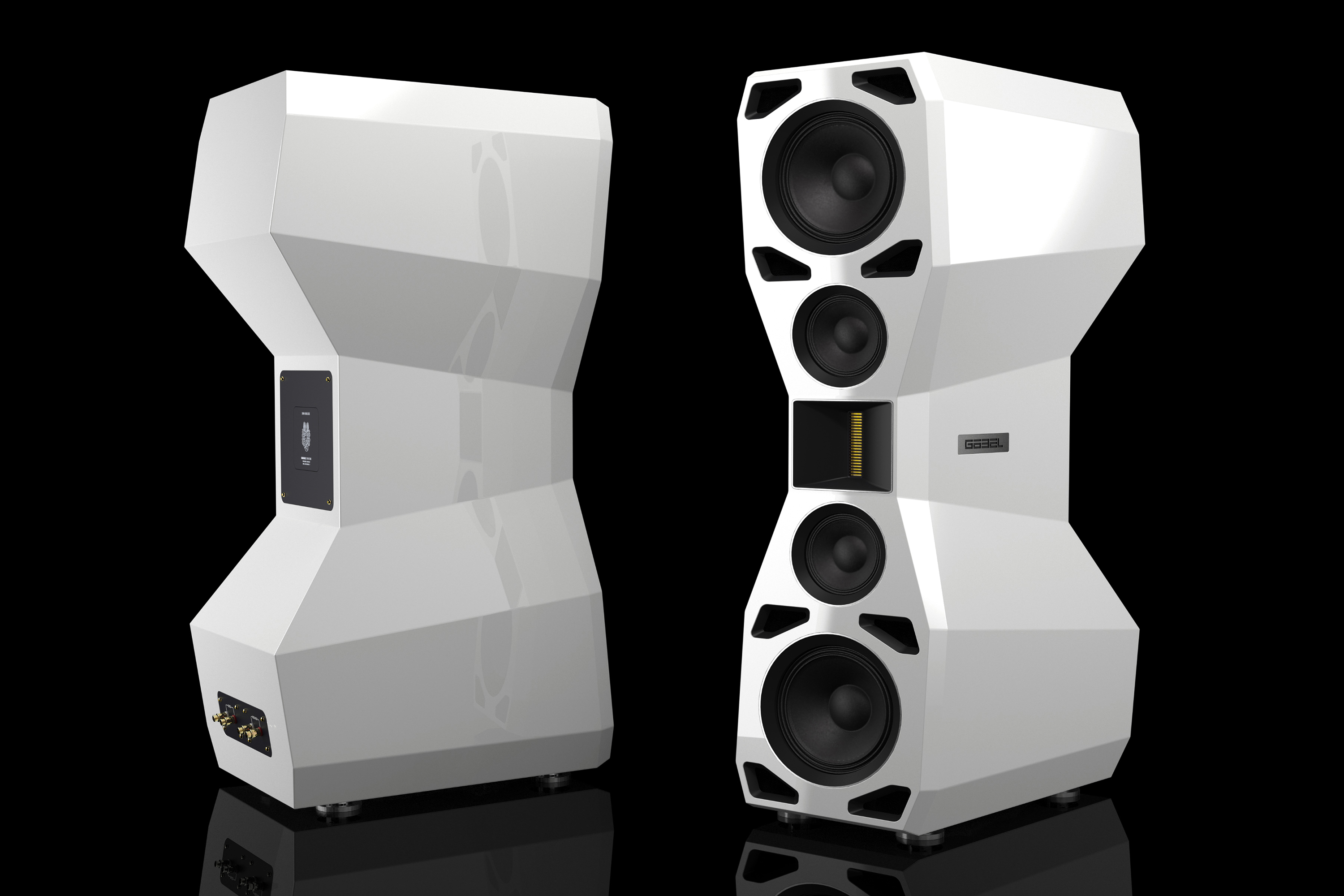
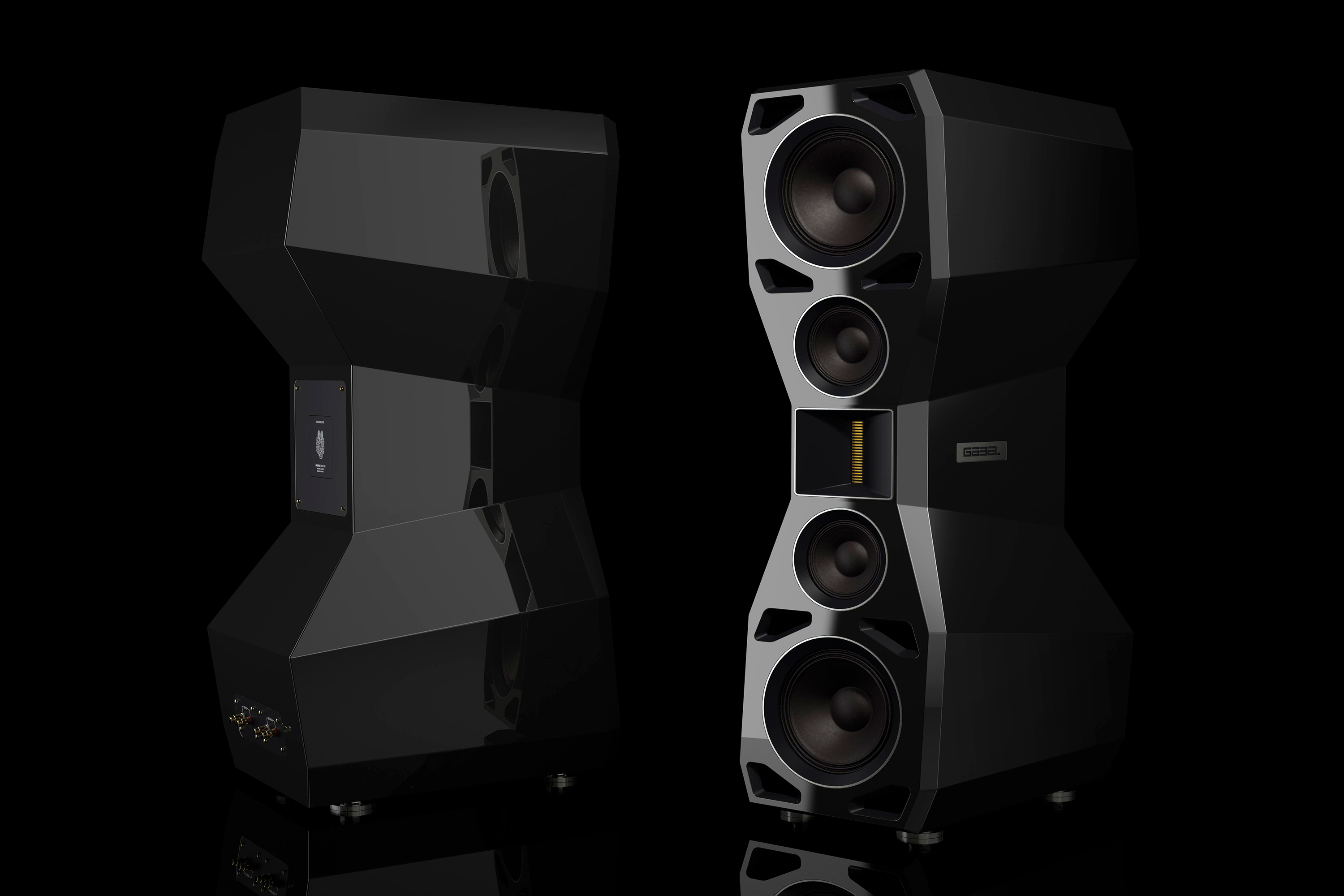
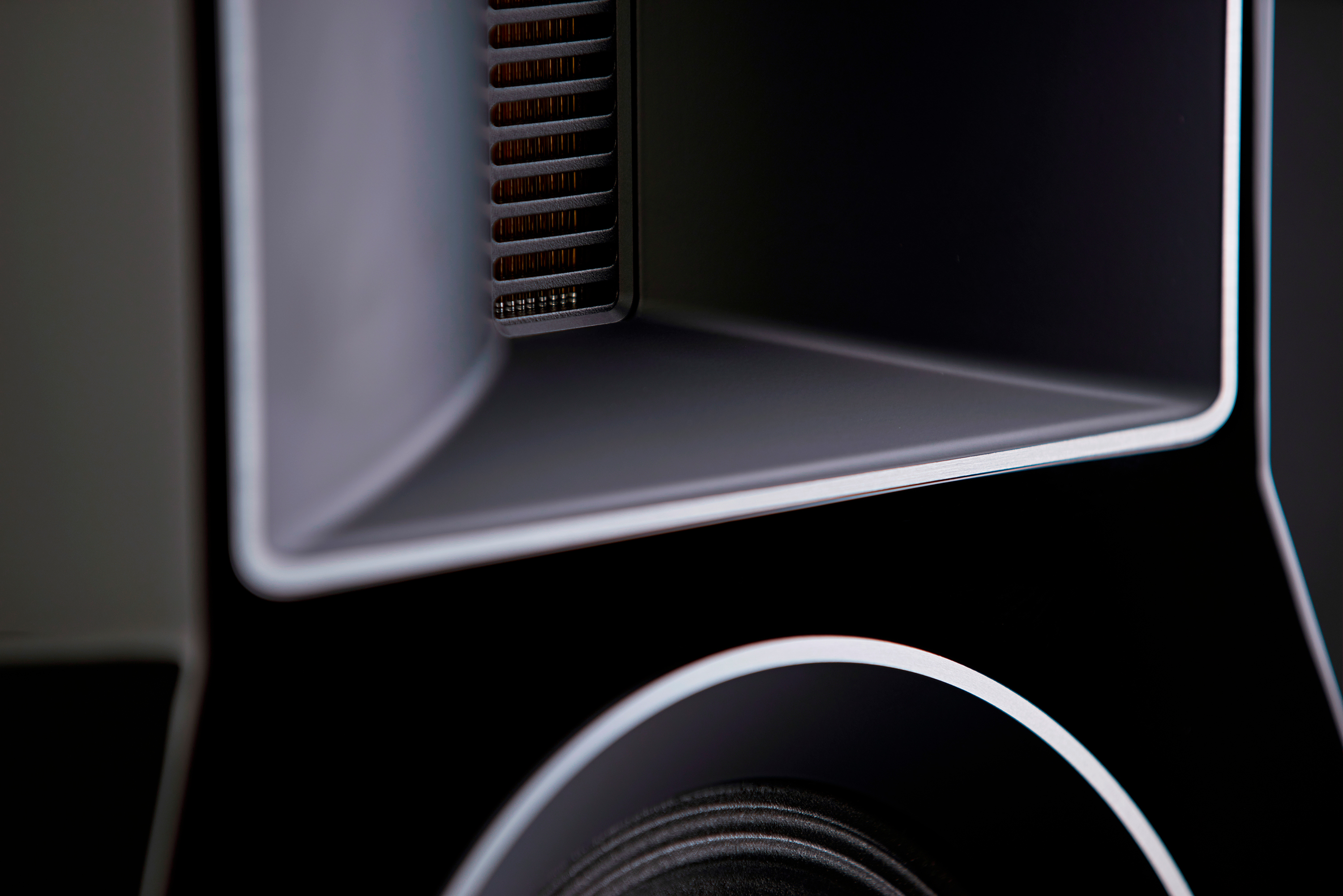
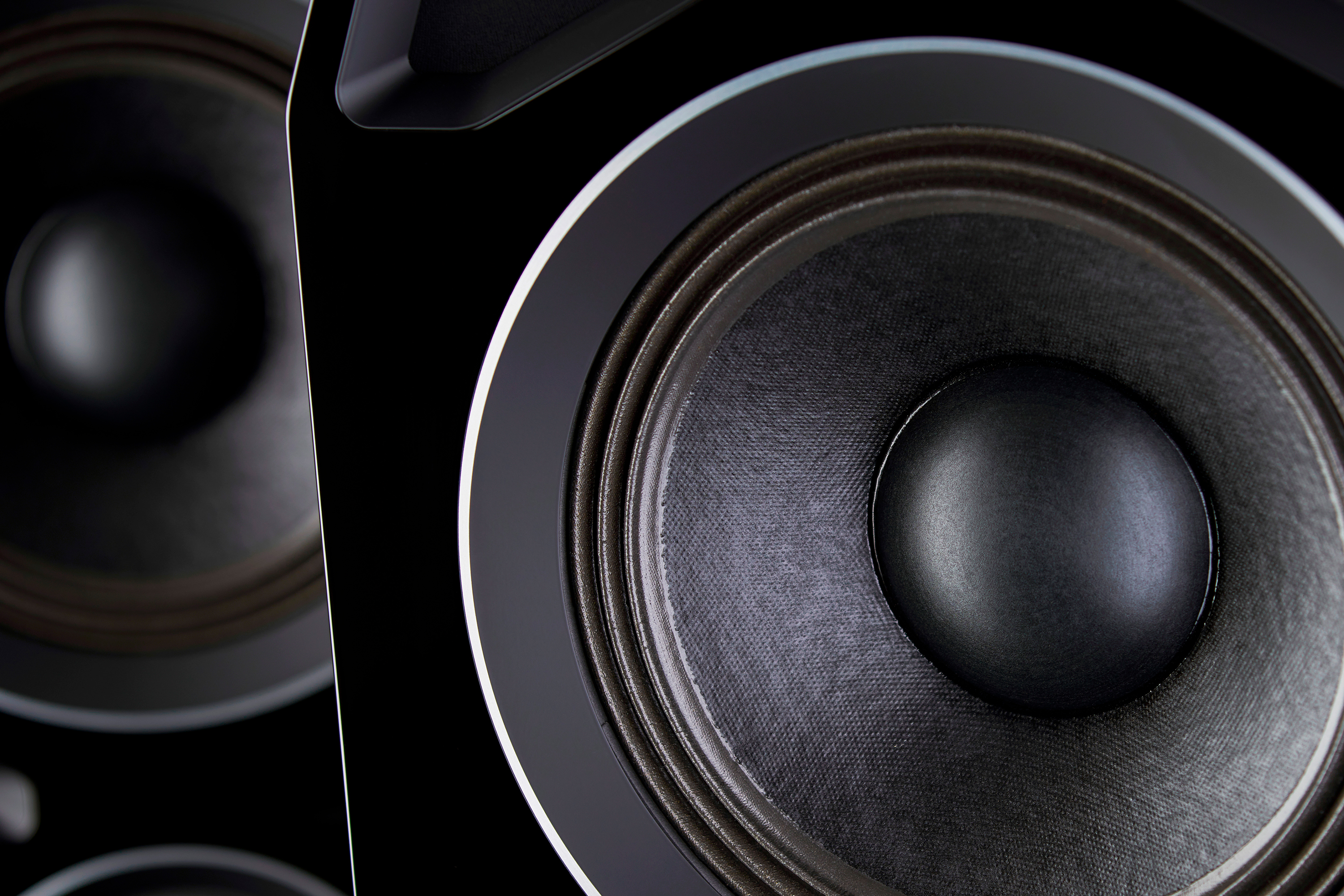
Before hearing the Divin Noblesse, I looked askance at the 8″ midrange driver (most are 6″ at most), particularly an 8″ midrange coupled to an AMT tweeter. Nonetheless, after living with this speaker, I have no reservations about the design. In fact, I must conclude that the Divin Noblesse is, through the midrange and treble, the highest-resolution dynamic loudspeaker that I’ve heard in my listening room—its presentation of detail and palpability approach that of electrostats and Magneplanars.
Link do recenzji: Goebel Divin Noblesse – The Absolute Sound
Recenzja Goebel Divin Noblesse w The Audio Beat
The first thing that hit me about this speaker’s performance was the uncluttered clarity it projects. It’s most obvious at low frequencies but extends across the entire range. Those of you looking for the traditional, rib-rattling thud that many audiophiles associate with big speakers are going to be disappointed. In common with many other more efficient and dynamically responsive speaker systems, the Divin Noblesse delivers bass that’s pitch-agile, articulate and fast on its feet -- as opposed to leaden, thick and turgid. It's not unlike live, acoustic bass. How often does an orchestra generate the sort of low frequencies that communicate on a skeletal rather than aural level? Very seldom. The bounce-you-round-the-dance-floor bass that comes from clubs and rock concerts is all to do with big, resonant cabinets and lots of amplification and nothing whatsoever to do with audio fidelity.
Indeed, Göbel has worked extremely hard and very effectively to eliminate the electrical and physical flaws that generate one-note bass. Listen to almost any jazz recording with an upright acoustic bass and you’ll immediately hear what I mean. Let’s use Charlie Mingus’s take on the Ellington standard "Mood Indigo" (from the 45rpm reissue of Mingus Mingus Mingus Mingus Mingus [Impulse!/Analogue Productions 54) as an example. Both the easy, loping rhythm and the deceptively simple melody are carried by the bass, underpinning the relaxed brass lines with a security and sure-footed pitch and placement that anchor the track. As it enters its elongated evolution, you hear the patterns and phrases with a clarity that allows you to forget the system and instead marvel at the sheer dexterity in the playing, the slight emphasis Mingus gives a note or doublet from the original melody that he occasionally drops into his meandering exposition. The notes are so clearly defined in terms of spacing and placement, frequency and timing, that you can almost picture Charlie’s hands working the strings.
Along with that low-frequency speed and definition come transparency and dimensionality. Anybody who has worked with positioning their own speakers will know what that means. Bringing clarity to the bottom end automatically declutters the midbass, midrange and on up. I differentiate midbass in this instance because that’s the range that imbues music with so much of its drive and energy, life and vitality. Gaining that clarity at source (as it were) even before you work with room placement is fundamental to the Divin Noblesse’s overall sound, its lucid presentation and coherent sense of musical energy and presence. You’ll often hear speakers described as well integrated or contiguous, seamless or even-handed, but in the case of the Göbels that goes well beyond the absence of tonal discontinuities and deep into the realm of musical energy and projection. The same substance that imbues Michael Kiwanuka’s kick drum with such solid impact applies right up the range, whether it’s cello, a pianist’s right hand, violin or bells. There’s no wispiness or thinness at the top, no pared-away or etched quality to the midrange -- just a sense of body and rightness, irrespective of frequency. While looking at those two substantial midrange drivers flanking the large central ribbon, that might not seem surprising, until you think about the almost ethereal sound and ghostly lack of presence that passes for high frequencies in so many speakers. If the Divin Noblesse was made by Marvel Comics, its super power would be the ability to combine substance and clarity.
Meanwhile, possession is nine-tenths of the law, a maxim that applies not only to the Göbel Divin Noblesse’s position in the marketplace, but also its position in my listening room. It's a speaker that not only possesses enormous potential but is more capable than most of delivering on that promise, and when the company finally prises them from my grasp, they are going to be sorely missed indeed. I’ll miss the extraordinary versatility and ability to bring the best out of partnering products. I’ll miss the transparency to input and how easy it makes both setup and assessing changes. But most of all I’ll miss the speakers' easy, inviting and convincing sense of musical communication. Few speakers that I’ve heard -- and none that are more affordable -- have told me more about who wrote, who or how they played or, most importantly of all, why they recorded this music. If you want to define (or redefine) high-end audio, that’s a pretty good place to start.
Link do recenzji: Goebel Divin Noblesse – The Audio Beat
Recenzja Goebel Divin Noblesse w Gy8
Have you ever noticed how the upright bass that’s such an integral part of so much jazz goes awol on most audio systems. If it’s there at all, then it tends to the soft, indistinct and tuneless – a world away from the live experience. One of my standard set up discs is the Duke Ellington/Ray Brown album This One’s For Blanton (Analogue Productions CAPJ 015/Pablo 2310-721), precisely because the extended, fingered bass runs and less than fantastic recording present any system and speaker with a bottom-end challenge. Walking back to the listening seat after starting the disc for the first time, those opening bass notes caused a serious double take as my jaw dropped almost as hard as my butt hit the sofa. Bass notes with weight, shape, texture, pitch and an almost tactile sense of attack and energy: Where did that come from? The simple answer is those four 12” bass drivers being driven by 300 watts of solid CH power. But there’s a lot more to it than that. That living, breathing bass line is the product of the system as a whole – the effortless musical expression, coherence and timing of the Wadax front-end, the consummate clarity, articulate flow and bottomless power of the CH 10 Series amps and the astonishingly low distortion, low storage and dynamic discrimination of the speakers. That and the remarkable, clarity and uncluttered linearity of their heavily and symmetrically ported bottom-end. Clearly, Göbel are onto something here.
This goes way beyond the electronics stepping back and getting out of the way. Time and again, disc after disc, the system wasn’t just un-intrusive, it simply wasn’t there. Whether it was the poised intensity and gracefully controlled, almost delicate intent of Alina Ibragimova playing Shostakovich’s First Violin Concerto (with Jurowski on Hyperion – a performance that’s as unexpected as it is remarkable), or Batiashvili’s contrasting dynamic authority and power when playing the same piece, the focus was firmly on the player, the playing and the performance as a whole. The system clearly delineated the differences between these two stellar performances, but rather than detracting from or diminishing one, the other or both, it succeeded in adding to their fascination. The raw energy and spikey attitudes of early Elvis Costello or Joe Jackson are all present and sneeringly correct, giving that music just the right cutting edge, while the unmistakable drive and momentum of Carlos Kleiber brings power and drama to the most familiar of Beethoven symphonies – without diminishing the sheer joie de vivre and sly humour exhibited by Jordi Savall and Le Concert Des Nations playing the same material on period instruments in a tiny space.
This is the captivating quality of live performance, the emotional and dramatic range of the live event brought home. Not, you’ll note, a perfect facsimile, but the sense and purpose in the music and the performance, freed of the constraints of reproduction. If we’ve been living with and have grown to accept, a glass ceiling on performance, or more accurately a glass wall between us and the original event, then these products and this system shatters it.
Link do recenzji: Goebel Divin Noblesse – Gy8
Goebel Divin Noblesse
Nagrody
Goebel Divin Noblesse
Galeria
Zobacz także

Goebel
Cennik
Cennik Goebel
Link: Cennik Goebel
Goebel
Dealerzy
Dealerzy Goebel
Link: Dealerzy Goebel