
Brinkmann Spyder
Recenzje
Recenzja Brinkmann Spyder w The Absolute Sound
Regular readers of mine know that I place great importance on isolation, one reason I tend to prefer tuned suspensions to fixed ones. So right off, I started with the Mehta/Los Angeles/Decca-London recording of Also Sprach Zarathustra with its pedal point from a 32-foot stop. I selected this for two reasons. First, I wanted to see how well the Spyder, with no suspension and little mass as such, withstood the onslaught of the 32-foot organ stop that opens the piece, and, second, because the note is actually on this particular recording and in considerable strength. The Spyder acquitted itself superbly on both counts: The pedal point was clean, big, and present and was both felt and heard beneath the crashing chords of full orchestra and pounding timpani. Since I was in a big orchestral mood, I went next to the fabulous Stokowski Roumanian Rhapsody No.1 (RCA) and it was the same story: impressive bass power, big, big sound, nice definition, and thrilling rhythmic drive. Last in this first outing, side six, Act IV of my trusty Bernstein Carmen: The Brinkmann combination presented the breadth and depth of the soundstage with a convincing sense of air and bloom when, say, the brass sound and resound against the chorus, the comings and goings of the various performing forces (soloists, chorus, groups of singers, and children’s chorus) arrayed holographically across the front of my listening room. Switching over to several jazz recordings, the deepest reaches of string bass seemed to me to be fractionally better defined and articulated from some other setups, but not by much, and on its own I doubt many will find the Brinkmann deficient.
Violins, violas, and cellos are always an acid test for neutrality, and very difficult to evaluate equipment with because much of the time they are miked too closely and thus appear too bright. A splendid exception is an old Vanguard recording by the Yale Quartet of Beethoven’s A minor: The ideal miking is such that you can close your eyes and imagine the players arrayed before you. However, it’s the sound of the instruments on this recording that really tells: violins sweet with just the right brilliance (maybe a bit too much—more on this soon as well), the viola the perfect alto to the violins’ soprano, the cello ideally warm and mellow. In the second movement, where Beethoven has the strings imitate the sound of a bagpipe, these players essay the passages so magically it always brings tears to my eyes, and the Brinkmann did not disappoint, with the violins and violas having maybe a smidgeon more sheen than I’m used to—but more on this later. Moving from classical quartet to jazz trio, Sonny Rollins’ Way Out West was set forth in all its early-stereo, left/right/center miking and with Rollins’ powerful sax rich, vibrant, with a slight edge (as there should be) and all the high percussion clean, clear, crystalline, and extended, with again a bit more sparkle than I hear on, say, the SACD.
A new 180-gram LP of Paul Simon’s Graceland again brought out the setup’s rhythmic strengths and quite outstanding ability to keep musical textures at once clarified yet blended. The voices in the a capella intro to “Diamonds on the Souls of Her Shoes” were marvelously lifelike in their roundedness and body, ditto for three very different kinds of voices: Doris Day on Hooray for Hollywood, Ella Fitzgerald Sings the Rogers and Hart Songbook, Volume 1, and Belafonte on The Many Moods of Belafonte. Day and Fitzgerald I’ve always found present particular difficulties. Day’s voice is basically bright but never harsh or edgy (unless it’s been recorded that way), and it also has some body to it; Fitzgerald’s is a soprano but a mezzo-soprano who can get down into alto territory, but for all its body it never sounds heavy. And so they were both reproduced mostly. (I always forget how vibrant, dynamic, and lively Fitzgerald’s Rodgers and Hart is, Buddy Bregman’s big band arrangements opening out with tremendous panache and what I can only describe as a kind of relaxed drive that swings so naturally you don’t even realize your toes are tapping, all outstandingly sent up by the Brinkmann ensemble.)
Link do recenzji: Brinkmann Spyder – The Absolute Sound
Recenzja Brinkmann Spyder w Stereophile
I used the Kuzma 4Point and Brinkmann 12.1 arms, and a diverse group of cartridges that included: Lyra's Atlas and Etna; the Triangle Arts Zeus; Ortofon's Anna, MC A90, and MC A95; and Miyajima Lab's Madake. The Spyder allowed each cartridge to speak its own mind, imparting very little of its own character, especially in terms of all-important tonality and rhythmic authority. The Spyder produced authoritative dynamics, an especially strong sense of musical flow, and backgrounds so "black" that I often thought I'd selected the wrong input when, after a stylus had hit the record, I unmuted the preamp.
The Spyder's bottom-end weight, control, and rhythmic authority kept me fully engaged, though I wasn't taken by surprise as I'd been, a decade ago, by the Balance's subterranean, "fundamentally correct, deep, tight, articulate, yet delicate bottom-end performance," as I described it in my review. Nor did I expect to be, given the differences in price and platter weight.
What I do know is that the $21,500 combination of Brinkmann Spyder and 12.1 arm with standard power supply will get you a versatile, ingeniously designed turntable built to the highest manufacturing standards, and an equally well-designed and precisely executed tonearm. The combination kept me listening blissfully for two months.
Otherwise, Brinkmann's combination of innovative, flexible, upgradable design, quality manufacturing, careful attention to small but important details—and outstanding sound—make the Brinkmann Spyder with 12.1 tonearm easy to recommend.
Link do recenzji: Brinkmann Spyder – Stereophile
Recenzja Brinkmann Spyder w Hi-Fi News
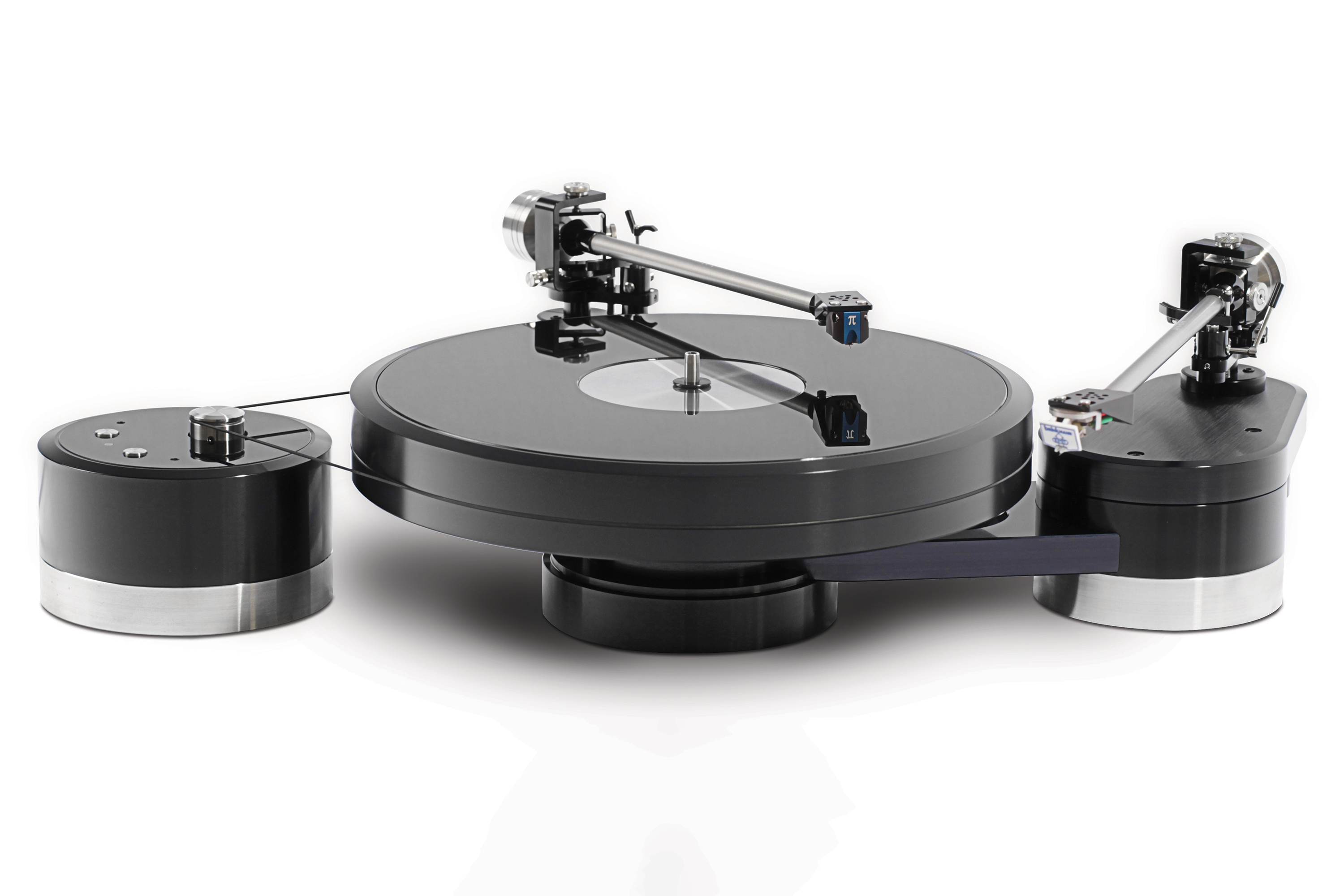
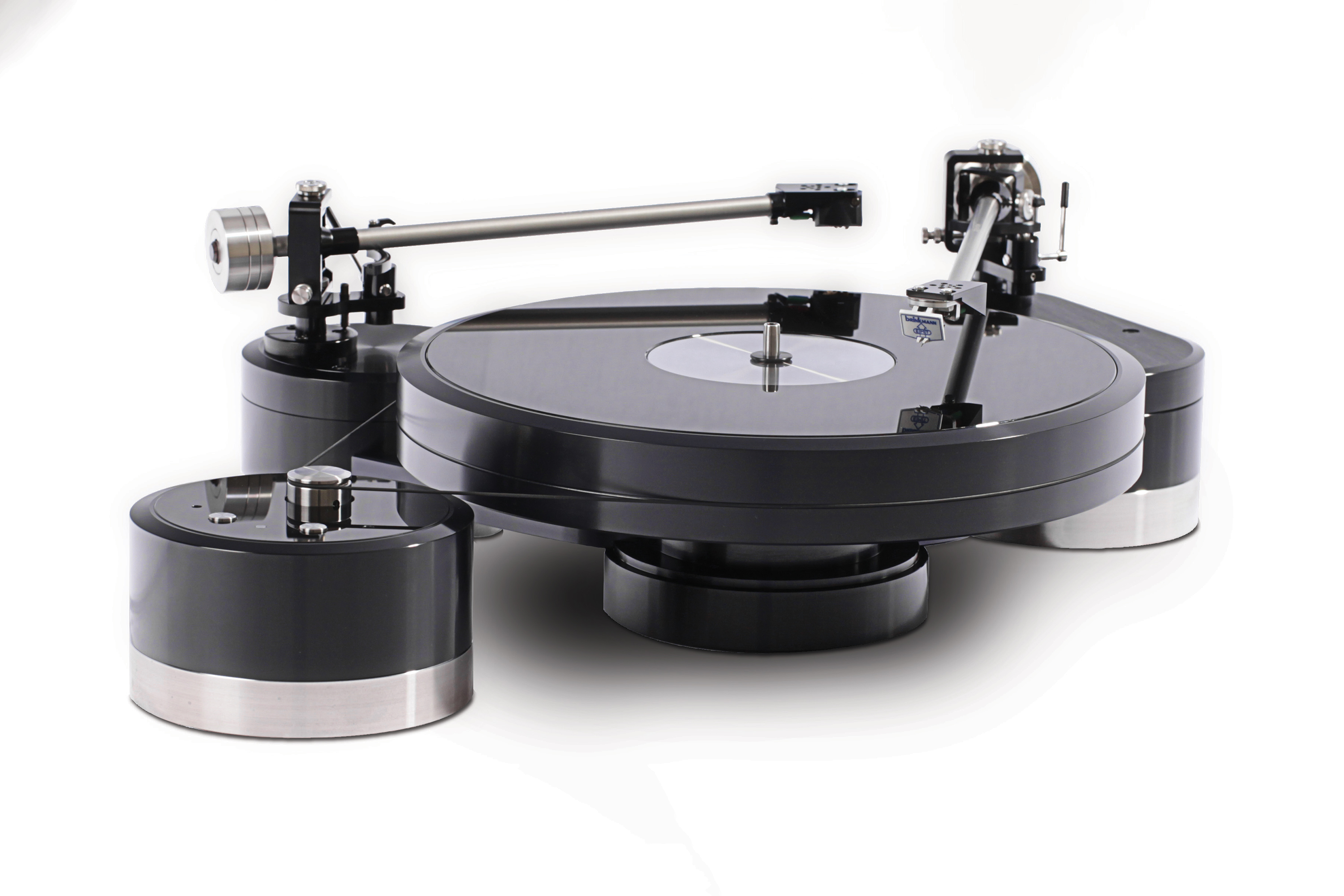
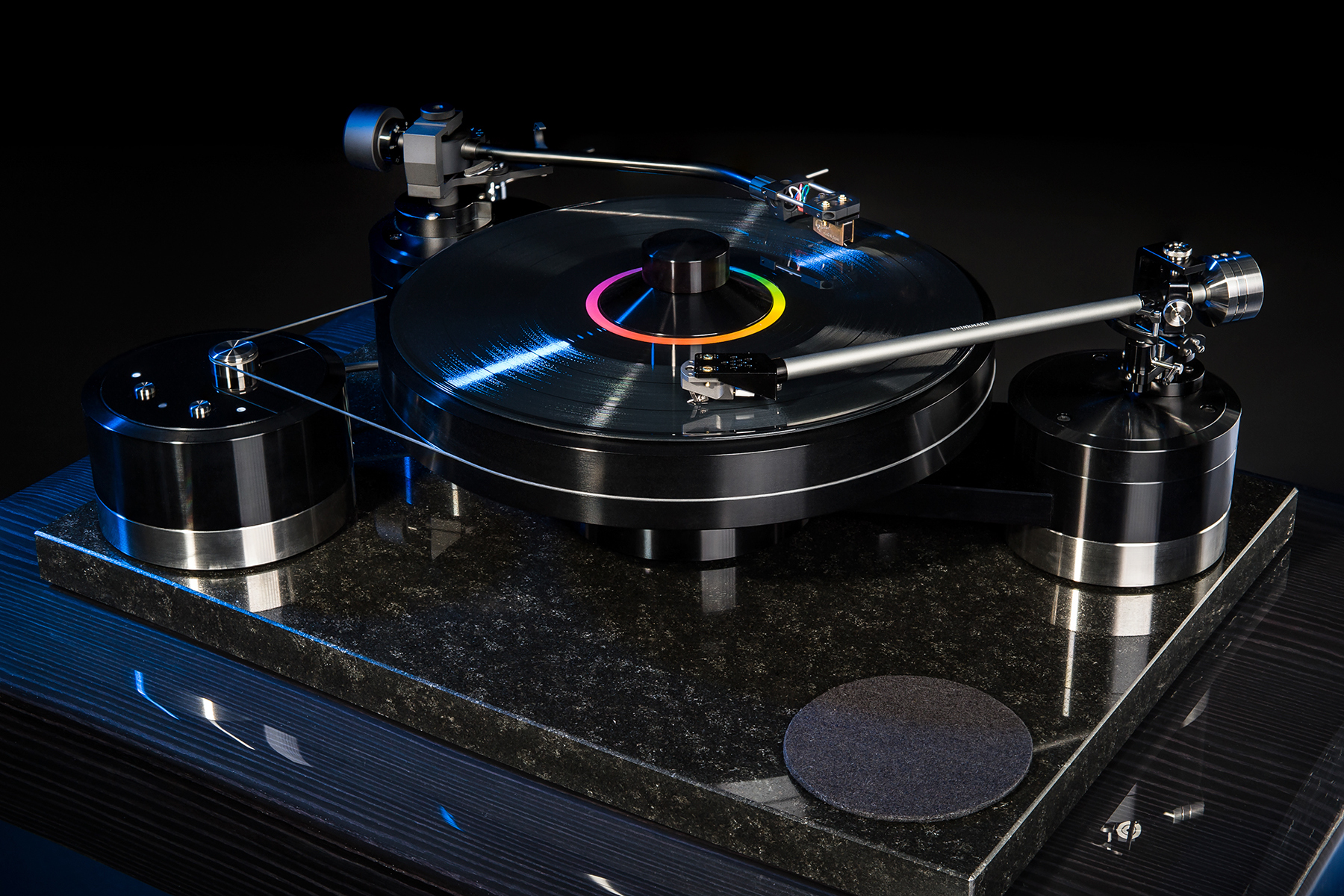
In the great scheme of high-end turntables, Brinkmann’s Spyder is a redoubtable device. It offers rhythmic ease, great clarity, a smooth tonal balance and expansive soundstaging – making it a highly enjoyable listen. Factor in its excellent finish, flexible design and overall engineering, and even at this price it is fine value. Those fortunate enough to aspire to such a thing should consider it an essential audition.
There’s a surprising amount of dynamic scale to its sound that is notably less compressed than with other decks. When the music gets loud, the Spyder happily conveys this without breaking into a sweat, yet it can eke its way deep down into the spaces between the notes to capture the subtleties of the music. This is an authoritative-sounding turntable that takes everything effortlessly in its stride.
The Spyder has great technical ability: it is an extremely stable-sounding device, devoid of the speed issues that plague lesser turntables. This brings great focus to the sound, which lets it excavate masses of low-level detail. Things snap into place and one feels like the fog has lifted from the recording. The effect is clear everywhere, from its deep, extended bass – which starts and stops snappily – to the treble, which is finely etched, spacious and crisp.
In the midband you find yourself fixating on the beauty of vocal harmonies, for example, or the purity of aggressively struck steel guitar strings. Cue up a classic rock track like Kate Bush’s ‘Babooshka’ [Never For Ever; EMI EMA 794] and you’re greeted with an impressively deft rendition of those opening arpeggios with their stinging attack transients – which lesser turntables invariably slur. Only a few select direct-drive turntables do better on this particular song, which is really saying something.
Indeed the Spyder is devoid of any nasties that distract the listener – disc surface noise seems very low, the deck’s ‘drive train’ keeps vanishingly quiet and the tonearm tracks most securely. Another enjoyable aspect of its character is its particularly fine soundstaging.
Link do recenzji: Brinkmann Spyder – Hi-Fi News
Brinkmann Spyder
Nagrody
Brinkmann Spyder – The Absolute Sound – Editors' Choice 2023
The Spyder’s sound is transparent, dynamic, low in perceived distortion, with a high degree of neutrality. It exhibits a clarity without that etched quality that is sometimes mistaken for clarity or transparency or resolution. The Spyder is also well isolated from external disturbance, even when the music gets big, deep, and loud. Operationally this setup was a joy to use, its fit and finish of a caliber that spells “G-E-R-M-A-N” in caps. In sum, here’s a vinyl player of all-around excellence that should provide years of performance both pleasurable and trouble-free.
Link: Brinkmann Spyder – The Absolute Sound – Editors' Choice 2023
Brinkmann Spyder – Stereophile – Recommended Components 2019

Link: Brinkmann Spyder – Stereophile – Recommended Components 2019
Brinkmann Spyder– Hi-Fi News – Outstanding Product

Brinkmann Spyder – Stereophile – Recommended Components 2019

Link: Brinkmann Spyder – Stereophile – Recommended Components 2019
Brinkmann Spyder – Stereophile – Recommended Components 2018

Link: Brinkmann Spyder – Stereophile – Recommended Components 2018
Brinkmann Spyder – Stereophile – Recommended Components 2018

Link: Brinkmann Spyder – Stereophile – Recommended Components 2018
Brinkmann Spyder – Stereophile – Recommended Components 2017

Link: Brinkmann Spyder – Stereophile – Recommended Components 2017
Brinkmann Spyder – Stereophile – Recommended Components 2017

Link: Brinkmann Spyder – Stereophile – Recommended Components 2017
Brinkmann Spyder – Stereophile – Recommended Components 2016

Link: Brinkmann Spyder – Stereophile – Recommended Components 2016
Brinkmann Spyder – Stereophile – Recommended Components 2016

Link: Brinkmann Spyder – Stereophile – Recommended Components 2016
Brinkmann Spyder – Stereophile – Recommended Components 2015

Link: Brinkmann Spyder – Stereophile – Recommended Components 2015
Brinkmann Spyder
Galeria
Zobacz także

Brinkmann
Cennik
Cennik Brinkmann Audio
Link: Cennik Brinkmann Audio
Brinkmann
Dealerzy
Dealerzy Brinkmann Audio
Link: Dealerzy Brinkmann Audio