
Brinkmann Bardo
Recenzje
Recenzja Brinkmann Bardo w Highfidelity.pl
O zestawie Brinkmanna mógłbym pisać jeszcze długo, bo to znakomity system i niemal każda płyta na nim zagrana była wyjątkowym doświadczeniem, przeżyciem. Najprościej brzmienie tego systemu opisać tak, jak zrobiłem to na początku – akuratne. Nie potrafię wskazać mocniejszych i słabszych jego stron. Oczywiście zmiana ramienia z 10.0 na 12.1 (także z lepszą wkładką) pokazało, że da się jeszcze lepiej, a czytając test Bardo autorstwa Michaela Framera można się dowiedzieć, że ze sporo droższym ramieniem napęd Brinkmanna pokazał się z jeszcze lepszej strony, ale faktem także jest, że to niezwykle dopracowany, high-endowy system...Nie ma znaczenia, jaki repertuar preferujemy – równie dobrze brzmiało flamenco, jazz, blues, muzyka elektroniczna, jak rock, nawet heavy metal, duża klasyka. Przy graniu akustycznym było mnóstwo detali, wybrzmienia, barwa, przy elektrycznej drive, wykop, dynamika i gigantyczne pokłady energii – oczywiście, jeśli tylko zapisano to w rowkach płyty.
Bardo, niezależnie od ramienia, czy wkładki (pośród odsłuchanych oczywiście) wydawał się być wyjątkowo odporny na trzaski, które zwykle towarzyszą odsłuchowi czarnej płyty. Oczywiście, że zależą one w dużej mierze od czystości płyt i igły, ale mając porównanie odsłuchu tych samych krążkach na różnych gramofonach mogę powiedzieć, że Brinkmann z jakiegoś powodu jest nieco mniej wrażliwy na zabrudzenia, czy ładunki elektrostatyczne zbierane z rowków. Z jednej strony wydawał się odczytywać więcej informacji niż inne maszyny, bo i te „gorsze” płyty brzmiały lepiej niż choćby na moim gramofonie, z drugiej natomiast z tych najlepszych wydań „wyciągał” prawdziwą magię muzyki. To co zagrał z wydanego przez Classic Records na jednostronnie tłoczonym „clear vinyl” Somethin' else Cannonballa Adderly’ego nie da się inaczej nazwać, jak właśnie czystą, muzyczną magią – namacalność instrumentów, prawdziwość ich brzmienia przyprawiała o ciarki na plecach. Moim zdaniem w słuchaniu muzyki chodzi właśnie o to. Trudno nazwać propozycję Helmuta Brinkmanna tanią, ale w porównaniu do produktów innych marek Bardo, nawet z ramieniem 12.1, nie jest aż tak drogi, oferując brzmienie, któremu nawet wielu maszynom droższym od niego trudno będzie dorównać. Jeśli gotowi jesteście Państwo wydać na gramofon sporo, ale nie szalenie dużo, to Bardo wydaje się być jedną z najciekawszych propozycji na rynku, taką, z którą można spędzić resztę audiofilskiego życia. Bezwzględna rekomendacja z mojej strony!
Link do recenzji: Brinkmann Bardo – Highfidelity.pl
Recenzja Brinkmann Bardo w Stereophile
The Bardo is orders of magnitude better than I would have believed had I used it only with Brinkmann's own 9.6 tonearm. That's not to say the 9.6 isn't a good arm at its price, or that the Bardo didn't sing and swing when connected to it, or that, in a less revealing system whose speakers and amp don't add up to $100,000, the Brinkmann combo wouldn't be among the best analog front-ends you can own for under $20,000. It's just that the costlier Kuzma 4Point is considerably better, and let the Bardo express itself more fully in every way.
With the Pi cartridge riding in the massive 4Point, the top end smoothed out considerably and was less pronounced without losing any air, transient speed, or high-frequency extension. Ella Fitzgerald's voice became more three-dimensional and nuanced and less bright, in part because the reverb better separated out into its own space instead of being submerged in the sound of her voice. The kick drum's energy produced a greater wallop and more satisfying whomp. More than that, the wind instruments in the right channel took on a richer, rounder harmonic sheen, while the piano in the left sported more wood and less cardboard. Images became more stable and solid—and through the 9.6 they'd already been plenty good in that regard.
The Bardo's speed control was, as expected, superb. If the direct-drive motor suffered from any rotational speed "jitter," it did so minimally. The Bardo's low-frequency extension and control were very, very good, and probably better than those of some more expensive belt drives in terms of low bass not creeping into the midbass, where it doesn't belong. Thin and/or malnourished in the bass the Bardo was not.
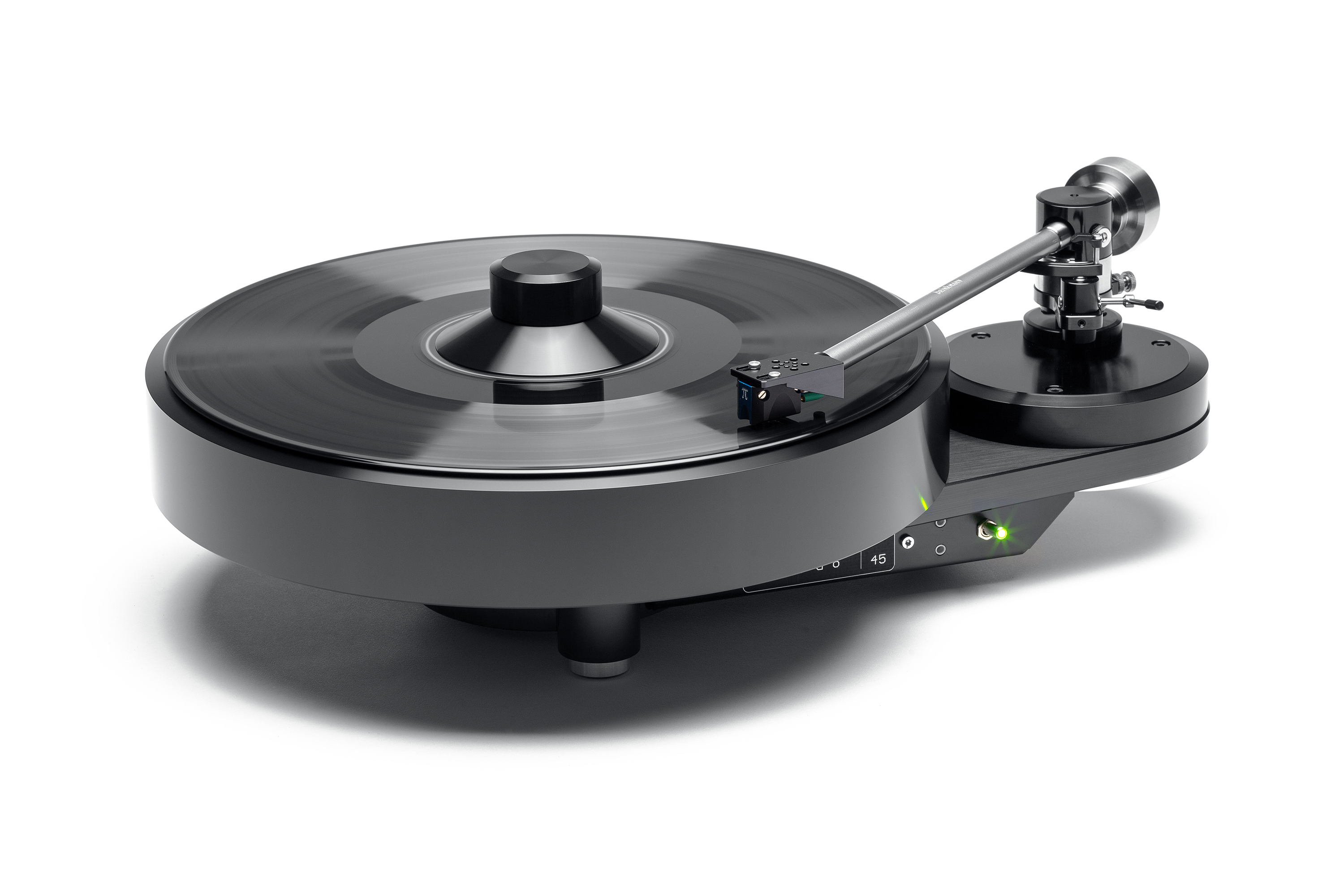
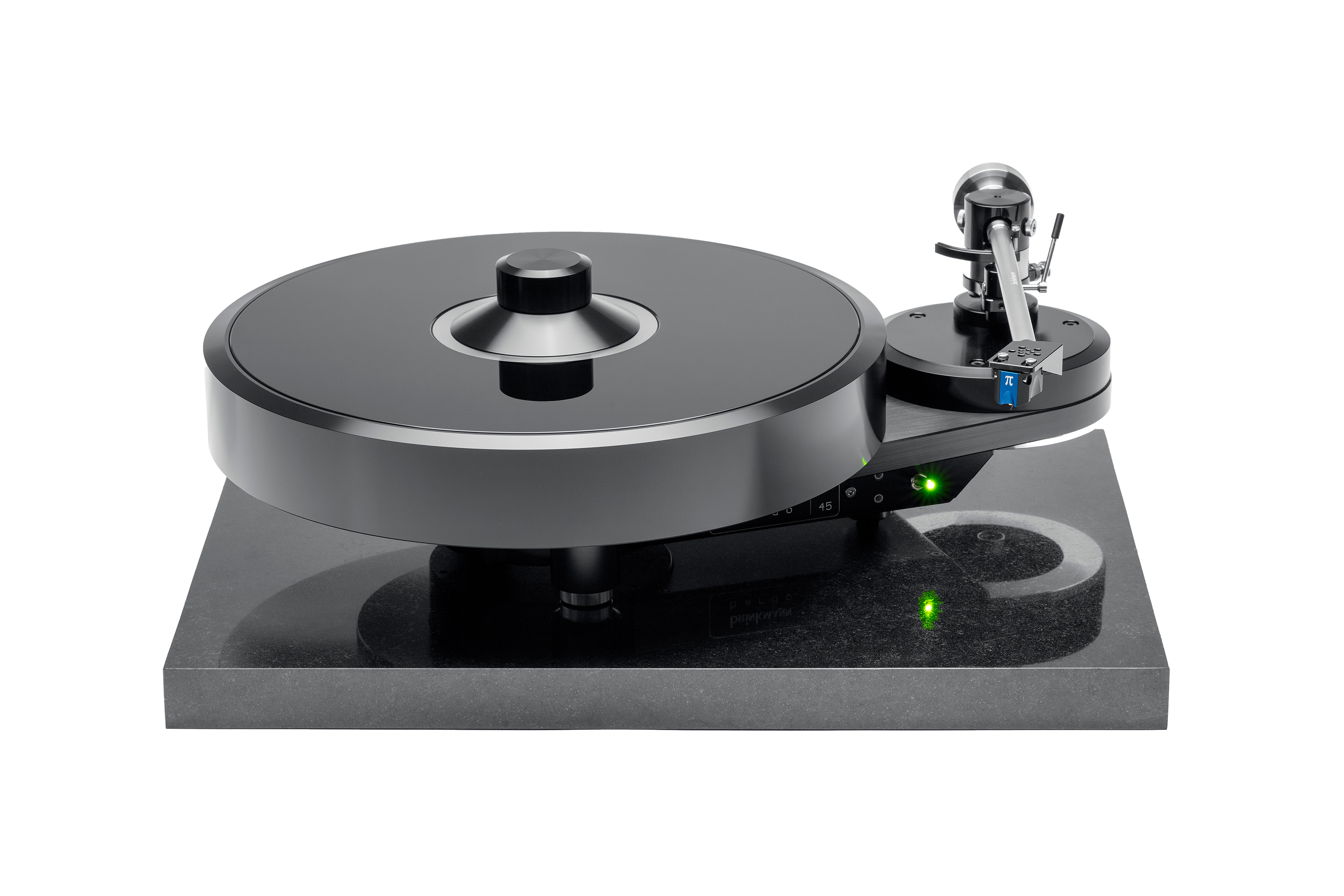
The Bardo is beautifully made, smartly designed (I think the high-mass platter and low-torque motor are key to its performance), looks elegant, and has no outboard motor and belt to potchky with. Out of the box, it's plenty good—and once you're hooked, you can make it even better. At $9490 with glass and stainless-steel mat and record clamp, the Brinkmann Bardo is a contender for the best turntable under $10,000, and probably should be auditioned by anyone looking for a turntable costing $15,000, or even more. It sounds that good, and its build quality and fit'n'finish are worthy of 'tables costing far more.
And if you're an experienced analog hand with $10,000 to invest and a prejudice against direct-drive turntables, you should definitely hear the Brinkmann Bardo before plunking down your money for anything else.
Link do recenzji: Brinkmann Bardo – Stereophile
Recenzja Brinkmann Bardo w The Audio Beat
Not surprisingly, the Bardo does have a character much different from belt-drive 'tables. Once the cartridge broke in, it was obvious just how much the Brinkmann approach differed from my experience with belt- and rim-drive 'tables. The Bardo came across as a fast and muscular record-playing engine. There was a sense of propulsion and accuracy. Perhaps some of this comes from the Brinkmann’s Teutonic character, but I suspect that direct drive grips the road and holds to the curves more precisely. The Bardo evoked the intensity and drive of an Arturo Toscanini, where a belt-drive 'table brings to mind the more relaxed feel of Janos Starker playing cello sonatas.
On string music, the Bardo brought greater definition to the strings, capturing each centimeter of the bow’s vertical movement across the strings, as opposed to the sense with the VPI of more directly experiencing the strings’ horizontal vibrations as the bow moved over them. With large-scale orchestral works, the Bardo provided cleaner crescendos and a bit tighter bass, with various sections of the orchestra standing out -- and sorted out more distinctly -- compared to the VPI’s somewhat larger soundstage and more relaxed order of detail. The Bardo pulled more detail out of a complex mix of sounds -- things lost with the more tube-like sound of rubber-driven 'table. The Bardo’s mix of muscle and bass extension played well with rock and pop music too.
The Brinkmann package is an exceptional melding of beauty and smooth function. It delivered a balanced sound that I could easily live with, although some may prefer a more romantic mix of virtues. Its gorgeous styling, smart execution and muscular sonic delivery wrapped up beauty and the beast in a neat package. The Bardo may be dressed up with Brinkmann’s more expensive tonearm and cartridge stable-mates, not to mention additional power-supply and support-platform options, but I suspect the unit as packaged offers most of what can be obtained without losing sight of cost.
The Bardo/9.6/Pi package offers a real taste of direct-drive’s promise. You don’t get the advantages of a large 'table that can accommodate multiple 'arms, nor can you adjust VTA on the fly. But if your goal is to stick with one cartridge at a time and not incessantly adjust it, this combination’s strengths of well-defined pitch, exceptional retrieval of detail, elegant controls and gorgeous aesthetics may well be just the right mix for you.
Link do recenzji: Brinkmann Bardo – The Audio Beat
Recenzja Brinkmann Bardo w Tone
As Adrian Belew’s trippy, reverse tracked, overdubbed vocals in “Big Electric Cat” go all the way from the edges of my speakers, out about seven more feet to the walls of my listening room, with detail galore, it’s easy to fall in love with this table. The Koetsu Onyx Platinum cartridge that costs as much as the Bardo puts forth a more engaging performance than it has here in any of my other reference turntables. Here, here for synergy. During the review period, everything from a Shure M97 to the Koetsu has been taken for a test drive, but the Japanese masterpiece wins the day. Everything on hand works exceptionally well with the Bardo. However, this table is fully up to the task of a $10k premium cartridge. It’s that good.
Going way back to the obscure bin, an old favorite, Tim Curry’s Fearless is an album full of slick late 70s production, with some of rock’s favorite sidemen backing up Dr. Frank-n-Furter in his alternate career as a serious musician. The bass line in this record has always sounded somewhat vague, yet when portrayed by the Bardo, it’s rock solid. Actually, everything played on the Bardo has an uncanny sense of pace to it. The nearly $40k AVID Acutus REF SP and SME V has a little more weight in the lows and delicacy in the highs, but the Bardo is unbeatable at its price point.
Watching the real-time speed graph for the Bardo, it’s near flat across the board. The phrase “rock solid” definitely applies here. Because Brinkmann implements direct drive the opposite way that the legendary Technics tables did, the result is much more to the liking of a modern audiophile.
The presentation of the Bardo is indeed unique. Record after record has an ease and freedom from fatigue, again because of the excellent speed accuracy this table offers. Friends with canine hearing claiming perfect pitch that can hear a plethora of speed issues on every table I’ve ever reviewed were not only dead silent listening to the Bardo but they were also outright complimentary. Violins take on a magical realism with this table because of that speed accuracy.
You’ll probably key in immediately to how great your rock records sound, should you be a fan of this genre. The Bardo does a great job in the bass performance, but if you live on a strict diet of Zeppelin, you might not notice the subtleties of this table quite as much as the classical listener preferring soloists and small ensemble music. Sampling this fair gives the Bardo a near reel to reel tape like transparency.
Here’s why the Brinkmann Bardo is our choice for 2016 Analog Product of the Year; it offers tremendous value, build quality, sound quality and ease of use. I’ve listened to my fair share of $100,000 plus turntables and have always walked away unimpressed. You can buy a pretty major hi-fi system for $100k, and I suggest if you take that path, you put the Bardo on top of your rack. Seriously, other than a few audio reviewers and a couple of hedge fund managers that got a screaming deal, who owns a $100,000 turntable anyway?
Link do recenzji: Brinkmann Bardo – Tone
Recenzja Brinkmann Bardo w hi-fi+
The player as a whole is extremely revealing and very even handed, it’s not as warm as an SME but it’s considerably more full bodied than a Clearaudio of similar price. The balance is on the lean side really but it could never be described as forward, in fact it’s very good at getting out of the way and letting the music through in all its emotional glory. I was struck by how much woe there is on Conjure’s ‘Oakland Blues’, this is a fabulous song written by Carman Moore and sung so effectively by Robert Jason that I have been listening to rather a lot on streamers of late but it takes on whole new depths with this turntable. It sounded very real thanks to the layers that the Bardo reveals in pretty much everything you spin, it also extracts the life in the recording in no uncertain fashion. A lot of seemingly neutral turntables fail in this crucial respect and effectively undermine one of the key qualities of vinyl, but this one lets all the vitality of the music out in the context of a presentation that’s as open as the recording allows.
Its timing, while strong, is not in the front league, high mass turntables, whatever the drive system, rarely are but this is not all that apparent without comparison. What it does rather obviously is put the music squarely in the room, it creates a physical presence that makes everything in the mix more real and tangible. This is largely because it tracks dynamics so well, maximising the contrast between the various instruments and voices in the mix gives the result a true sense of life that is hard to resist.
This is all the more apparent when someone like Leo Kottke starts picking his acoustic guitar, the quality of playing is intoxicating because the turntable has no apparent overhang – notes stop and start with precision but without any undue emphasis or ring. As mentioned the Bardo can sound a bit lean at times and needs the rich muscularity of the EMT cartridge to balance this out, but its tautness and body with a van den Hul Condor is also extremely engaging. So much so that I found myself listening at unnecessarily high levels just for the fun of it. Under such circumstances its musical skills are brought to the fore and the records sound even better, at least for as long as the neighbours can tolerate it. Put on a spectacular recording such as the recent Premonition Records pressing of Patricia Barber’s Café Blue and you can’t help but be overwhelmed by the experience – to be frank I’m not a huge fan of her work, at least I didn’t used to be. In the Bardo’s hands the second track Mourning Grace changed all that.
Link do recenzji: Brinkmann Bardo – hi-fi+
Recenzja Brinkmann Bardo w Hi-Fi Voice
Brinkmann Bardo nezapře svůj německý původ – jeho projev je velmi organizovaný, pevný a klidný. Když zazní prvotní údery do velkého kotle v úvodu „Trafalgar" od Bee Gees (MOFI | 0973), hluboké, velké tóny zazní masivně, autoritativně a přitom velmi uvolněně, Bardo jako kdyby uměl předat libovolné množství energie a přitom stále nevyčerpal svou dynamickou rezervu. Libovolná hlasitost, libovolně komplikovaný moment, Brinkmann neztrácí svůj klid a jakousi až zenově klidnou vyrovnanost.
Stejně tak v klidu a bez vyčnívajících či nepříjemných momentů umí předat i oblasti výšek – úvodní zběsilé hodinářství na slavné „Time" (Pink Floyd | „Dark Side of the Moon" | EMI | EMILPI1362) je naprosto hladké, jemné, přitom ale maximálně naléhavé. V kombinaci s přenoskou Transfiguration a měkkou „áčkovostí" komponentů Pass Labs je dojem naprosto úchvatný, podmanivý a nesmírně sugestivní. Cinkot hodin je čistý a prokreslený do nejmenších detailů. Jeho nepřehánějící, poklidný, muzikální charakter už je ale vlastní tomu nejvyššímu high-endu, Bardo je úvodem do nekompromisní věrnosti.
Se stejnou lehkostí a nenuceností si vychutnáte i velký zvuk úvodních pasáží „Also sprach Zarathustra" Richarda Strausse (Vídeňská filharmonie | Herbert von Karajan | Ace of Diamonds | SDD2102). Naprosto přirozená barevnost, nezkreslená dynamika a snad jen o mikroskopický ždibec pomalejší zvuk jsou naprosto odzbrojující kombinací, která vás vtáhne do hudebního dění, dá vám prohlédnout i skutečně drobné zvukové detaily a navíc vše plyne jako mohutná, naprosto soudržná hudební řeka. Velmi zajímavá je kombinace bezprostřednosti zvuku a přitom citelného poklidu, které vzbuzují dojem, že takhle nějak to má být a během poslechu ani to nejkritičtější ucho nebude mít touhu hledat chyby – do toho se musíte neustále nutit, protože podmanivý zvuk vás zase a znovu okouzlí a vtáhne do prostoru bez otázek.
Brinkmann Bardo už patří do té kategorie vybavení, která vám se zavřenými očima přenese do poslechového prostoru nejen osobnost, ale i samotnou osobu interpreta a jeho nástroje. Když Diana Krall spustí svůj jazzík na desce „From this moment on" a zvláště v titulní skladbě, což je coververze tracku Cole Portera, bude vám až běhat mráz po zádech. Emoce jsou silnou stránkou Brinkmann Bardo, jeho maximální věrnost reprodukce dává také maximální prostor právě obsahu hudby a jediným limitem kvality se tak stává nahrávka a vaše osobní rozpoložení. Hlas je tak živoucí, že máte skutečně dojem osobní přítomnosti Diany mez reprosoustavami.
Link do recenzji: Brinkmann Bardo – Hi-Fi Voice
Brinkmann Bardo
Nagrody
Brinkmann Bardo – Stereophile – Recommended Components 2020

Link: Brinkmann Bardo – Stereophile – Recommended Components 2020
Brinkmann Bardo – Tone – 2016 Analog Product of the Year

Link: Brinkmann Bardo – Tone – 2016 Analog Product of the Year
Brinkmann Bardo – Analog Planet – The Gruvy Award

Brinkmann Bardo – Stereophile – Recommended Components 2019

Link: Brinkmann Bardo – Stereophile – Recommended Components 2019
Brinkmann Bardo – Stereophile – Recommended Components 2019

Link: Brinkmann Bardo – Stereophile – Recommended Components 2019
Brinkmann Bardo – Stereophile – Recommended Components 2018

Link: Brinkmann Bardo – Stereophile – Recommended Components 2018
Brinkmann Bardo – Stereophile – Recommended Components 2018

Link: Brinkmann Bardo – Stereophile – Recommended Components 2018
Brinkmann Bardo – Stereophile – Recommended Components 2017

Link: Brinkmann Bardo – Stereophile – Recommended Components 2017
Brinkmann Bardo – Stereophile – Recommended Components 2017

Link: Brinkmann Bardo – Stereophile – Recommended Components 2017
Brinkmann Bardo – Stereophile – Recommended Components 2016

Link: Brinkmann Bardo – Stereophile – Recommended Components 2016
Brinkmann Bardo – Stereophile – Recommended Components 2016

Link: Brinkmann Bardo – Stereophile – Recommended Components 2016
Brinkmann Bardo – Stereophile – Recommended Components 2015

Link: Brinkmann Bardo – Stereophile – Recommended Components 2015
Brinkmann Bardo – Stereophile – Recommended Components 2015

Link: Brinkmann Bardo – Stereophile – Recommended Components 2015
Brinkmann Bardo – Stereophile – Recommended Components 2014
Link: Brinkmann Bardo – Stereophile – Recommended Components 2014
Brinkmann Bardo – Stereophile – Recommended Components 2013
Link: Brinkmann Bardo – Stereophile – Recommended Components 2013
Brinkmann Bardo
Galeria
Zobacz także

Brinkmann
Cennik
Cennik Brinkmann Audio
Link: Cennik Brinkmann Audio
Brinkmann
Dealerzy
Dealerzy Brinkmann Audio
Link: Dealerzy Brinkmann Audio