
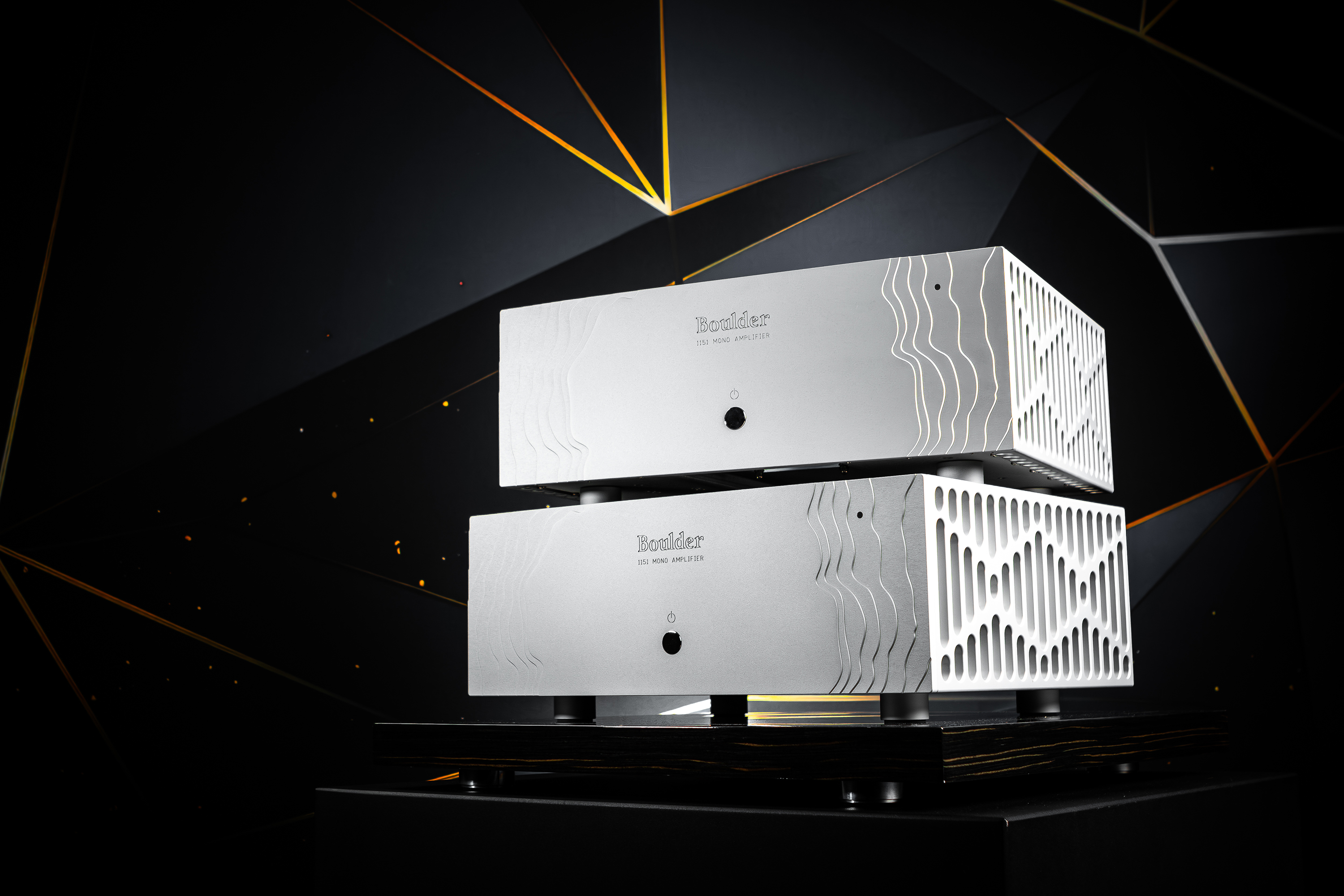
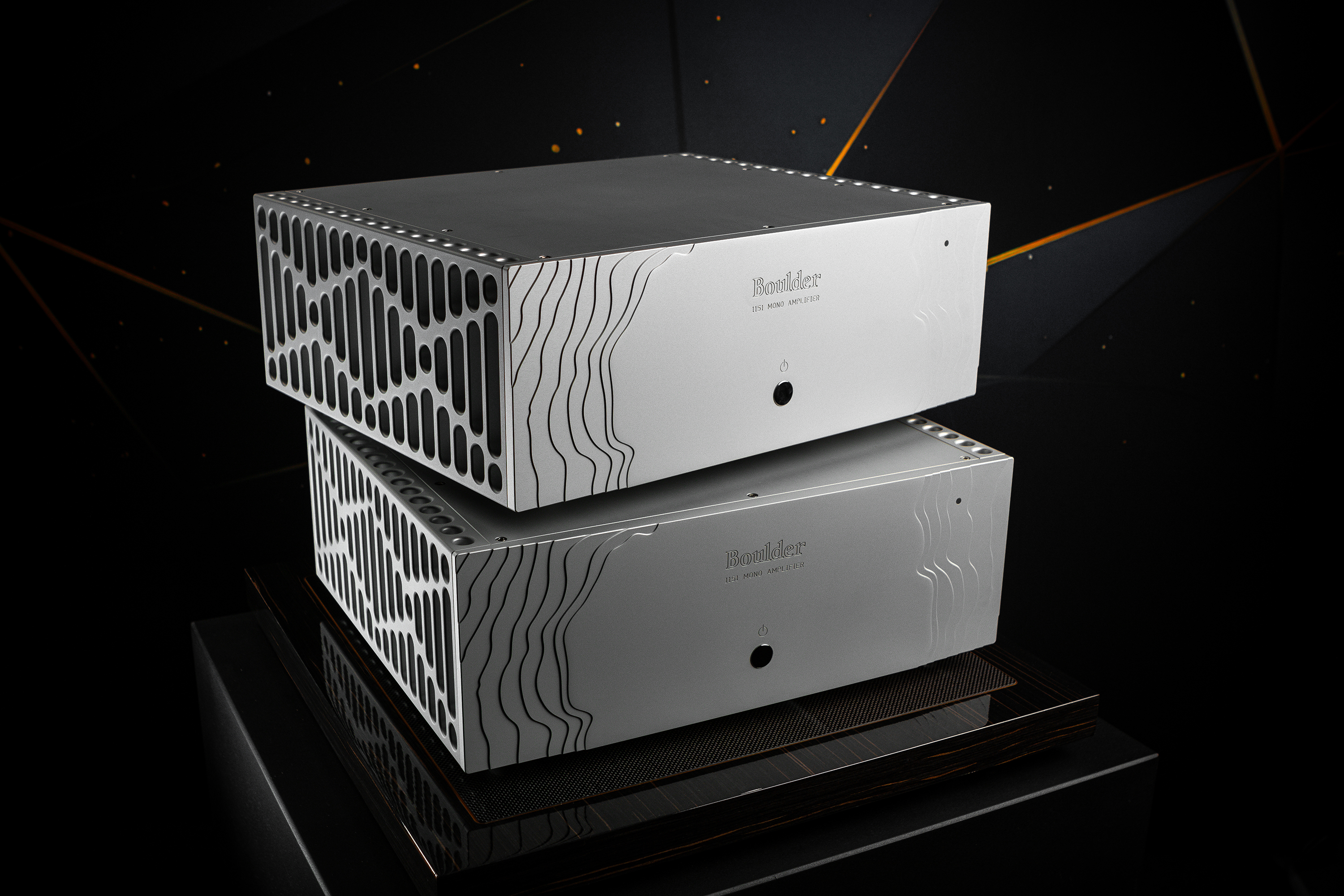
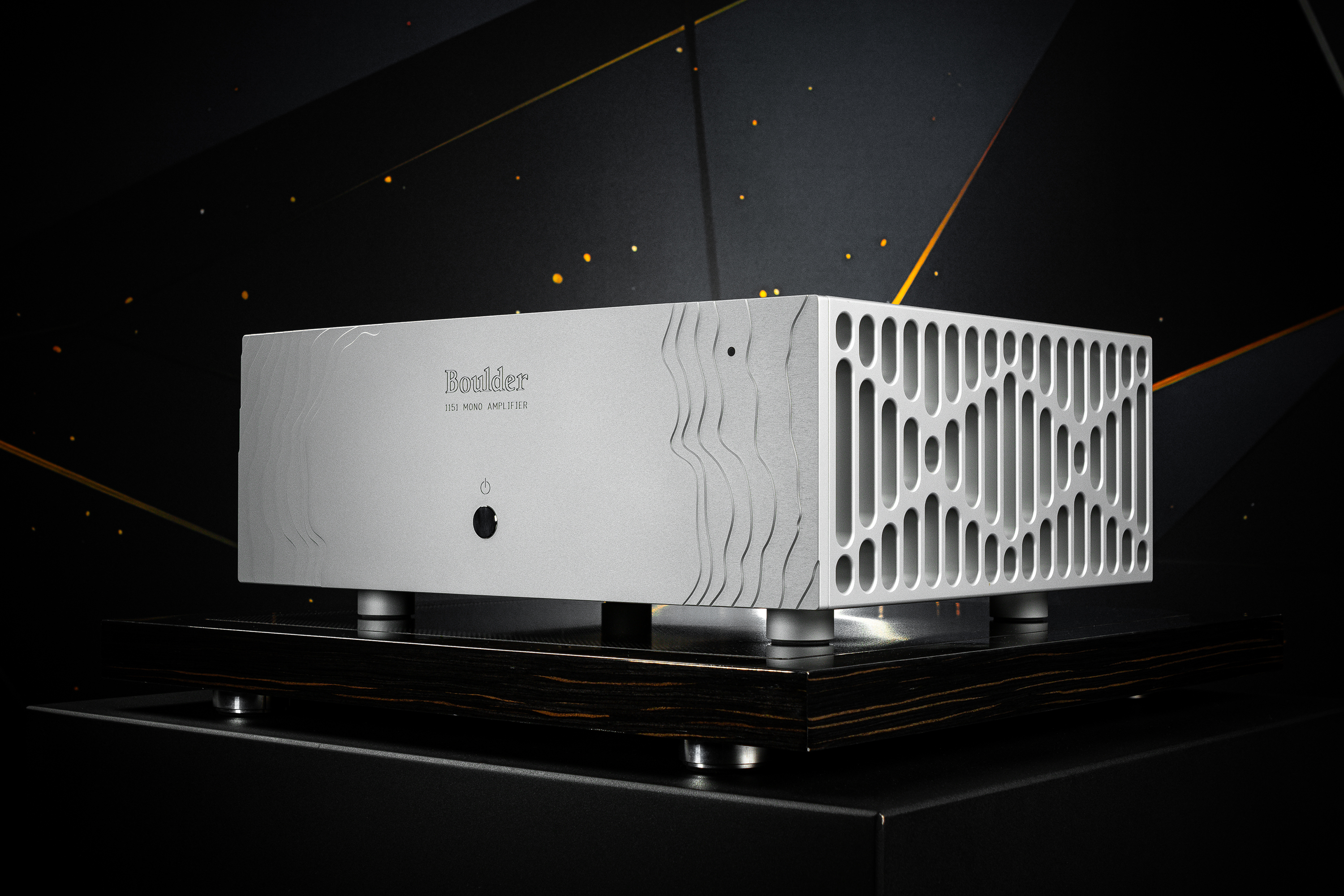
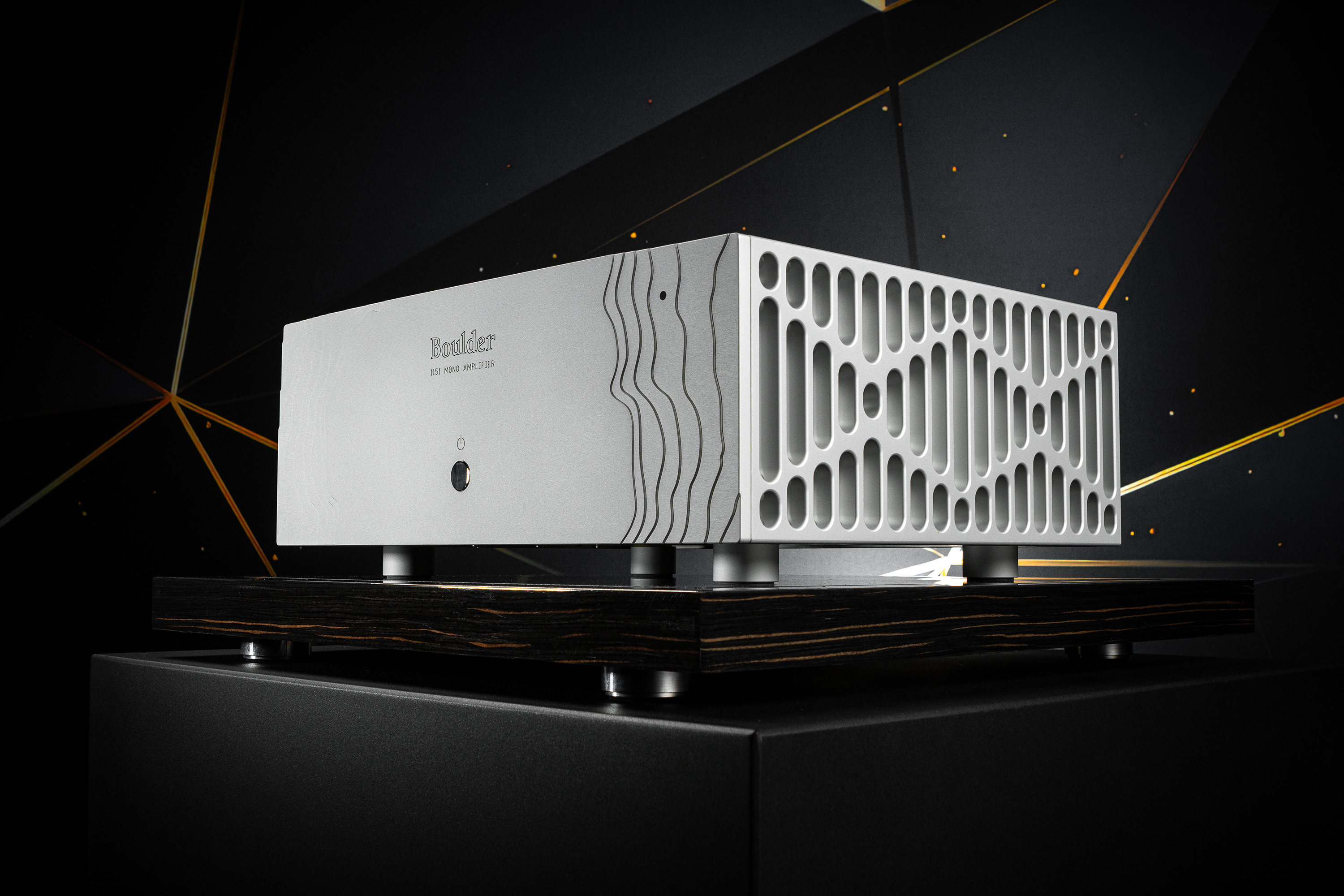
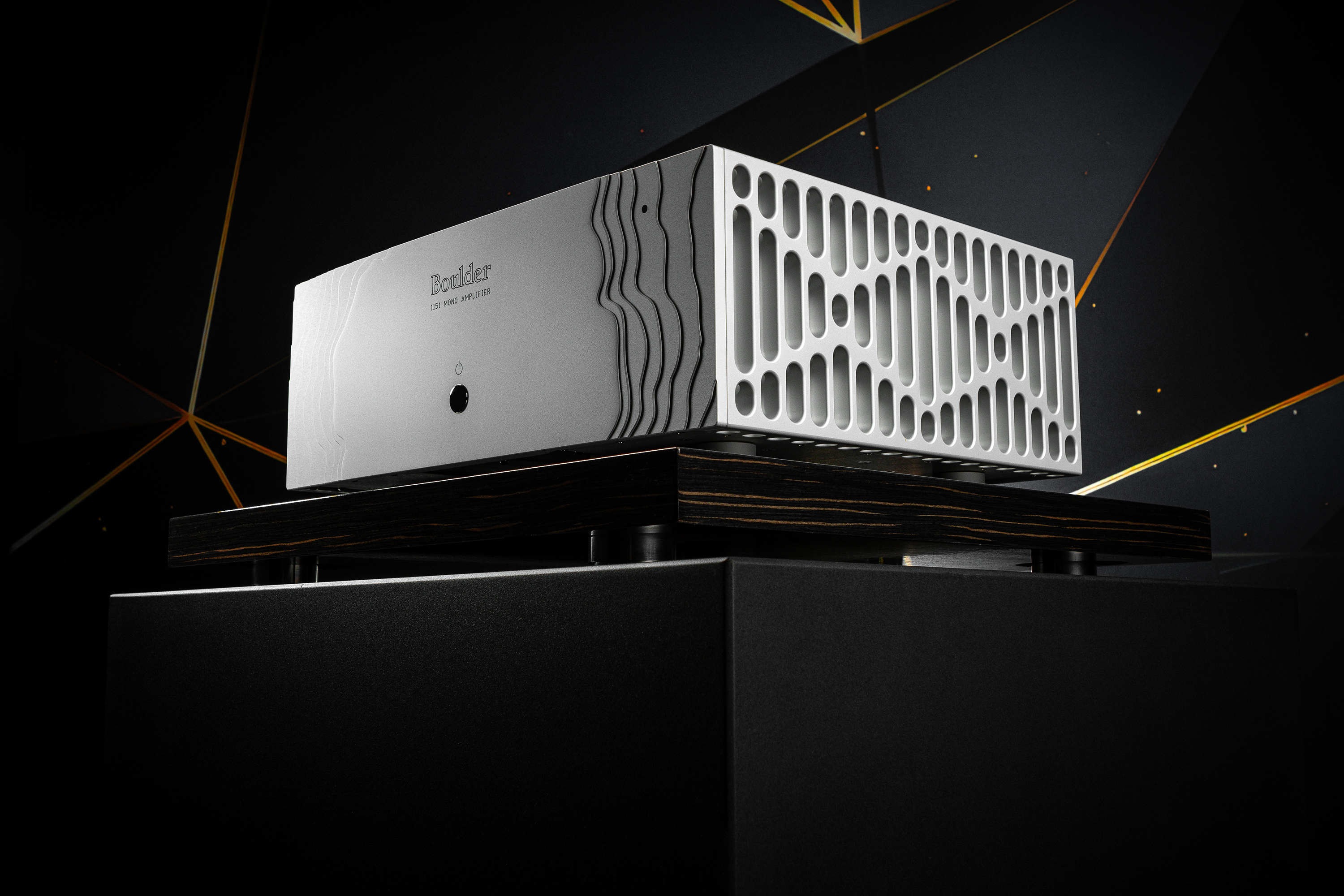
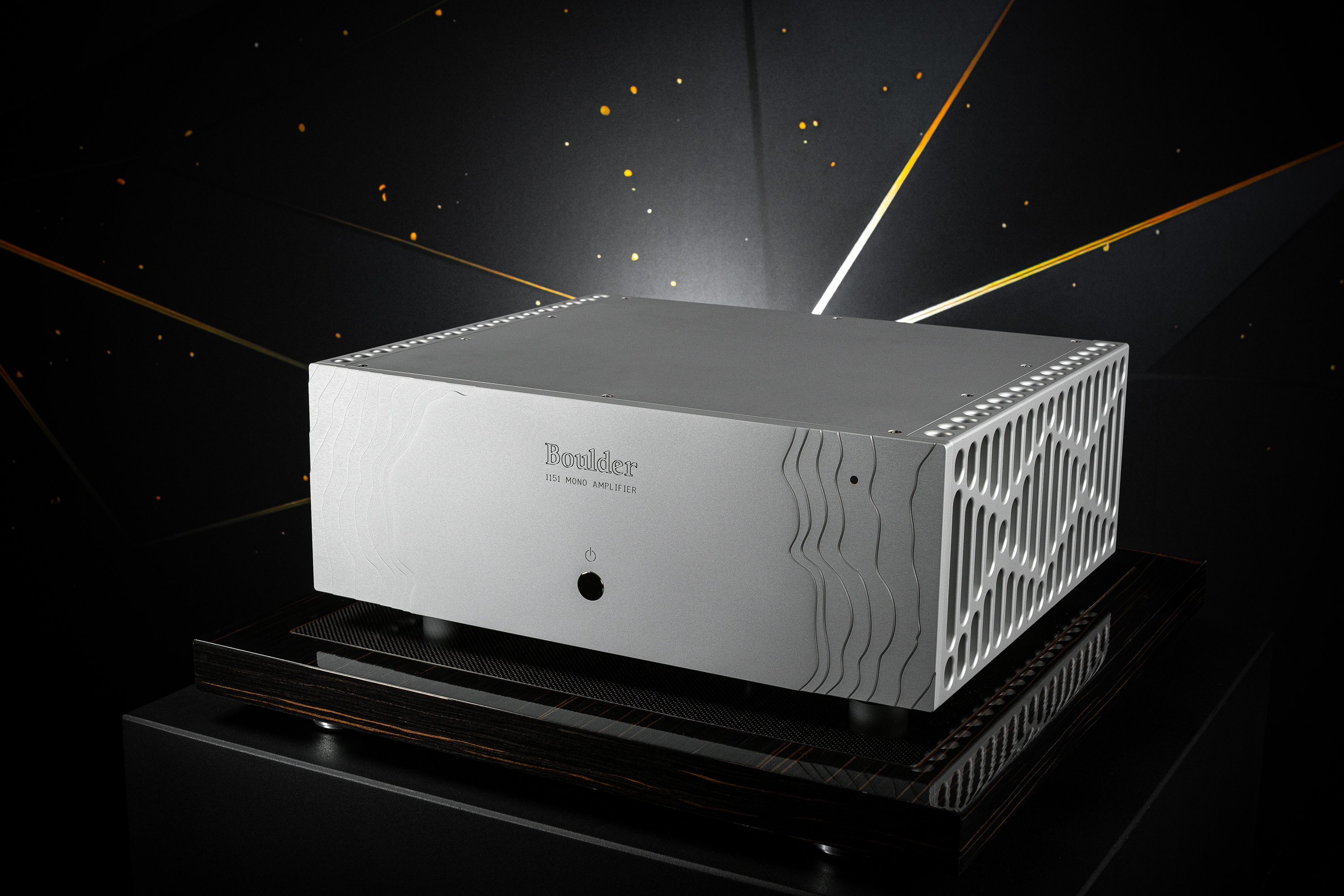
Boulder 1151
Dane techniczne
Moc ciągła, 8 omów 250 W
Moc szczytowa, 8 omów 350 W
Moc szczytowa, 4 omy 600 W
Moc szczytowa, 2 omy 750 W
THD, 8 omów 250 W 0,002%, 20 kHz: 0,01%
THD, 4 omy 250 W 0,002%, 20 kHz: 0,01%
THD, 2 omy 250 W 0,003%, 20 kHz: 0,02%
Równoważny szum wejściowy (EIN), 20 kHz, BW 2.2 μV
Odpowiedź amplitudowa, 20 Hz do 20 kHz +0,00, -0,04 dB
Pasmo przenoszenia, -3 dB 0,015 Hz, 150 kHz
Wzmocnienie napięcia 26 dB
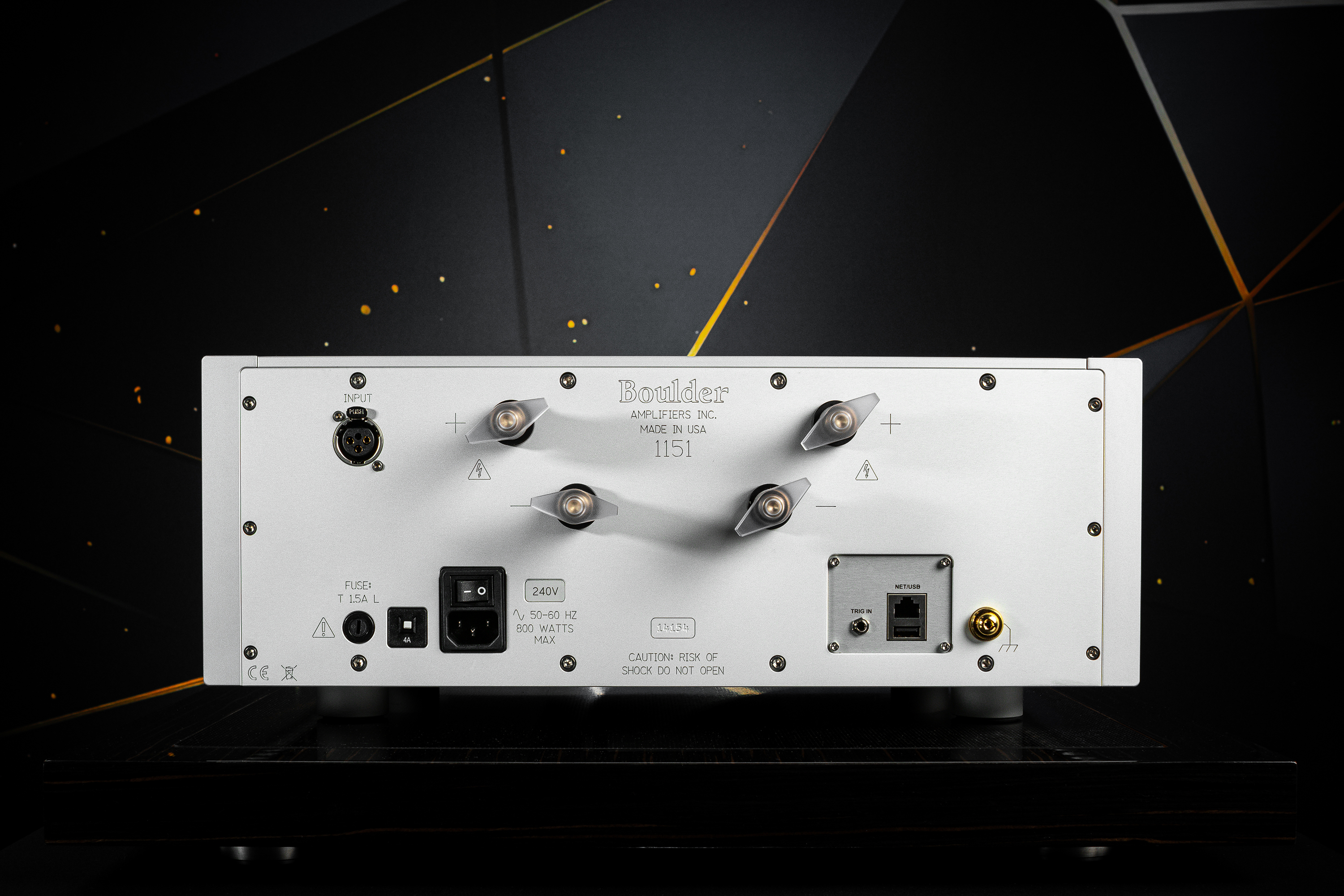
Impedancja wejściowa 50 kΩ symetryczna 25 kΩ niesymetryczna
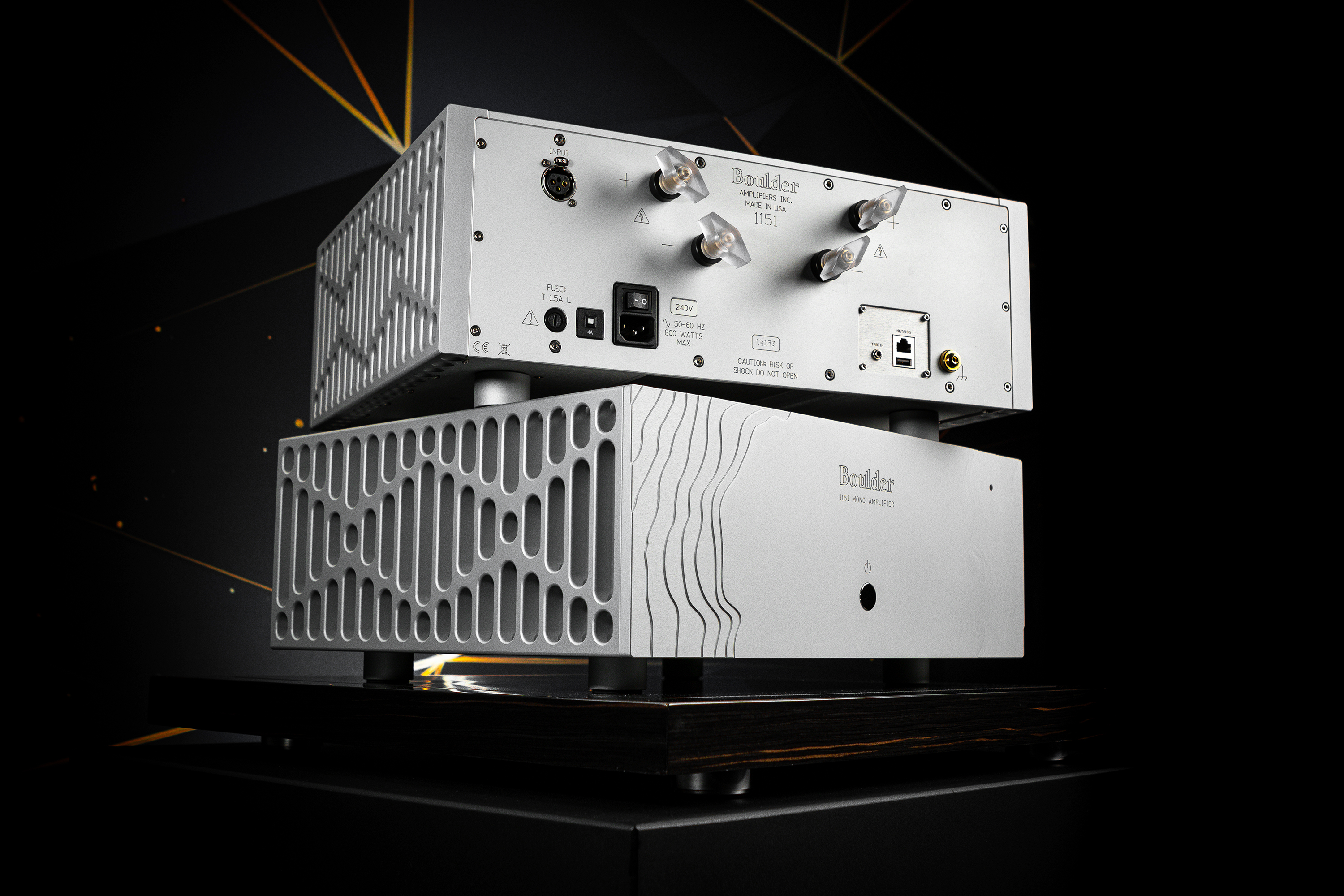
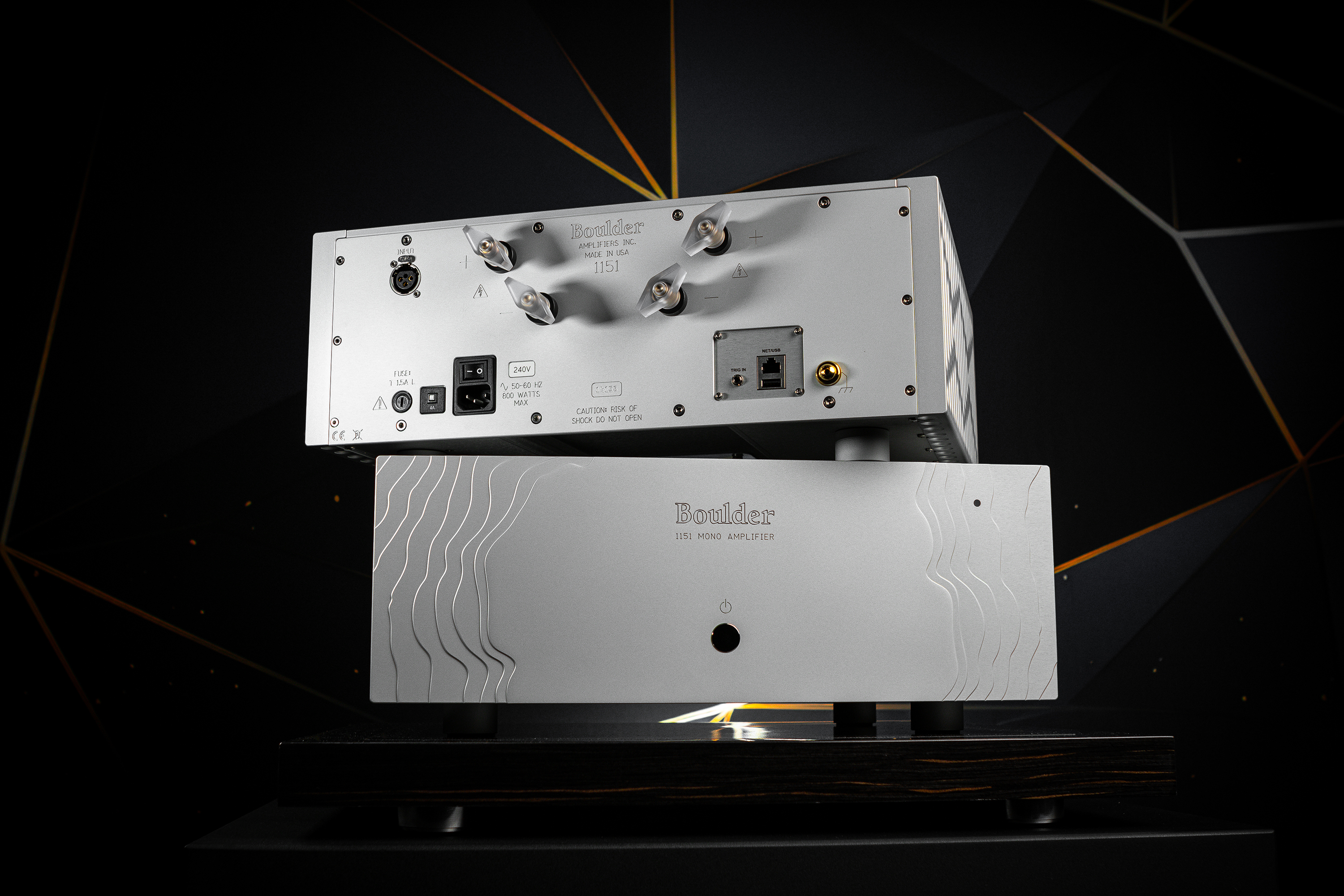
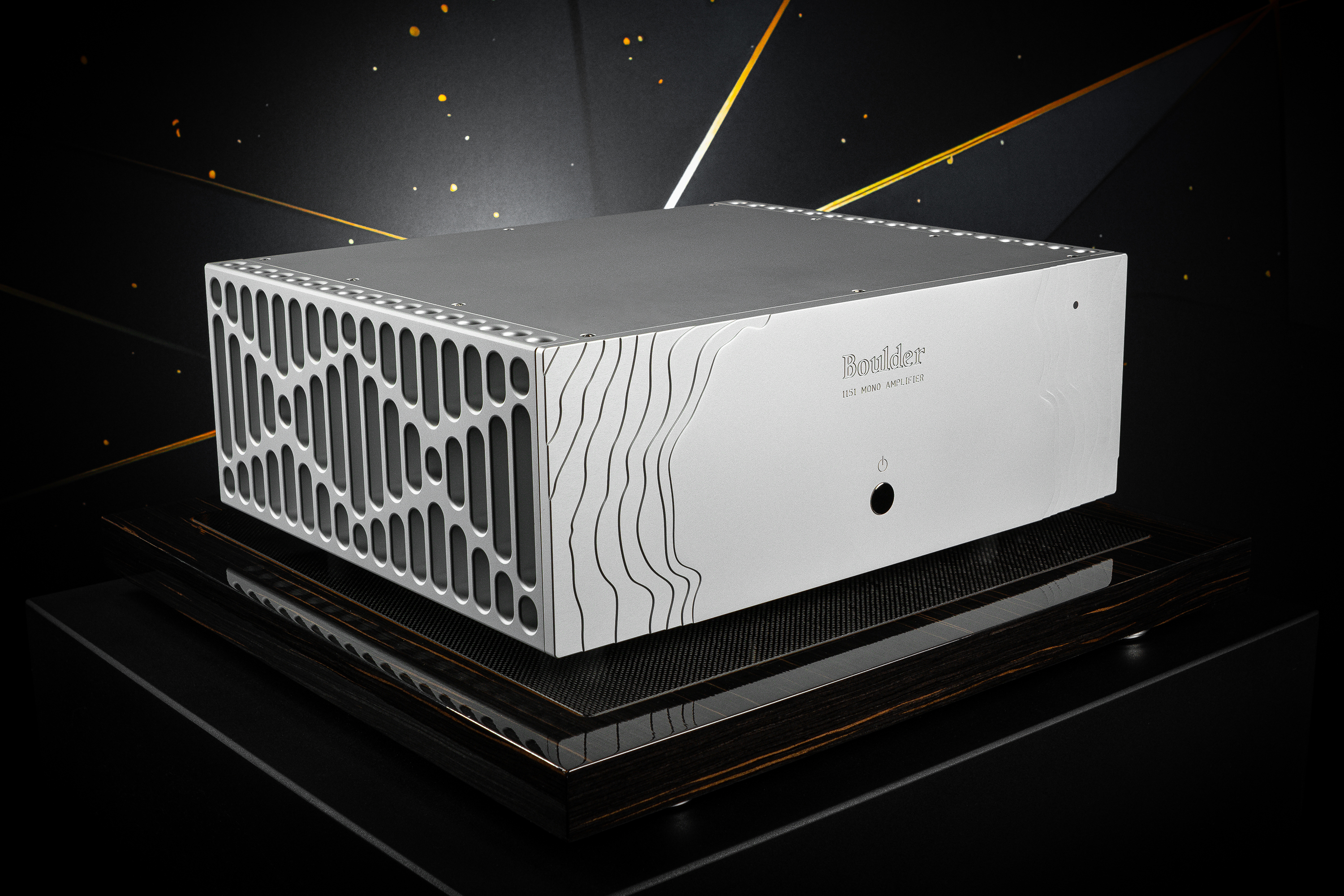
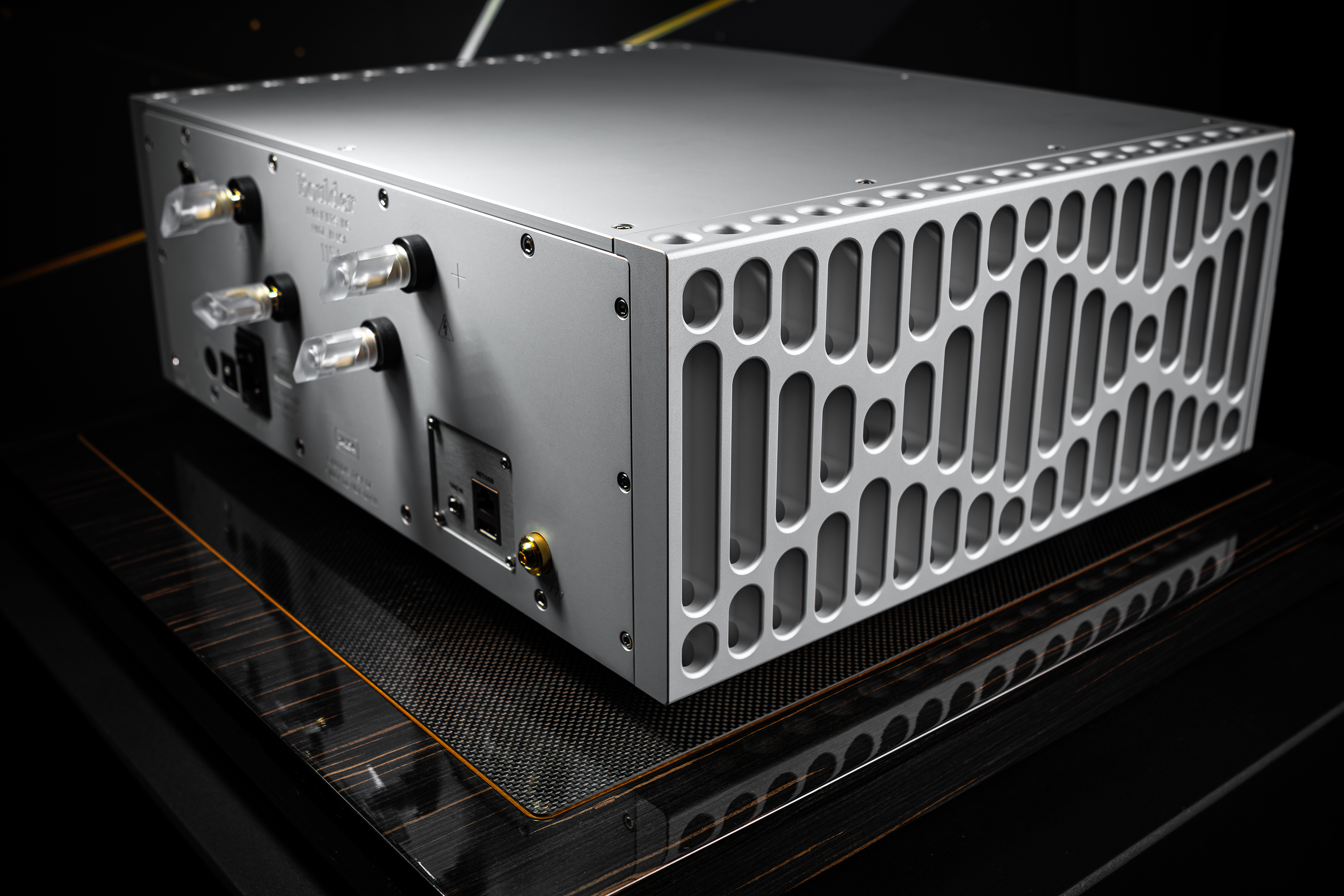
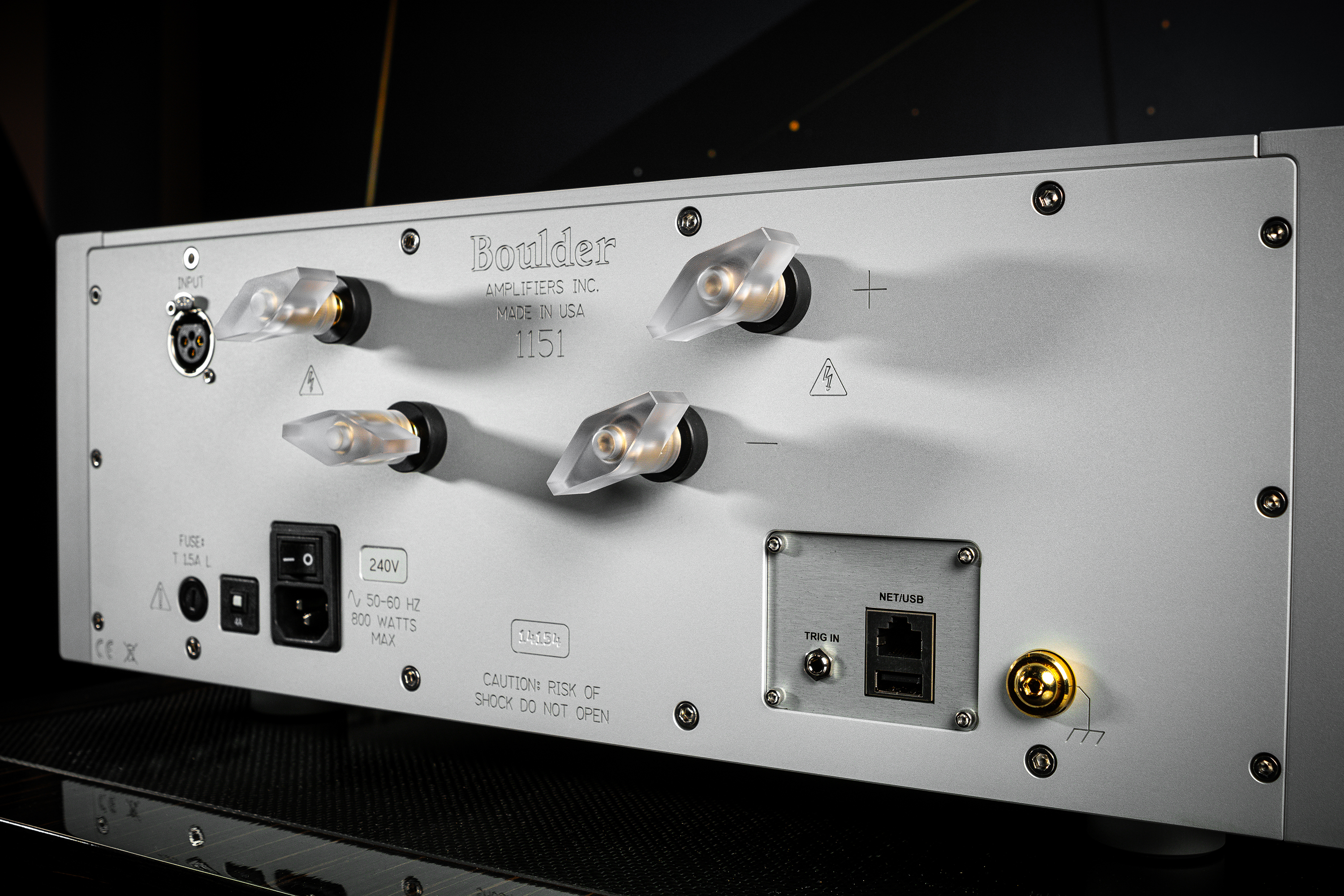
Wejścia Symetryczne 3-pinowe wyjścia XLR
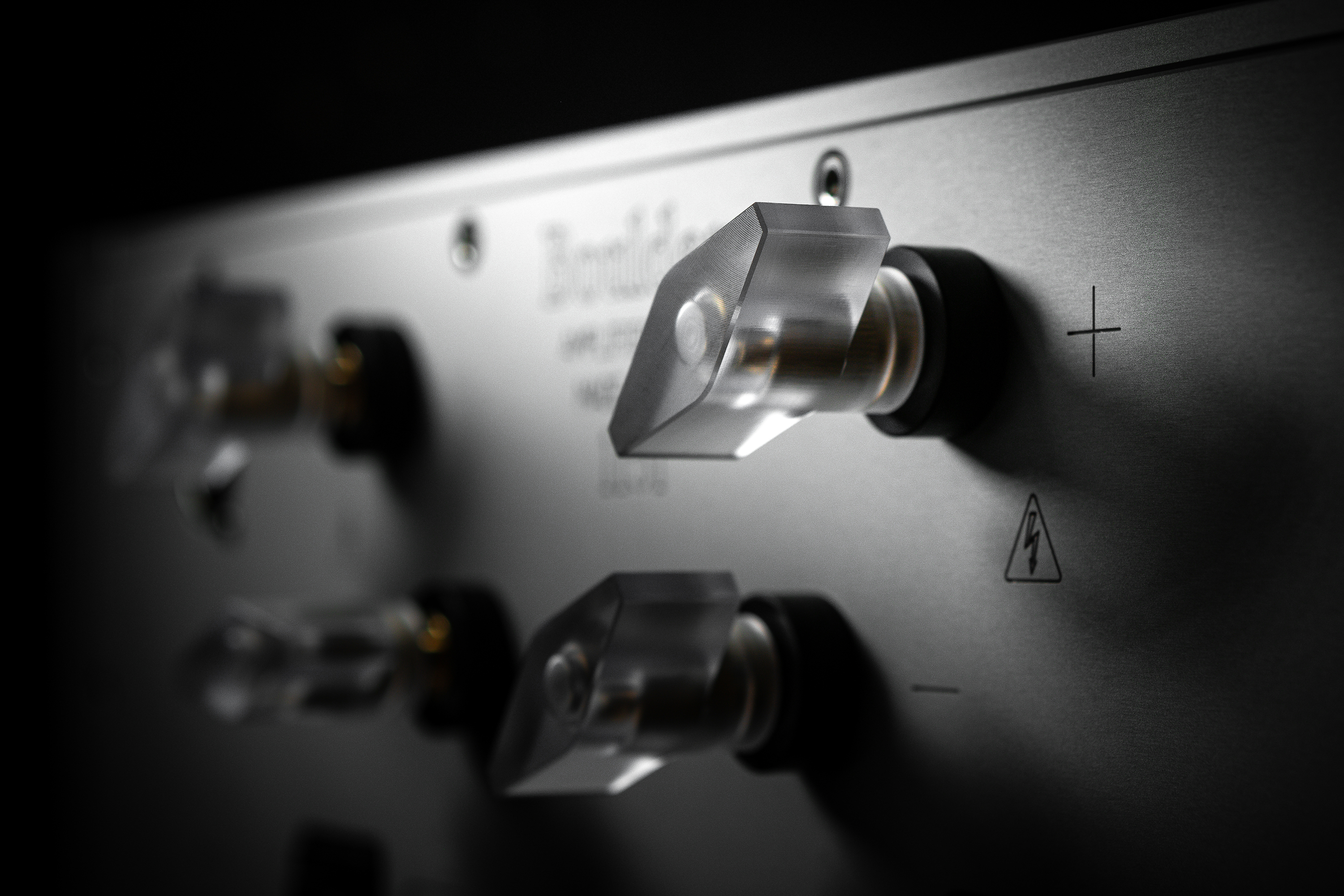
Wyjścia 6mm zaciski mocujące
Wymagania dotyczące zasilania 100 V, 120 V, 240 V 50–60 Hz
Pobór mocy >10 W w trybie czuwania 60 W w stanie spoczynku
Boulder 1151
Recenzje
Recenzja Boulder 1151 w Stereophile
My initial impressions were uniformly positive. More than positive. Boulder's 1151 monoblocks sounded really beautiful. I began by sampling unfamiliar recordings for possible review. Electric Fields (24/48 WAV, Download/Alpha), from Barbara Hannigan, the Labèque Sisters, and David Chalmin, struck me as a bit too Hildegard von Bingen meets new age immersive, but it was compelling and intriguing enough to warrant a review. As I continued to listen, the warm, glowing bath of sound from the 1151s kept drawing me in.
The time for reference tracks had come. I began with a song that, in a demo of the dCS Varèse music system, wowed a seasoned group of audiophiles: the long version of Aretha's take on "Bridge Over Troubled Water," remastered in 2021 and issued on the compilation Aretha (24/96 FLAC, Rhino Atlantic/Qobuz; footnote 3). Bass was solid and perfectly controlled, and the sound was warm and inviting. Colors may have been a bit homogenized (again compared to my reference amplifiers), but the presentation was marvelously illumined and anything but monochromatic.
To further test how well the 1151 could highlight differences, I compared the sound of two maximally different modern pianos captured on two different recordings from the same label: Ott's recording of Field's Nocturnes, cited above, and Murray Perahia's Beethoven Piano Sonatas (24/96 FLAC, Deutsche Grammophon/Qobuz). As much as I found myself wanting more bottom from both instruments, the difference in the basic sound of the two recordings (effusive warmth vs clanginess) stood out in sharp relief against a stunningly silent backdrop.
As I prepare to head to the music room and pack up the Boulder 1151 mono amplifiers for shipment to John Atkinson for measurement, I think back to my first listen: open, clear as a bell, vital, and alive. Those are the distinguishing characteristics that stood out for me then and that remain with me now. Anything but dry or sterile, these amps bring an inner warmth and freshness to music that is best described not as a breath of fresh air but as a welcome change of seasons. Think springtime. If that description and their price hit your sweet spot, I urge you to try them to see if they'll find their way into your heart. I would not be surprised to learn that they do.
Link do recenzji: Boulder 1151 – Stereophile
Boulder 1151
Nagrody
Boulder 1151 – Stereophile – Recommended Components 2026
JVS wrote that Boulder’s 1151 monoblocks “sounded really beautiful. ... the warm, glowing bath of sound from the 1151s kept drawing me in.” He summed up his time with the Boulders by writing “open, clear as a bell, vital, and alive. Those are the distinguishing characteristics that stood out for me then and that remain with me now. Anything but dry or sterile, these amps bring an inner warmth and freshness to music that is best described not as a breath of fresh air but as a welcome change of seasons.” JA summed up the Boulder 1151’s performance on his test bench as “superb,” with high power accompanied by extremely low levels of noise and all types of distortion.
Link: Boulder 1151 – Stereophile – Recommended Components 2026
Boulder 1151 – Stereophile – Recommended Components 2025
JVS wrote that Boulder’s 1151 monoblocks “sounded really beautiful. ... the warm, glowing bath of sound from the 1151s kept drawing me in.” He summed up his time with the Boulders by writing “open, clear as a bell, vital, and alive. Those are the distinguishing characteristics that stood out for me then and that remain with me now. Anything but dry or sterile, these amps bring an inner warmth and freshness to music that is best described not as a breath of fresh air but as a welcome change of seasons.” JA summed up the Boulder 1151’s performance on his test bench as “superb,” with high power accompanied by extremely low levels of noise and all types of distortion.
Link: Boulder 1151 – Stereophile – Recommended Components 2025
Boulder 1151
Galeria
Zobacz także

Boulder
Cennik
Cennik Boulder Amplifiers
Boulder
Dealerzy
Dealerzy Boulder Amplifiers