
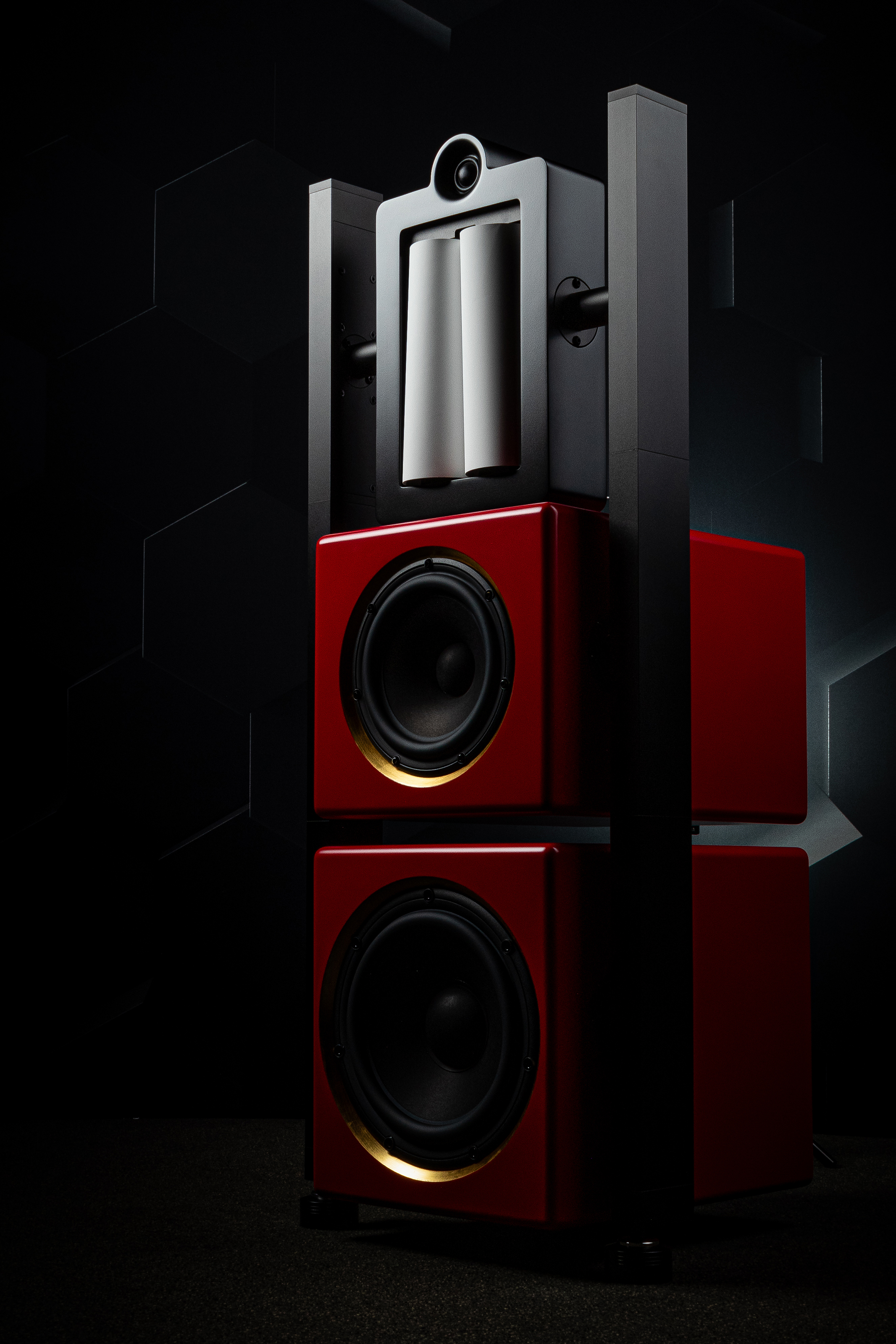
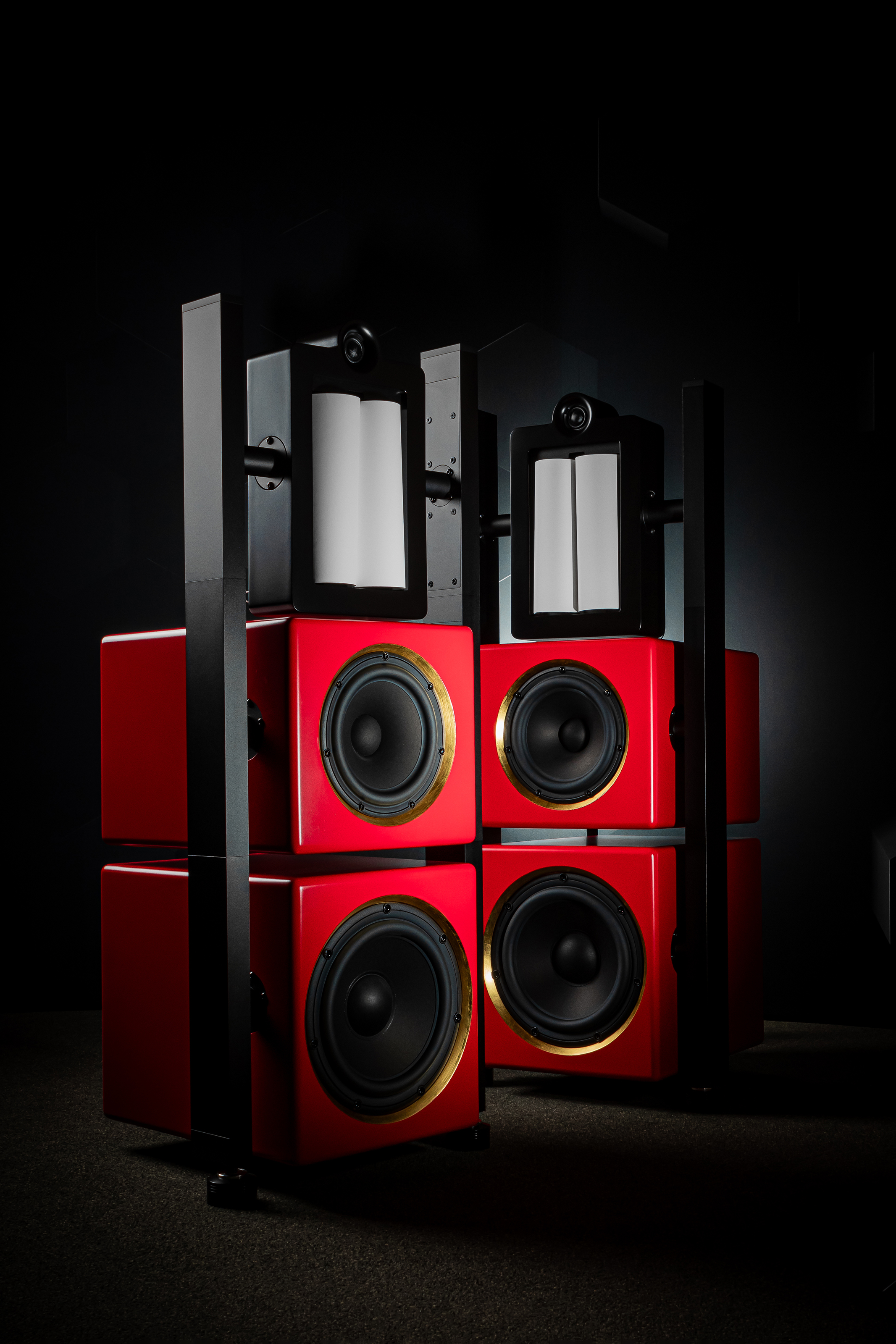
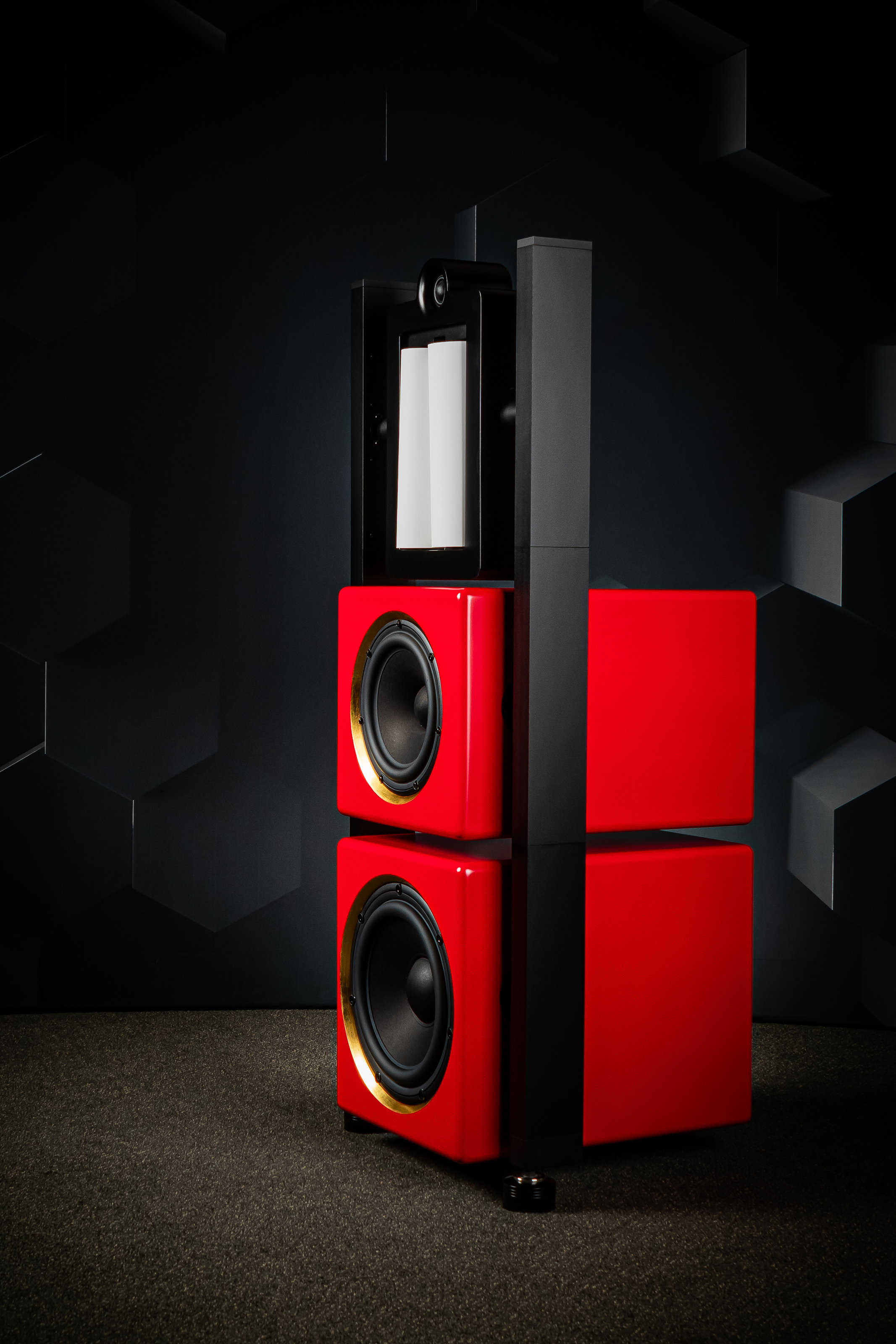
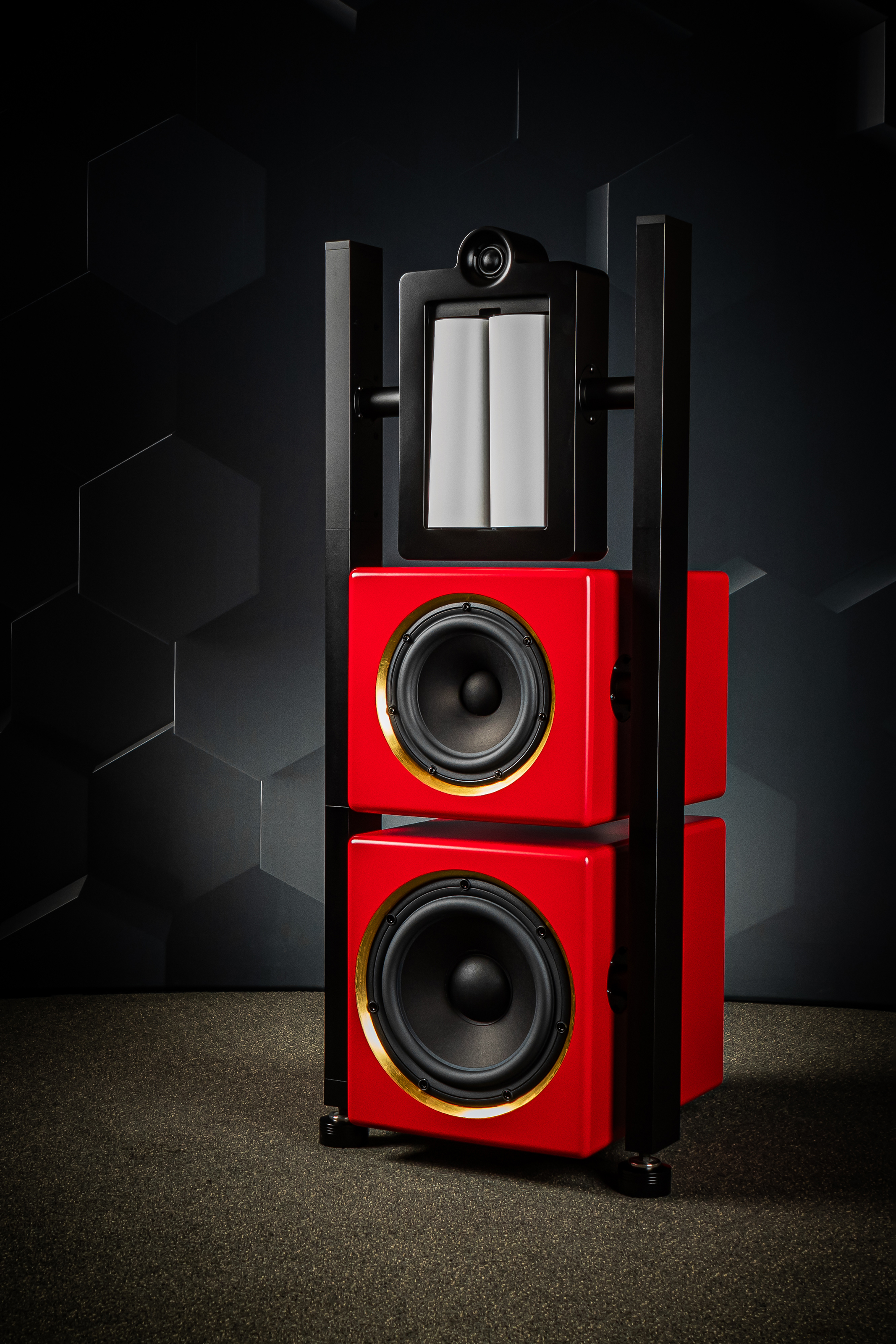
Audionec EVO2
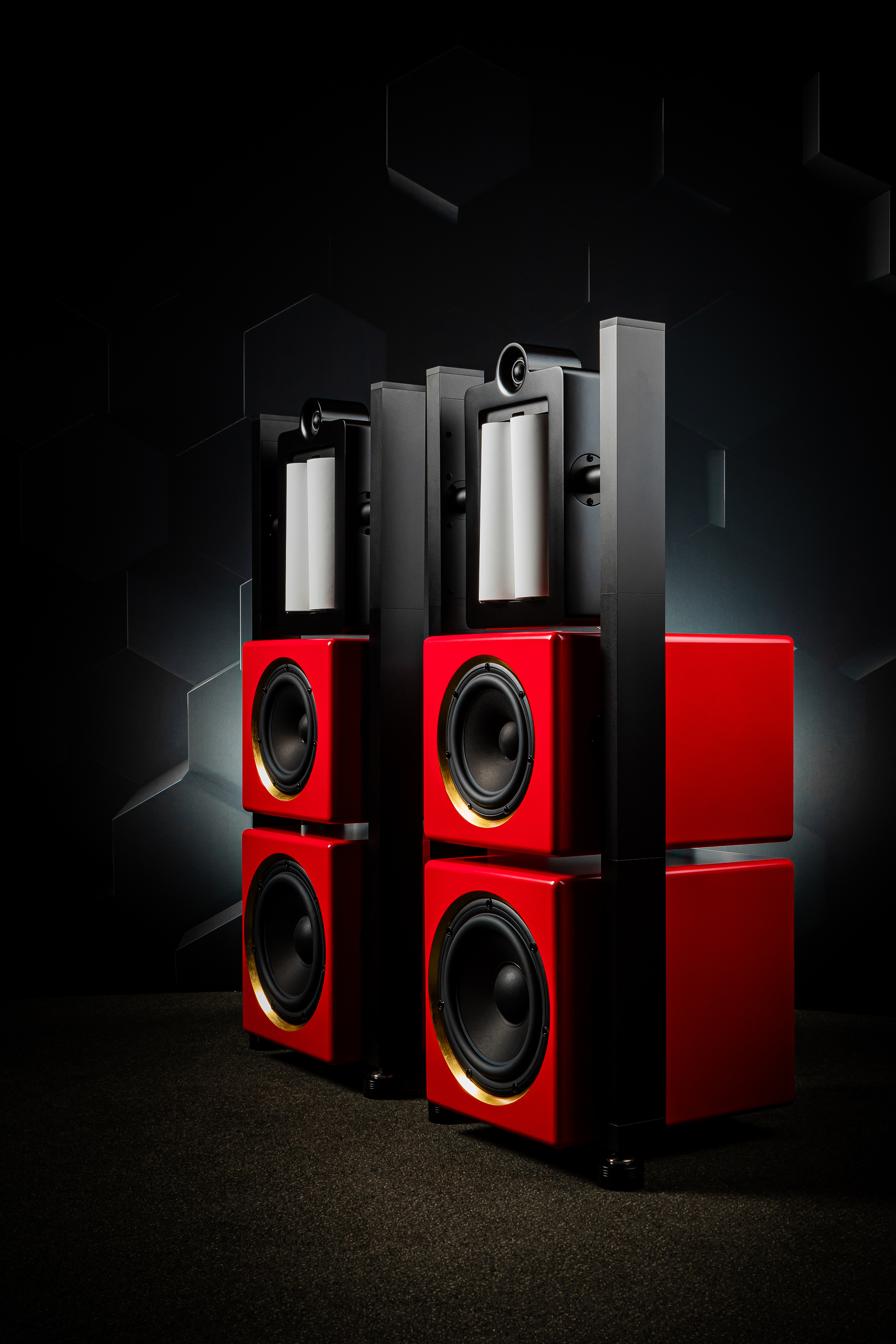
Dane techniczne
Głośnik wysokotonowy 10 kHz – 45 kHz
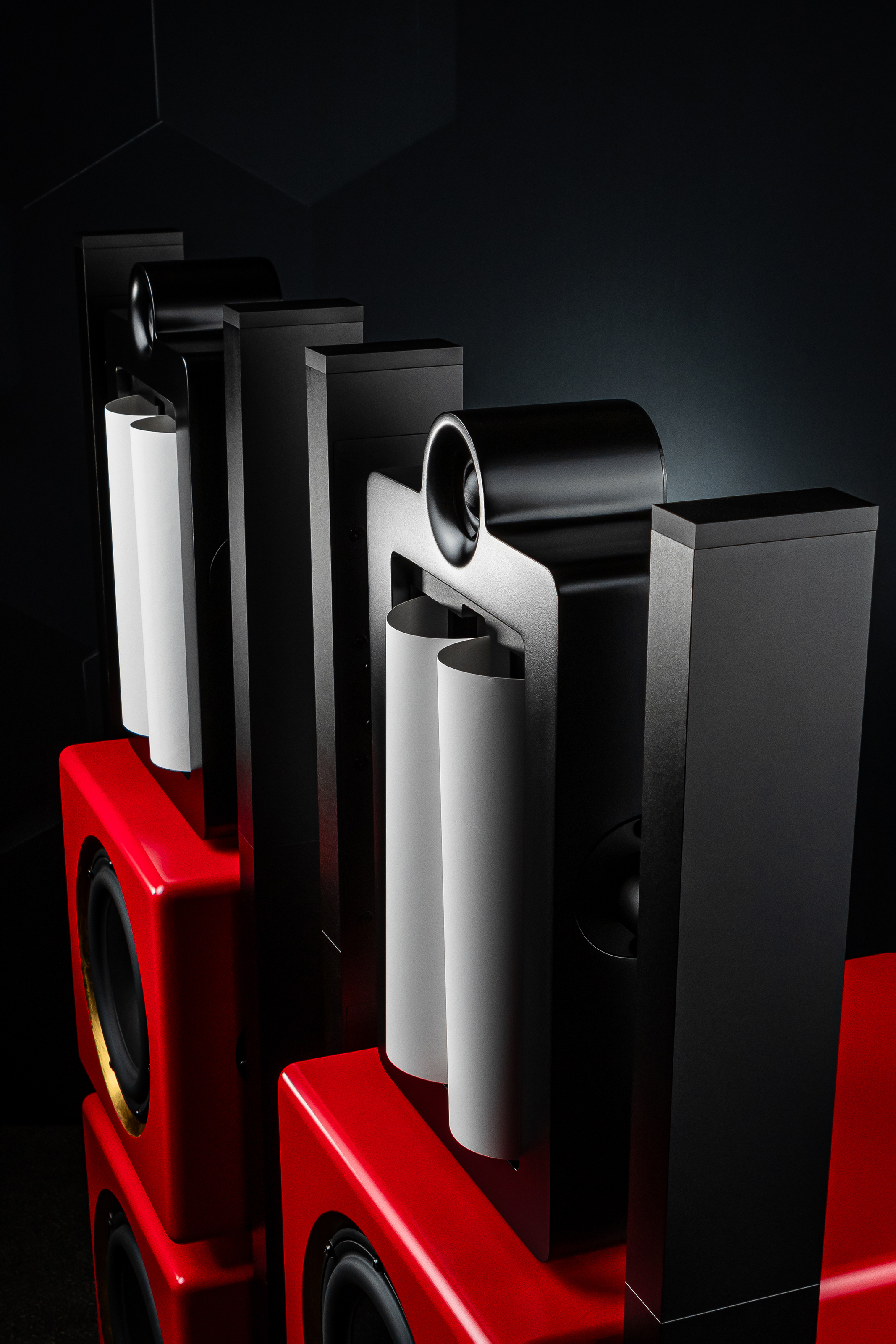
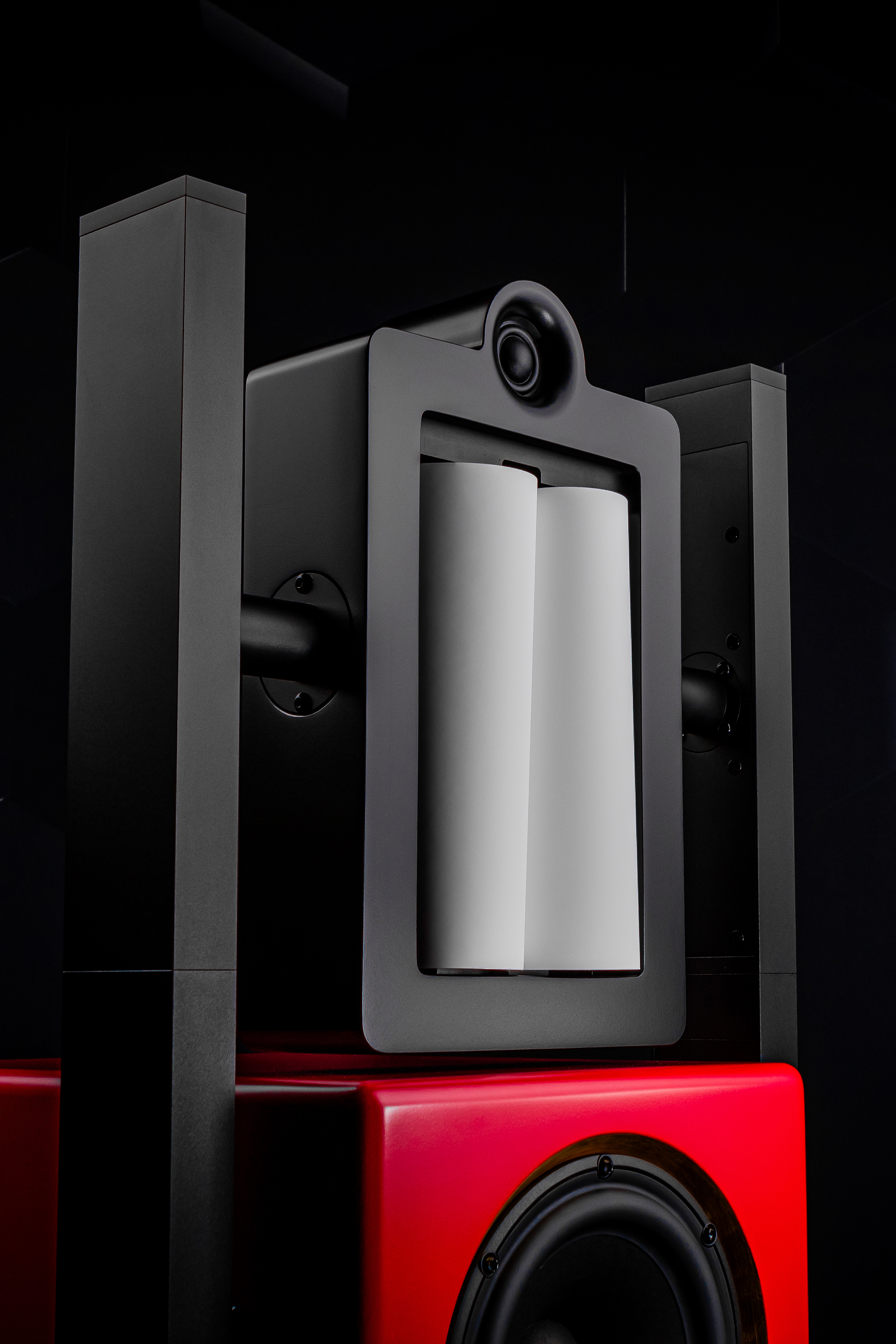
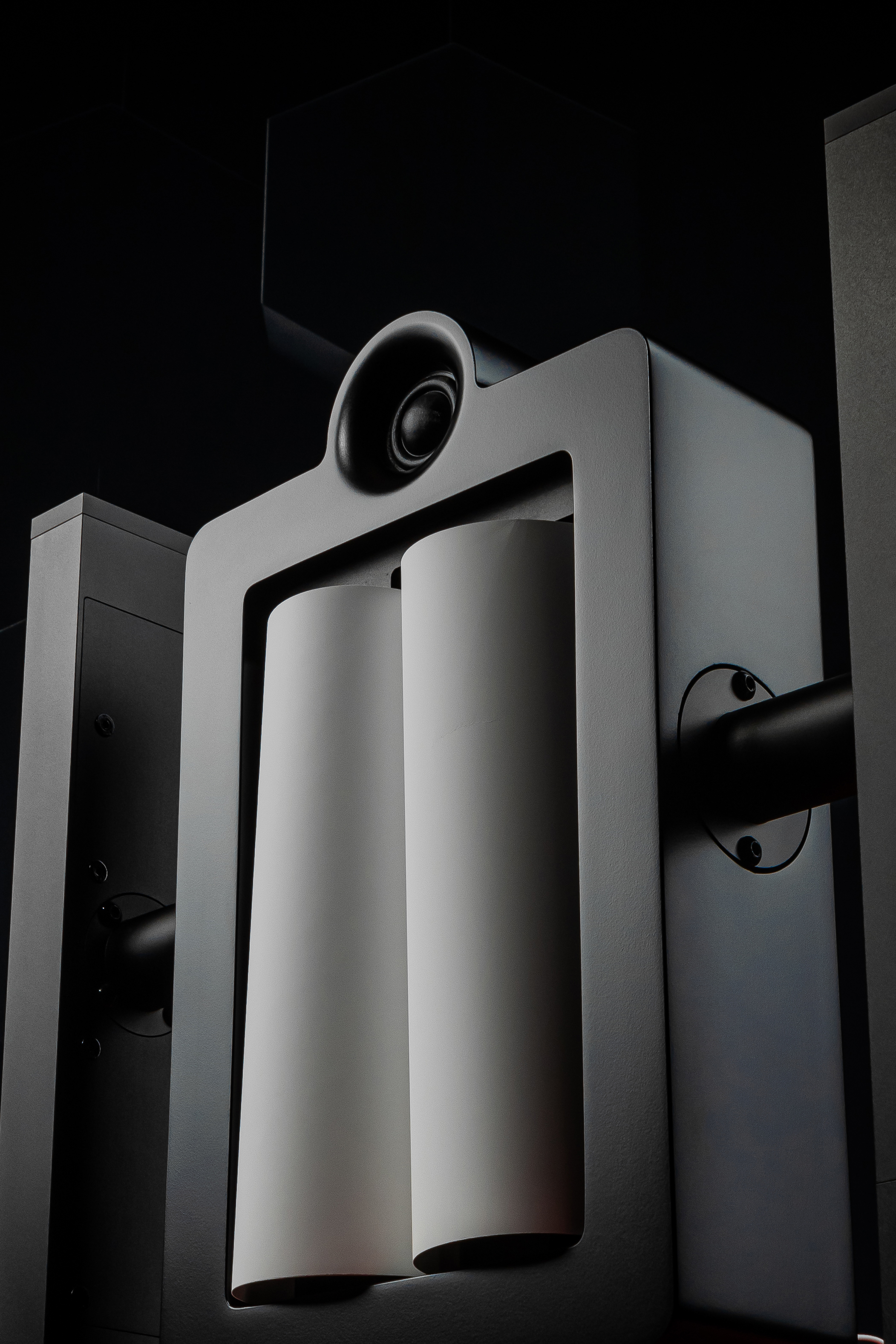
Duopole 31 400 Hz – 10 kHz
Głośnik niskotonowy 22cm 35 Hz – 400 Hz
Sub 28 cm 20 Hz – 35 Hz
Impedancja 4 Ohm
Skuteczność 90 dB
Zalecana moc wzmacniacza 50 – 400 W
Wymiary (szer. x wys. x gł.) 46 x 115 x 47 cm
Waga 76 kg
Audionec EVO 2
Recenzje
Recenzja Audionec EVO 2 w Hi-Fi i Muzyka
W mniej złożonym materiale dźwięk przyspiesza i dodatkowo się oczyszcza. W piosenkach Dire Straits puls staje się jeszcze bardziej energetyczny, a wybrzmienia lepiej korespondują ze sprężystością. Dół wydaje się tu wręcz idealny – świetnie zestrojony, proporcjonalny, bez monumentalnego powiększenia. Powtarza się to również w innych nagraniach. Co do barwy średnicy – przed testem słyszałem opowieści o magii i lampowej cudowności. Tymczasem odbieram ją jako normalną, bez wyraźnego ocieplenia ani ochłodzenia. Instrumenty mają wymiary takie, jak trzeba. Nie zauważam kombinacji, tylko zdrowe i naturalne brzmienie; tak prawidłowe, że aż chce się słuchać. Wbrew pozorom to rzadka atrakcja, ponieważ konstruktorzy często właśnie w średnicy chcą zaprezentować osobiste spojrzenie na muzykę. Tutaj odnoszę wrażenie, że ktoś się nie wtrącał między wódkę a zakąskę i po prostu pozwolił instrumentom grać. I one robią swoje – jeden nie przeszkadza drugiemu, a zamiast tego rozmawiają. Kontrapunkty stają się jasne i logiczne, choć towarzyszy im „zaledwie” świetna przejrzystość.
Lubię taką dosłowną górę, przy której nie muszę się niczego domyślać; na wszelkie „uszlachetnienia” jestem wręcz uczulony. Audioneki rozwiewają wszelkie wątpliwości pierwszym szarpnięciem struny gitary w „Why Worry”, dlatego ta piosenka brzmi na nich jak z bajki. A wszystko płynie ze spokojem i bez napięcia, choć wystarczy muśnięcie membrany większego bębna i już pojawia się kaloryczny puls. Najbardziej spektakularna pozostaje przestrzeń, choć będzie wzbudzać kontrowersje. Jej wielkość już tak nie uderza, ale trójwymiarowość jest oszałamiająca.
Audioneki to specyficzne kolumny. Raz wzorcowo neutralne, innym razem efekciarskie. Przestrzeń kształtują jak żadne inne. Cena jest kosmiczna, ale niepowtarzalność nie daje opcji poszukiwania tańszego zamiennika. Na koniec o lampach. Wnioski w rodzaju „wystarczy 30 W, oby kaloryczne” okazują się nietrafione. Połączenie z Unisonem na EL34 okazało się katastrofą. O jakiejkolwiek kontroli basu i porządku nie było mowy, może poza płytami z kameralnym plumkaniem. Pierwsze wrażenie przy wysokiej głośności było jednoznaczne: dużo, głośno i bez sensu. W porównaniu z lampą McIntosh MA12000 ze swoimi 300 watami pokazał coś tak skrajnie innego, że szkoda strzępić język. Są wzmacniacze jeszcze mocniejsze, jeszcze bardziej precyzyjne i takie polecam. Wersja w kolorze D’Agostino nie powstała przypadkiem.
Link do recenzji: Audionec EVO 2 – Hi-Fi i Muzyka
Recenzja Audionec EVO 2 AS w The Ear
Bringing the speaker up to Audionec Evo 2 AS level by plugging in the Sub didn’t change things dramatically which is a sign that Audionec have done a great job of integrating this active element. Timing remained spot on without any leading edge forwardness, in fact there is a delicacy to the delivery that is sublime, the triangle on Babylon Sisters (Steely Dan) has never sounded so real. And the snap on Bernard Purdie’s snare drum is sharp but with real depth of tone, it feels like you can hear right into the mix such is the degree of separation between instruments and voices. With Massive Attack’s The Man Next Door the bass has serious extension and power, helping to place the sound in the room in full effect. The image may not be sharp but the sense of presence more than makes up for it, these speakers thrive on high energy productions like this, articulating every nuance of the performance to powerful effect.
As you might expect the results get better with a good analogue source, reviewing a recent reissue of John Lee Hooker’s The Healer (Craft Records) I was struck by how obvious it was that the stylus had warmed up by the second track. It carried on improving over the side but it’s rare that such graduations are so clear. The Audionecs are unsurprisingly very sensitive to variations in level between records too, this was illustrated when going from Michael Franks’ The Art of Tea to Taj Mahal’s Recycling the Blues & Other Related Stuff. Both are from the same era but the latter is cut at a higher level and in the able hands of the Evo 2s sounded superb, the live tracks being particularly powerful thanks to the acres of acoustic space, realistic immediacy and big dynamic range. The latter is something that more sensitive speakers have a natural advantage with and that was very clear here, making the performance that much more entertaining.
As luck would have it a pair of Synthesis Roma 98DC valve power amps turned up during the Audionec’s tenure. These have KT88 output tubes and a specified 80 Watt output, they proved to be perfect partners for the Evo 2, producing a warmer and more engaging sound than the transistor amps previously in use. The balance seemed a bit darker but the musical message was extremely clear indeed, the Audionec Evo 2s revel in the timbre that tubes bring out. Put on a good recording of an acoustic performance and it feels like you’re there in the studio or the concert hall. The beauty of the music is so strong that you can’t help but fall for it, and this is as true for Haydn quartets as it is for Arab Strap’s gritty tales and chewy bass lines.
Link do recenzji: Audionec EVO 2 AS – The Ear
Recenzja Audionec EVO 2 AS w Enjoy the Music
So, how does all of this fancy French fabricated creativity sound? In the French word, fantastique! Considering the abject discrepancy in driver technology, the whole functions as a whole, with no sense of individual components. There is a wonderful integration of drivers with extension from sub to super with no overt deviation from a unified sonic signature. That unified sonic signature is subtlety, refinement, and dynamic scale. These speakers scale, and they scale well. Saint Saens' "Danse Macabre" from [Witches' Brew Blue Moon Imports B0098YTXAC, 44.1kHz/16-bit] presents with quiet moments of anticipation and hesitation flowing into subtle grandiosity. The Duopole offers a wonderful sense of subtlety at both soft and louder listening levels. And as the music soars to dynamic heights, the Evo 2 properly conveys gravitas and impact while never loosening its grip or allowing things to smear or lose composure. Thoroughly enjoyable (is that a complete sentence?).
As I said, they are neutral. The remarkably small and room-friendly powered sub-woofers are measured to 18Hz. They certainly go low, but once below around 25Hz didn't hold the complex harmonic textures that my much more expensive Dynaudio Consequence Ultimates with twin 12' drivers reproduce; very little can compete with them though. For such a small enclosure, they do an exceptional job of delivering the goods. The reproduction of textures in the 25Hz to 45Hz range is wonderful. Oscar Peterson Trio's "You Look Good To Me" from We Get Requests [Verve XVRJ8606D64], DSD single rate 2.8MHz/64fs has a lingering base note that allows you to feel the reverberation of the wood as it is bowed. It always puts a smile on my face when done right. Midrange and up is where that wonderful driver shines, and the same track's piano presented with the rich tonal luster it was recorded with. As I eased through my listening list, both male and female vocals flowed with ease and a natural sense of expression and harmonic layering that would make a Harbeth sit up and take notice. Highs are extended and airy without shining or offending. Properly conveyed for this level of equipment and delightful in the presentation.
The wide band of the Duopole Driver is the key to its neutrality and overall coherence. I ramped up the pace a bit by trying some of Sinatra's "The lady is a Tramp" from 57-In concert [DCC UCDCC 101, 44.1kHz/16-bit). The room widened and Frank was dropping his tacky one-liners. The orchestra was deep and wide, with stage extending well beyond the speakers' boarders. More set back than forward, I felt mid audience with the stage just above. Frank's voice hung in the air at the proper height and the instruments each occupied their own space with the identifiable distance between them. They were social distancing and didn't even know it. At first, I was concerned these refined monochromatic beauties wouldn't be able to rock, but David Bowie's "Ziggy Stardust" from The Rise And Fall Of Ziggy Stardust And The Spiders From Mars [Rhino/Parlophone B0106UFG1G, 44.1KHz/16-bit] was a blast and showed the Evo 2's were more than willing to groove and jam. Then I threw down Infected Mushroom's "Becoming Insane" from Vicious Delicious [MOON Records B015NKJ9NU 44.1kHz/16-bit] and was blown away at the abuse these speakers could take, and not lose their magic mojo.
Link do recenzji: Audionec EVO 2 AS – Enjoy the Music
Recenzja Audionec EVO 2 w Lite Magazin
Die fantastische räumliche Abbildung der Evo 2 verlangt geradezu danach, Musik vom Yello-Mastermind Boris Blank aufzulegen. Wir wählen „Celestial Echo“, seine Kollaboration mit der Sängerin Malia. Wieder erleben wir, wie körperhaft diese Schallwandler die Sängerin abbilden: Malia hat in dieser Wiedergabe eine besonders große Verführungskraft, die intime Nähe, mit der ihre Stimme in diesem Song aufgenommen ist, können wir fast physisch wahrnehmen. Doch ebenso attraktiv ist das instrumentale geschehen: Blank ist ja berühmt für seine phantastischen Produktionen, er kreiert auch mit diesem Song einen Klang-Kosmos. Synthesizer-Schwaden wabern durch den Raum, der keine Grenzen zu kennen scheint. Einzelne Töne oszillieren im Pingpong von links nach rechts, Percussions wandern gemächlich von einer Seite zur anderen, verschwinden an einem fernen Horizont – „unendliche Weiten“ schießt es uns als Assoziation durch den Kopf. Blank ist aber auch berüchtigt für die Verwendung abgrundtiefer Bässe – und auch hier werden wir amtlich bedient.
Die Synthi-Töne aus dem Blankschen Frequenzkeller haben Kraft und Volumen, die Bässe drücken uns ordentlich auf Trommelfell und Magen. Gerade die Tiefton-Fähigkeit hätten wir von der Evo 2 in diesem Maß nicht erwartet, da das Volumen des Woofer-Moduls doch seine Grenzen hat. Sicherlich geht hier noch mehr, dafür gibt es ja die Ausbaustufen Evo 3 und Evo 4. Doch bereits die Evo 2 liefert eine tolle Trias von mächtigen Bass, sattestem Druck und immenser Dynamik. Das beweist sie uns zum Abschluss bei „Arabian Desert Groove“. Diese Nummer ist zuallererst ein Showcase für Charly Antolini: Der Ausnahme-Drummer spielt ungemein elegant und herrlich flüssig. Er lässt dabei aber locker und lässig die vertracktesten Beats, Breaks und Patterns einfließen – und diese Artistik präsentiert uns die Evo 2 als herrlich dynamisches Feuerwerk: Die Anschläge haben eine tolle Impulsivität und Agilität, der Anschlag der Stöcke auf den Fellen und den Becken ist knackig und crisp.
Auch die zum Ende hin immer verhaltenere Spielweise bis hin zum flüsterleisen Pianissimo ist beeindruckend: Wir hören sogar, wie die Felle vibrieren und die Kessel resonieren, wie das Metall der Becken nach dem Anschlag beim Ausklangen den Sound verändert. Die Wiedergabe ist auch hier völlig stimmig und homogen. Der Breitbänder beweist abermals, welch exzellenten Job er als Quasi-Punktschallquelle macht. Die zweite Attraktion dieser Nummer ist nun der Bass von Wolfgang Schmidt. Hier hören wir einen realen Saiten-Bass, der nicht nur mördertief ist, sondern auch jenen Anschlags-Punch erzeugt, der dem Synthie-Bass von Boris Blank abgeht. Die Evo 2 liefert die erst lang ausgehaltenen, dann abgestoppten Töne mit satter Kraft und fettem Schub. Dabei bleibt der Ton aber immer konturiert und definiert, ohne dass es wummert oder zu Verdeckungen etwa mit dem Schlagzeug kommt. Das bleibt auch so bei gesteigerter und gesteigertster Lautstärke – mit dieser Stärke punktet die Evo 2 zum Finale.
Link do recenzji: Audionec EVO 2 – Lite Magazin
Recenzja Audionec EVO 2 w Positive Feedback
That aside nicely segues us into a comment on their overall tonal character. As I said, they are neutral. The remarkably small and room-friendly powered sub-woofers are measured to 18Hz. They certainly go low, but once below around 25Hz didn't hold the complex harmonic textures that my much more expensive Dynaudio Consequence Ultimates with twin 12" drivers reproduce; very little can compete with them though. For such a small enclosure, they do an exceptional job of delivering the goods. The reproduction of textures in the 25Hz to 45Hz range is wonderful. Oscar Peterson Trio's "You Look Good To Me" from We Get Requests [Verve XVRJ8606D64], DSD single rate 2.8MHz/64fs has a lingering base note that allows you to feel the reverberation of the wood as it is bowed. It always puts a smile on my face when done right. Midrange and up is where that wonderful driver shines, and the same track's piano presented with the rich tonal luster it was recorded with. As I eased through my listening list, both male and female vocals flowed with ease and a natural sense of expression and harmonic layering that would make a Harbeth sit up and take notice. Highs are extended and airy without shining or offending. Properly conveyed for this level of equipment and delightful in the presentation.
The wide band of the Duopole Driver is the key to its neutrality and overall coherence. I ramped up the pace a bit by trying some of Sinatra's "The Lady is a Tramp" from 57-In Concert [DCC UCDCC 101, 44.1kHz/16-bit). The room widened and Frank was dropping his tacky one-liners. The orchestra was deep and wide, with stage extending well beyond the speakers' boarders. More set back than forward, I felt mid audience with the stage just above. Frank's voice hung in the air at the proper height and the instruments each occupied their own space with the identifiable distance between them. They were social distancing and didn't even know it. At first, I was concerned these refined monochromatic beauties wouldn't be able to rock, but David Bowie's "Ziggy Stardust" from The Rise And Fall Of Ziggy Stardust And The Spiders From Mars [Rhino/Parlophone B0106UFG1G, 44.1kHz/16-bit] was a blast and showed the Evo 2's were more than willing to groove and jam. Then I threw down Infected Mushroom's "Becoming Insane" from Vicious Delicious [MOON Records B015NKJ9NU 44.1kHz/16-bit] and was blown away at the abuse these speakers could take, and not lose their magic mojo.
Link do recenzji: Audionec EVO 2 – Positive Feedback
Audionec EVO 2
Nagrody
Audionec EVO 2 AS– The Ear – 5 Star Badge

Audionec EVO 2 – Lite Magazin – Highlight

Audionec EVO 2
Galeria
Zobacz także

Audionec
Cennik
Cennik Audionec
Link: Cennik Audionec
Audionec
Dealerzy
Dealerzy Audionec
Link: Dealerzy Audionec